Nobody's Waiting for Your Launch
How to launch a micro-SaaS as a solo founder: warm outreach before public posts, one community done right, and why your first customers won't come from a viral moment.
 By Max25 min read
Listen to this article
20:36AI-generated podcast-style overview of this article (not a word-for-word narration).
I shipped a product on a Tuesday in March. Spent the morning polishing the landing page, picked a font I liked, wrote a launch tweet, posted on Product Hunt, and opened Stripe in a second tab like I was watching election results. By dinner I had four signups. Two were friends being nice. One was a bot. The fourth person actually paid, then emailed me three bugs in a row, which honestly made my week.
That was a successful launch by my early standards.
I've had worse ones. I've also had launches where nothing moved for five days and then a single email to the right twelve people produced more revenue than a week of public posting. The pattern isn't random. It's just not the pattern Twitter sells you.
If you're trying to figure out how to launch a micro-SaaS after you've validated, built, and priced the thing, you probably want a moment. Confetti. A graph going up and to the right. What you'll actually get is closer to sending a lot of messages into the void and hearing back from fewer people than you'd like, then slowly finding the ones who needed exactly what you made.
This is Part 4 of Micro-SaaS From Zero. The code works. The price is on the page. Now you need strangers to find it and hand you money. I'm going to walk through the launch approach I use today as a solo founder: warm before public, one community done properly, launch platforms without betting the farm, and the thirty-day habit that matters more than any single post. Some examples below are composite scenes, not one product's exact stats. I'll say when they're hypothetical.
One belief under all of it. Revenue is validation. Launch traffic isn't. Upvotes aren't. Your mom sharing the link isn't. If you want a micro-SaaS that pays you, treat launch as distribution for people who already have the problem, not as a lottery ticket for attention.
How to launch a micro-SaaS when nobody's waiting for it
Here's the uncomfortable truth about launch day. Unless you spent months building an audience, nobody is refreshing your URL waiting for you to flip the switch. The internet is not a crowd holding its breath. It's a noisy room where everyone is already in another conversation.
That's not an insult. It's the baseline. And once you accept it, launch gets simpler. You stop preparing for applause and start preparing for outreach.
How to launch a micro-SaaS as a solo founder is mostly a sequencing problem. Who hears about it first? Where do they already gather? What do you want them to do in the first five minutes? The product is the easy part now. AI helped with that. Distribution is still manual, still awkward, still mostly conversations and showing up in the right places repeatedly.
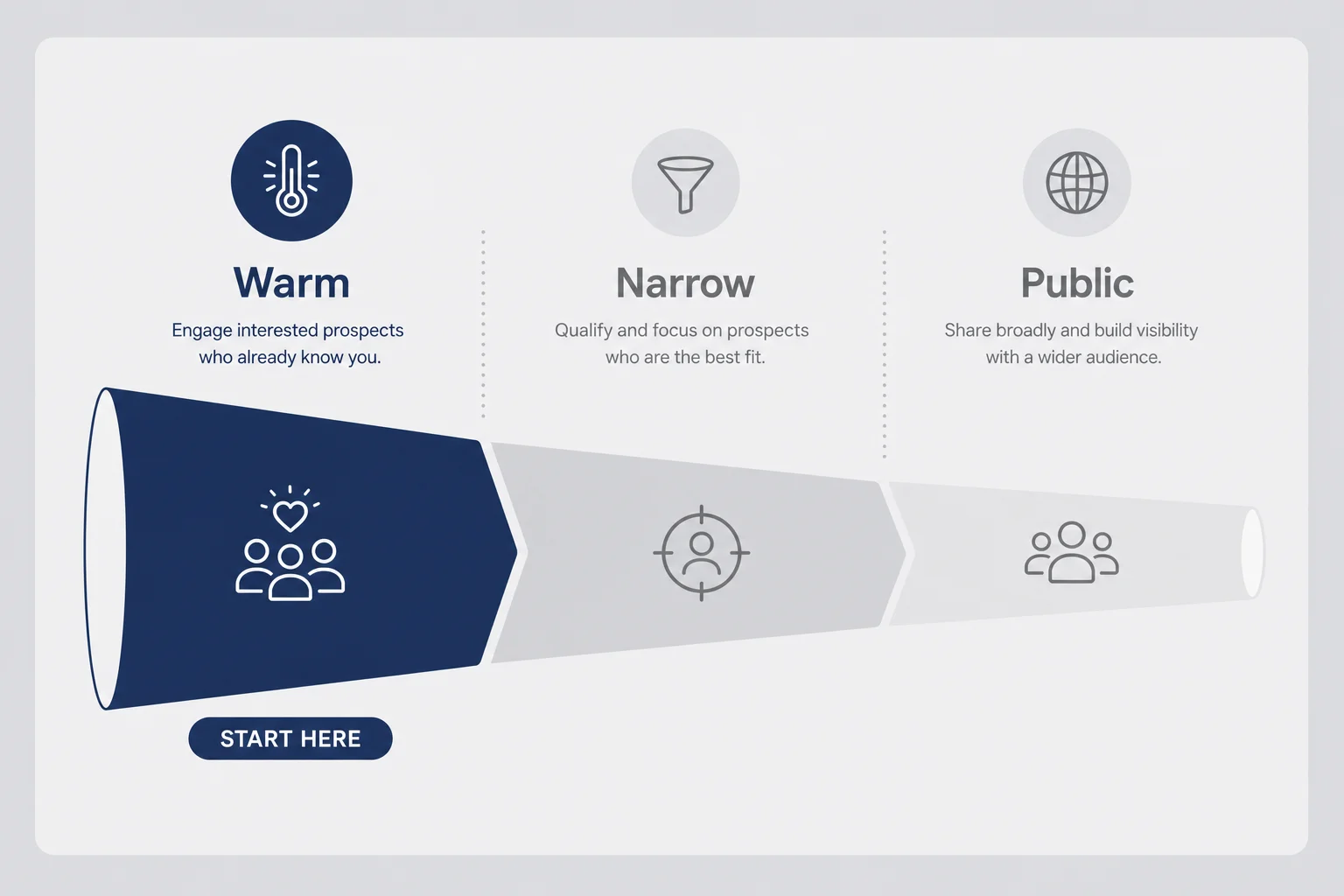
I divide launch into three layers. Warm: people who already know the problem and gave you permission to email them. Narrow: one community or channel where you become a familiar name. Public: Product Hunt, Hacker News, a showy post on social media. Most founders do public first because it feels like launch. I do warm first because it produces customers.
Warm launch teaches you where onboarding breaks before strangers hit it. Narrow channel teaches you language that resonates. Public launch amplifies whatever you learned. Reverse the order and you amplify confusion.
You also don't need a huge list. Twelve real people who said "email me when this exists" beat twelve hundred visitors from a generic tech audience who clicked because the thumbnail looked interesting. Quality of attention beats volume every time at this stage.
So if you're staring at a shipped product and an empty Stripe dashboard, good. You're normal. The work now is closer to sales than to coding, and nobody warned you about that because building is more fun to write about. Launch is the part where you find out whether the last three months were an investment or a hobby with a domain name.
There's a micro-SaaS launch strategy that sounds boring and works: talk to people who already care, fix what breaks, pick one place to be useful, repeat for thirty days. No secret channel. No growth hack. Just consistency aimed at the right room.
Launch isn't a day, and that's actually good news
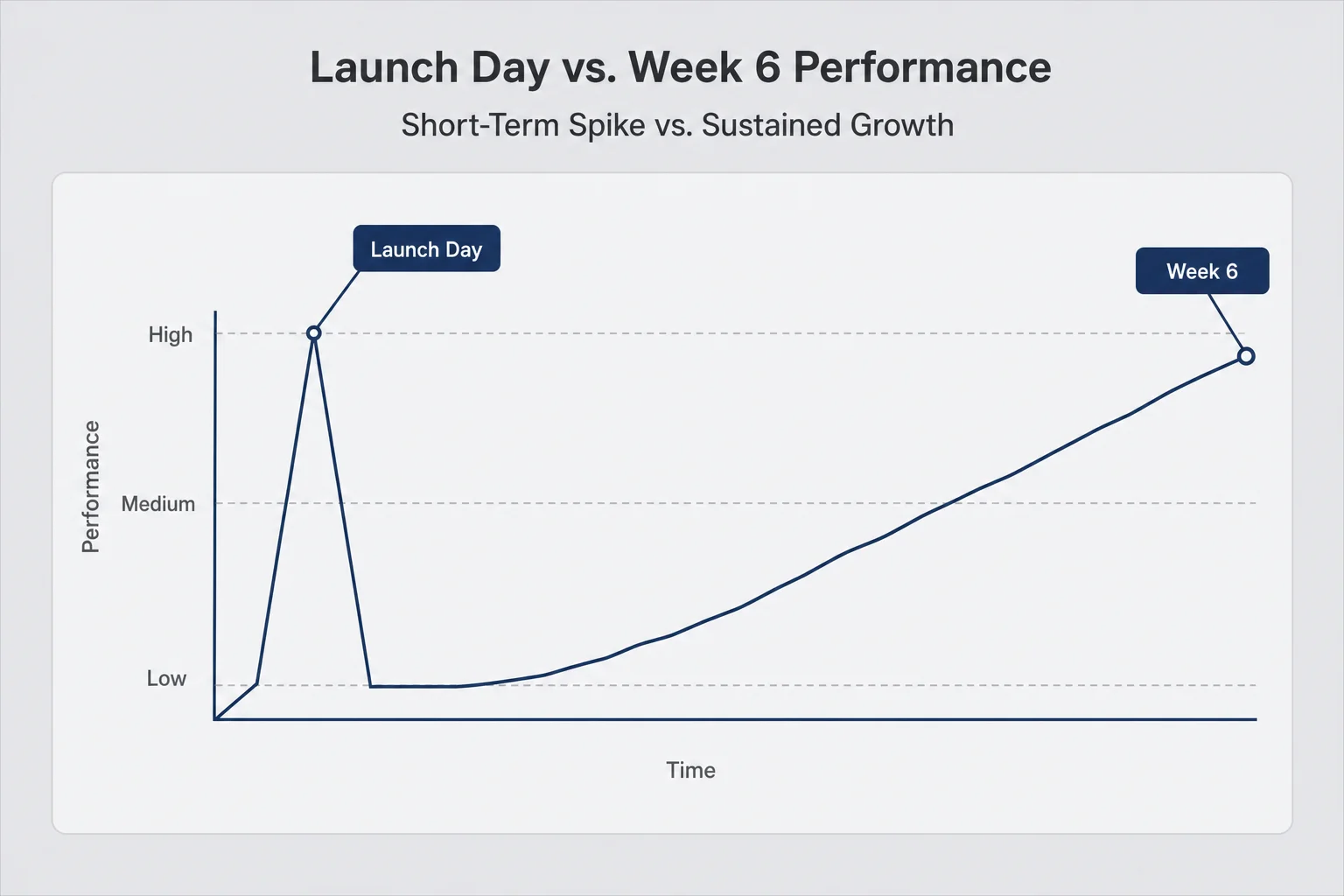
The fantasy launch is a spike. You post, the internet notices, revenue jumps, you screenshot the dashboard for posterity. The reality for most solo products is a slope. Small actions compound. A helpful reply in a forum today becomes a customer in six weeks because someone searched the thread later.
That's good news if you let it be. Spikes end. Slopes can pay rent.
The spike versus the slope
Product Hunt can send traffic. Hacker News can send traffic. A viral tweet can send traffic. What they rarely send, for an unknown micro-SaaS on day one, is a durable customer base. They send curiosity. Curiosity converts only if the product is ready and the offer is obvious to someone who didn't build it.
I track launch in two numbers: conversations started and paying customers from people who weren't friends. Everything else is weather. Signups without payment are weather. Page views are weather. Followers gained are weather unless they translate into people with the problem.
The slope comes from repeating small actions. Email five more people from your validation list. Answer two questions in a niche community. Publish one article that answers a question your buyer actually searches. Fix the onboarding step where people stall. Each action is a mini launch. The founders who win aren't the ones with the best launch day. They're the ones still launching on day forty.
That rhythm is hard to maintain alone. Set a recurring block on your calendar for distribution, same as you'd set one for building. Tuesday and Thursday mornings, outreach and community. Not "when I feel like it." Feelings after launch skew toward hiding in code because code gives instant feedback. Sales gives silence. The calendar fixes that bias a little.
Why one big moment is a trap
Big moments encourage bad decisions. You delay shipping to "prepare." You add features nobody asked for because they'll look good in a screenshot. You discount aggressively to inflate day-one numbers and inherit customers who only wanted a deal. You interpret silence as failure and either panic-rewrite the product or panic-quit.
Worse, a big moment lets you avoid the boring work. Writing personal emails is boring. Being helpful in a forum for weeks is boring. Building SEO pages one at a time is boring. Launch-as-event encourages you to do the exciting post once and then wait, which is how products die with a beautiful landing page.
The math of launching
A single launch day is a spike. A launch habit is a slope. The slope is what pays your bills.
If you've read the build guide, you've seen this idea already. That post covers launch in one section. This one goes deep, because distribution deserves its own week, not a paragraph between Stripe setup and a warning about AI wrappers.
Where your first ten customers actually come from
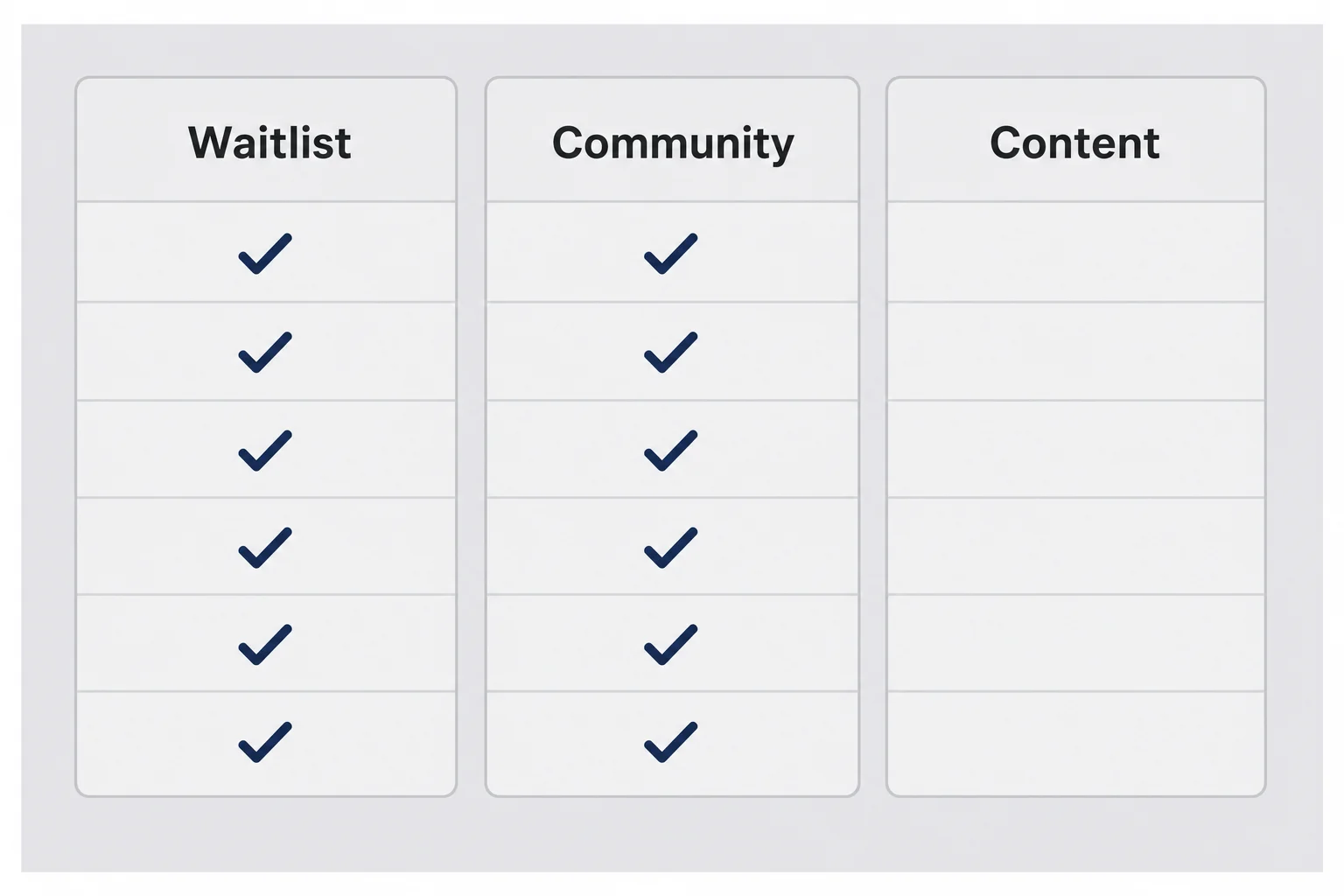
Ask founders where their first ten paying customers came from. If they're honest, the answer is rarely "Product Hunt" or "Google ads." It's usually a messy combination of people they emailed, people they met in a community, and one referral from someone who got real value.
That's the map. Everything else is optional seasoning.
Warm traffic beats cold traffic every time
Warm traffic means people who already know the problem exists. They joined a waitlist during validation. They talked to you on a customer interview and said "keep me posted." They pre-ordered or paid a deposit. They follow you because you write about their niche, not because you write about startups in general.
Cold traffic means strangers who saw a link and clicked. Some will convert. Most won't, because they don't yet trust you, don't yet feel the pain sharply, or don't understand what your product does in eight seconds.
Your first ten customers almost always come from warm traffic. The ratio might look like eight warm, two cold. Or ten warm and zero cold for months. That's fine. Ten paying customers who got value and stick around beat a hundred signups who ghosted.
If you skipped validation and have no list, you can still launch, but you're doing cold acquisition with a v1 product and no trust. Possible. Slower. More demoralizing. Before you count on it, run your numbers through the cold email ROI calculator to see how many emails one paying customer actually costs at realistic reply and close rates. When text alone stalls on a visual product, the Loom outreach fit picker tells you whether async video belongs at touch three. This is why Part 1 of the series exists.
The channels that don't work yet
Paid ads usually don't work yet. Not because ads never work for micro-SaaS, but because you don't know your message, your conversion path, or your retention well enough to buy traffic profitably. You'll pay to learn what organic outreach would have taught you for free, except now you're also managing an ad dashboard at midnight.
Broad social media rarely works yet. Posting on your personal account to other founders isn't reaching your buyer. Posting into the void on LinkedIn without a niche isn't reaching anyone. "Build in public" threads about MRR screenshots attract other builders, not necessarily customers — model milestones in the free MRR calculator instead of performing progress for other founders.
Influencer partnerships, affiliate programs, PR outreach to tech blogs: later problems. They assume you already convert strangers who arrive with intent. Fix warm conversion first.
Focus beats breadth. One email list. One community. One content topic. Do those until ten strangers pay you, then expand.
I see founders ignore this because breadth feels like progress. Posting in five places creates activity. Activity isn't traction. Pick the channel where you already got validation signal. If all your interviews came from a Slack group, launch there. If your waitlist came from one subreddit, become useful in that subreddit. Follow the evidence you already paid for during validation, don't invent a new audience because a blog post said TikTok is hot.
The warm launch before you go public
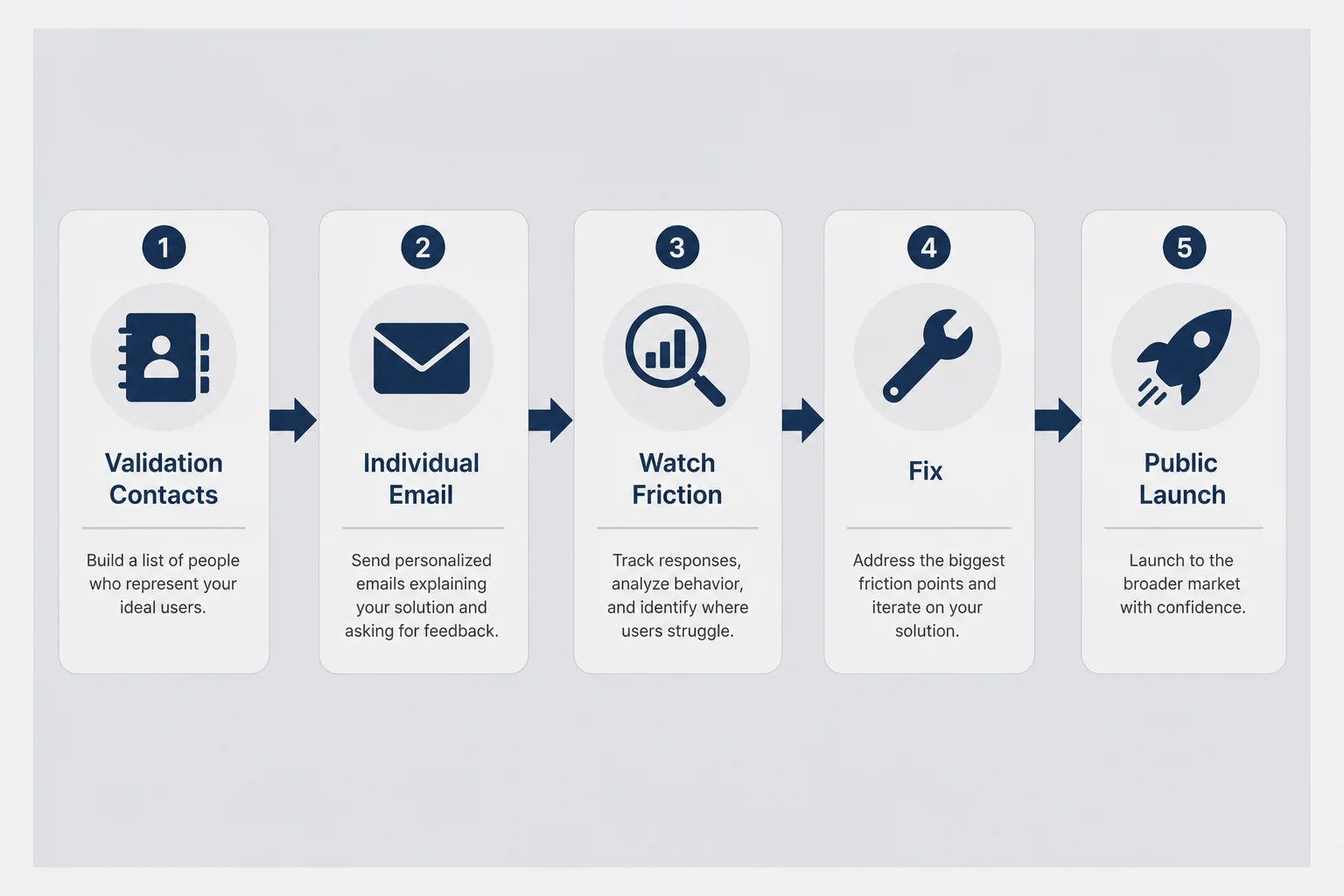
Before you post anywhere public, run a warm launch. Ten to thirty people max. People who opted in during validation or agreed to try an early version. You're not looking for applause. You're looking for friction.
Who gets early access and why
Start with the people who gave you money signals during validation. Pre-sale buyers first. Waitlist people who replied to your emails. Interview contacts who said the pain was real. Friends only if they match the ideal customer profile. Friends who don't match the problem give polite feedback that misleads you.
Email them individually. Not a BCC blast. Not a Mailchimp template with your logo. A plain email from you: "You said you wanted this. It's ready enough to use. Here's a link and a code if I'm offering early pricing. I'd love to know where you get stuck."
Individual emails feel slow. They are slow. They also get read.
Offer something for the inconvenience if you can. Extended trial, early-bird price locked for a year, direct line to you for support. Early users are doing you a favor by tolerating rough edges. Treat them accordingly.
What to fix before you invite strangers
Watch where warm users stall. Signup confusion. Empty state that doesn't explain the next click. Missing integration they assumed existed. Pricing page that makes sense to you and nobody else. Fix those before Product Hunt sends you traffic that won't tell you what's wrong, they'll just leave.
Sit with five warm users if you can. Not a survey. A screen share. Watch where they hesitate. Where they click the wrong thing. Where they ask "can it also do X" and you realize your headline promised something adjacent. I once watched someone stop at an empty dashboard because I assumed they'd import data first. They assumed sample data would exist. One afternoon of watching saved me a month of guessing.
Write down every support question from warm launch. If three people ask the same thing, fix the product or the docs before you scale traffic. Support tickets at ten users are gifts. Support tickets at a thousand users are a fire.
Public launch comes after warm launch stops producing the same fatal bug. Not after zero bugs. After no show-stoppers. Warm launch also sets your first testimonials if you treat people well. Ask permission later. Don't pressure on day two. A sentence from a real customer beats any copy you write yourself.
Email people like a human, not a brand
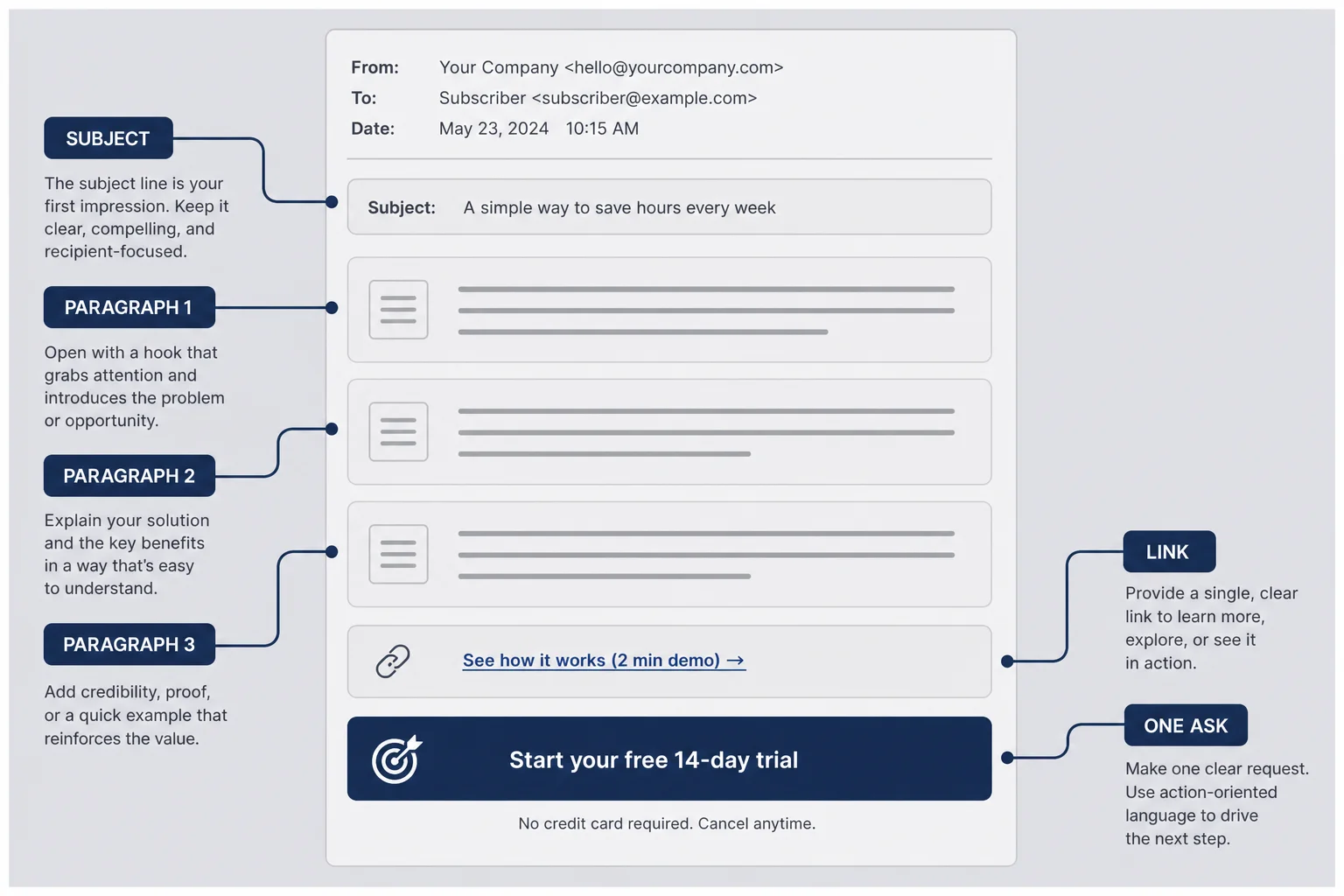
Email is unfashionable in launch threads. It's also how I got most of my first customers across multiple products. Not newsletters. Not drip campaigns on day one. Plain emails from a person who built a thing to a person who asked to hear about it.
The note that gets replies
Subject line: short and specific. "Your waitlist thing is ready" beats "Exciting Product Launch Announcement." They should know why you're emailing in five words.
Body: three paragraphs max for the first note. Remind them how you know each other. One sentence on what the product does in outcome language, not feature language. Link. Ask for one thing: try it, reply with questions, or tell you honestly if it's not for them.
No HTML template. No giant header image. No "unsubscribe" footer vibe on a list of twelve people. Write it like you'd write to a colleague.
Follow up once after four or five days if they didn't open it. "Bumping this in case it got buried. No worries if timing's wrong." Then stop. Pestering strangers who opted in is still pestering.
For people who try but don't pay, a different note. "Saw you signed up. Where did you get stuck?" That question teaches you more than any analytics dashboard in week one.
What to send after someone pays
Thank them simply. Not a corporate onboarding sequence yet. Tell them how to reach you directly. Ask what they were hoping the product would do for them, in their words. Save those phrases for your landing page later.
First paying customers are gold for language. They describe the problem without your jargon. Copy their sentences (with permission if you publish them). The best headline I ever used came from a customer's reply email, not from my brain.
Don't upsell them on day one. Don't ask for a testimonial before they've gotten value. Don't add them to a marketing list they didn't expect. Protect the trust.
Batch your personal emails if you must, but send in small groups with slight customization. "Hey Sarah" with one line referencing how you met beats mail merge that gets the name wrong half the time. I've seen founders ruin warm lists with automation that felt robotic. The whole point of warm launch is that it's not automated.
Pick one community and show up every week
Most solo founders spread too thin. Reddit plus Twitter plus LinkedIn plus Discord plus Indie Hackers plus a forum they joined once. They post links, get ignored, and conclude marketing doesn't work.
Marketing didn't fail. Dilution did.
Pick one place where your buyers already talk about the problem. Not where founders talk about building. Where buyers complain, ask for recommendations, share workflows. Subreddit for their trade. Facebook group for their industry. Slack community with a paid gate. Forum that's been active for years.
Show up every week for ninety days before you judge it. Answer questions. Share what you've learned. Mention your product when it's genuinely relevant, not when you're itching to promote.
How to mention your product without becoming spam
The test I use: would this reply help someone if my product didn't exist? If yes, write the reply. If the product fits as one option among several, mention it plainly. "I built something that does X because I had this problem. Happy to share link if useful." No hype. No "check out my startup."
Comment history matters. If your last twenty posts are link drops, nobody cares. If your last twenty posts are useful and one mentions your tool, people click.
Say you're selling that competitor price monitor for Shopify stores again. The buyer isn't on Indie Hackers comparing MRR screenshots. They're in e-commerce operator forums complaining about manual checks and bad repricing decisions. Show up there. Answer pricing strategy questions. Share a spreadsheet template if you have one. After a month, when someone asks "is there a tool for this," your name comes up because you were useful, not because you hijacked a thread.
Track one metric for the community channel: meaningful conversations per week. Not karma. Not likes. Conversations where someone describes a problem you solve. If that number stays zero after a month of genuine participation, you might be in the wrong room. Try one other place before you conclude that communities don't work for you.
Some communities allow show-and-tell threads on specific days. Use those rules. Mods remember founders who spam. They also remember founders who contribute.
This is slow. It's also how trust forms. Trust converts better than novelty for B2B micro-SaaS where the buyer is skeptical and the price requires a credit card.
Product Hunt and Hacker News without betting the farm
I'm not anti-Product Hunt. I'm anti-treating it as destiny.
PH and HN can give you a useful bump: feedback, backlinks, a day of traffic, a story to tell. They rarely replace warm outreach for first customers. The audience skews toward tech curiosity. Your buyer might be a shop owner who never heard of Product Hunt.
Still worth doing once, if you're prepared.
What to prepare before you post
Have onboarding that survived warm users. Have a landing page that explains the outcome in one screen. Have pricing visible. Have a way to capture emails from people who aren't ready yet. Have your warm list ready to upvote or comment authentically, not as a fake brigade, as people who actually know the product.
Prepare a maker comment that's honest. What problem, who it's for, what's rough, what you're fixing next. People reward honesty more than polish on these platforms.
Choose timing that's not a holiday weekend. Tuesday through Thursday is conventional wisdom for PH. For HN, early morning US time gets more eyeballs. None of this matters as much as whether the product is ready.
Don't offer a huge launch discount unless you mean it long term. Fifty percent off forever trains bad customers and makes later pricing painful.
How to read a quiet launch day
If PH sends traffic and nobody converts, check fit before you check fate. Wrong audience. Unclear page. Broken signup on mobile. Missing trust signal. Fix those.
If HN comments are harsh, read for signal. "This already exists" might mean your differentiation isn't visible. "I don't get the use case" might mean your headline is too clever. Defend calmly or say thanks and iterate. Arguing on HN is rarely worth your afternoon.
One quiet launch day is normal. I've had PH launches that produced one customer and launches that produced zero and warm email that produced five. The channel matters less than readiness and fit.
Treat public platforms as one input in week one, then go back to the community and the email list where your buyers actually live.
Make a simple doc before you post: link, one-sentence pitch, known rough edges, support email, pricing URL. When traffic hits, you won't have time to hunt for links. Reply to comments the same day if you can. Responsiveness on launch day matters more than perfect grammar.
If you get featured and signup breaks, fix it before you celebrate. Nothing worse than driving a thousand visitors to a 500 error except driving them to a signup flow that doesn't explain what happens next.
Write the article your buyers are already searching for
SEO is a slow launch, but it's the one that compounds while you sleep. Not "write fifty AI posts." One genuinely useful article that answers a question your ideal customer types into Google.
You already know the question if you did validation. It's the problem they described in interviews. It's the workaround they Google at 11 p.m. Write that article on your site. Make it helpful without requiring signup. Link to the product naturally where it fits.
Programmatic SEO and content farms are tempting in 2026 because AI makes words cheap. Cheap words don't rank and don't convert. One article you've lived, with specifics and examples, beats thirty generic listicles.
Internal links matter. Connect the article to your other posts if relevant. Connect to Indie Hacking topics you actually know. Build a small cluster around the problem you solve.
This won't pay off in week one. It might pay off in month four when someone searches, reads, and signs up without you being in the room. That's the slope again.
If you hate writing, record a short Loom solving the problem manually and transcribe it into a post. Ugly and useful beats polished and empty.
Pick one keyword phrase your buyers actually use, not the phrase you'd put on a pitch deck. "Shopify competitor price tracking" beats "AI-powered retail intelligence." Check whether existing answers are weak. Thin forum threads and outdated blog posts from 2019 are invitations, not reasons to stay away. Your article should answer the question completely enough that someone trusts you before they trust your product.
Link from that article to your signup page once, naturally, where the tool is the obvious next step. Don't trap the reader in a funnel on a post that's supposed to help. Help first. The signup link is for people who were already looking for a tool.
Update the article when the product changes materially. Stale SEO pages that describe v1 when you're on v3 hurt trust. One living article maintained quarterly beats five abandoned ones.
Build in public if it fits you
Build in public works when your audience includes buyers, not only other founders. If you sell developer tools to developers, sharing progress on X can attract customers. If you sell compliance software to clinic administrators, those administrators might not follow your GitHub commits.
When it fits, share real progress. Revenue milestones if you're comfortable. Mistakes you fixed. Decisions you reversed. People trust founders who sound like humans.
When it doesn't fit, skip it. Nobody says you must perform startup theater on social media. Plenty of profitable micro-SaaS products grow through forums, email, and SEO without a single viral thread.
When I'd skip it entirely
Skip build in public if it makes you ship performatively, building features that photograph well instead of features customers need. Skip it if you're in a space where buyers don't hang out on Twitter. Skip it if you're exhausted and posting would burn you out. Launch has enough chores without becoming a content creator you never wanted to be.
There's also a privacy angle. If your niche is small and your customers don't want their vendor tweeting daily drama, be discreet. Boring and reliable wins trust in some industries more than charismatic and visible.
Do what matches your temperament and your buyer's watering holes. Launch is not a personality test you have to ace on X.
If you do build in public, share specifics. "Shipped billing" is boring. "Spent six hours fixing webhooks because Stripe test mode lied to me" is human and attracts the right kind of attention from people who've been there. Specificity signals you're a builder, not a marketer performing builder cosplay.
What to do when launch week feels like a flop
You posted. You emailed. Silence. Or worse, traffic with no payments. First instinct: rewrite everything. Second instinct: quit. Both are usually wrong.
Start with diagnostics. Did warm emails actually send? Check spam folders. Did people open them? If opens are fine but nobody clicked, the offer or link is wrong. If nobody opened, subject line or list quality is wrong.
Did anyone start signup and stop? That's onboarding or positioning. Talk to them if you can.
Did people say "too expensive"? Maybe. Or maybe they didn't see the value yet. Price objections often mean unclear outcomes, not a broken price point.
Compare this launch to your validation signals. If strangers paid deposits before you built and nobody will pay now, something broke between promise and product. If validation was always soft, launch didn't fail, the earlier evidence did. Be honest about which story you're in before you rewrite code for a distribution problem or rewrite marketing for a product problem.
Give it two weeks of consistent outreach before you declare failure. Not two weeks of refreshing analytics. Two weeks of emails, community replies, and fixes based on feedback.
Pivot the message before you pivot the product. Try a different headline. Try a different community. Try interviewing three more potential buyers about how they describe the problem.
Quitting is valid if validation was always weak and launch confirmed it. Quitting because day three was quiet is usually premature. Most products I thought flopped were distribution problems, not product problems, and distribution problems are fixable with less shame than rebuilding from scratch.
The first thirty days after you launch a micro-SaaS
Treat the first thirty days as a launch month, not a victory lap. Same product, same price, repeated outreach.
Week one: warm list, fix onboarding fires, one community post that's helpful not salesy. Week two: follow up with trial users who didn't convert, publish or update one piece of content, consider PH or HN if warm users aren't hitting blockers. Week three: ask paying customers what almost stopped them from buying. Use their words somewhere visible. Week four: review what channel produced real conversations. Double down on that one. Stop doing the channel that only produced anxiety.
Here's what that looked like on one product, numbers rounded because it's a composite. Week one: twelve personal emails, four replies, two trials, one payment. Week two: six follow-ups, one blog post updated, zero PH traffic. Week three: talked to the one payer for forty minutes, rewrote the headline, two more payments from the original email list. Week four: stopped posting on X entirely, spent the time in one subreddit, one more payment and three useful feature requests. Not glamorous. Total after thirty days: four paying customers. Enough to learn. Enough to keep going.
Track simple numbers weekly: emails sent to warm leads, replies received, trials started, payments, support tickets per customer. Ignore vanity metrics unless they correlate with one of those.
Split time roughly half building fixes, half distribution. Founders who only build after launch wonder why nobody shows up. Founders who only post without fixing onboarding wonder why nobody stays. You need both.
By day thirty, you want a small set of paying customers or clear evidence the offer is wrong. Ten paying strangers is a strong signal. Three paying strangers plus good feedback is enough to keep going. Zero payments and zero engagement from warm leads is a signal to revisit validation, not always to burn the product, but to ask hard questions.
Questions I get about launching a micro-SaaS
When should I launch my micro-SaaS?
Launch when a stranger can sign up, pay, and get value without you hand-holding every step. That usually means working auth, billing, onboarding, and the core workflow. It does not mean every feature on your roadmap. If ten people from validation said they'd pay, and checkout works, you're ready for a warm launch to that list before you post anywhere public.
How do I get my first paying customers?
Start with people who already raised their hand during validation: waitlist emails, interview contacts, pre-sale buyers. Email them personally, not from a marketing platform with a logo header. Then show up weekly in one community where those people already gather. Answer questions, be useful, mention your tool only when it genuinely fits. Most first customers come from direct outreach and niche communities, not viral launch days.
Is Product Hunt worth it for a solo founder?
Worth doing once for feedback, backlinks, and a spike of curious visitors. Not worth treating as your whole launch strategy. Many solo products see traffic that doesn't convert because Product Hunt audiences browse, they don't always buy. Prepare your onboarding, have a clear offer, and email your warm list the same day. Then move on to channels that compound.
Should I do a big launch or a quiet launch?
Quiet first, louder later. A warm launch to people who know the problem beats a public splash to strangers. Fix onboarding issues with ten friendly users before you invite a thousand curious ones. Once payment and support workflows survive real use, add Product Hunt, Hacker News, or a community post. Big launches amplify what's already working or what's already broken.
How long does it take to get first customers after launch?
If you did validation properly, first paying customers often arrive within one to two weeks of warm outreach. If you skipped validation and launch publicly to cold traffic, expect weeks of silence. Solo founders who treat launch as a thirty-day habit of showing up in one place outperform founders who post once and refresh Stripe hourly.
What if nobody signs up on launch day?
That's normal. Launch day spikes are rare for unknown solo products. Check whether anyone from your warm list got the email, whether checkout works, and whether the offer is clear to someone who didn't build the product. Then return to direct outreach and one community. Launch is a process. One quiet Tuesday doesn't mean the product is dead.
Keep launching long after the code is done
My March launch with one real paying customer wasn't a failure. It was a start. That customer told me where the product was confusing. The next ten came from emails and a forum I kept showing up in, not from a hero moment on launch day.
How to launch a micro-SaaS as a solo founder is mostly about accepting that nobody is waiting, then doing the unglamorous work anyway. Warm outreach before public posts. One community done properly. Email like a person. Public platforms once, not as religion. Content and trust on a slope measured in weeks.
You already did the hard part of building in 2026. Distribution is still human. That's annoying and also kind of fair, because the founders who keep showing up after a quiet Tuesday are the ones who end up with the customers everyone else wondered how they got.
Keep launching. Fix what breaks. Talk to people who have the problem. The spike is optional. The slope is the business.




Comments