Eight Seconds to Convince a Stranger
How to build a micro-SaaS landing page that converts when you are the only marketer: headlines, structure, pricing visibility, and honest tests at solo-founder traffic levels.
 By Reese25 min read
Listen to this article
23:47AI-generated podcast-style overview of this article (not a word-for-word narration).
A founder emailed me last month with a screenshot I have seen a hundred times. Plausible dashboard open. Forty-seven visitors in seven days. Zero signups. He had spent two weeks on cold outreach, rewrote his subject lines twice, and was ready to blame the channel. I opened the link he was sending people to. The headline said "Next-generation workflow intelligence for modern teams." I asked him what the product actually did. He said it exported Shopify orders to a Google Sheet with the right columns. Those two descriptions do not live in the same universe.
That is what a broken micro-SaaS landing page for solo founders looks like in one frame. Traffic showed up. The page did not close. Not because strangers hate small software. Because the page was written for the founder's pride, not the visitor's Tuesday morning problem.
I have been on the marketing side of small B2B SaaS since 2014. I have rewritten more heroes than I can count. The failures rhyme. Feature-first language. Hidden pricing. Homepages pretending to be landing pages. Founders who optimize email subject lines while the destination URL confuses the people who actually click. The good news is that landing page conversion is not about secret formulas. It is about saying what you do in words your buyer already uses, then getting out of the way.
I am not a developer. I do not open Figma for fun. I have spent more time fixing landing pages for indie founders than I care to admit, usually at 11 p.m. on a Wednesday when someone's Product Hunt spike produced curious clicks and nothing else. This guide is for the solo founder who finally has something to send people to and needs that page to convert without hiring a copywriter, an agency, or a growth team that does not exist.
This is Part 6 of Micro-SaaS From Zero. If you have not validated demand at all, start with how to validate a micro-SaaS idea and get a fake door page right before you polish a full product page. If you are still shaping how you charge, read micro-SaaS pricing for solo founders in parallel. This post assumes you have something real to sell and strangers are starting to arrive from outreach, communities, or search. When you are ready to email those strangers directly, micro-SaaS cold email for first customers picks up where the page leaves off. Max covers the build. Imani covers shipping without code. I cover the page that decides whether any of that work turns into revenue.
Micro-SaaS landing page for solo founders when traffic finally shows up
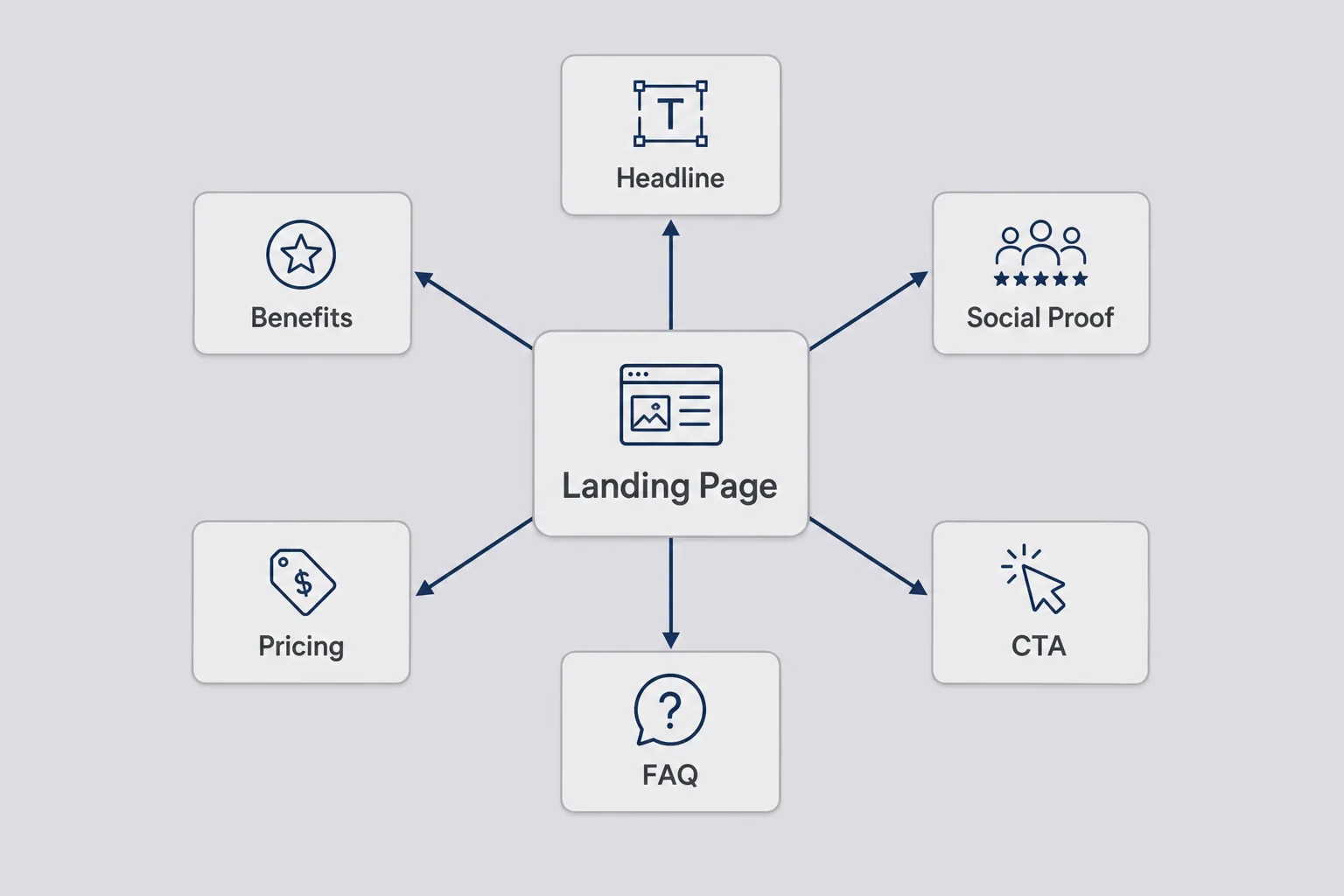
Getting traffic and getting signups are different skills. Solo founders often conflate them because both feel like marketing. They are not the same problem. Traffic is distribution: email, forums, SEO, a mention in a newsletter. Conversion is translation: turning a skeptical visitor into someone who believes you can solve a specific problem well enough to try or pay.
A micro-SaaS landing page for solo founders has one job. Remove doubt fast enough that the right person takes the next step. Not educate the industry. Not showcase every feature you shipped at 2 a.m. Not tell your founding story above the fold unless the story is the proof. One job.
Most early pages fail before design enters the chat. The founder knows the product intimately. The visitor does not. Every internal name, every acronym, every "we built X so you can Y" that made sense in your head lands as noise on a screen they will leave in eight seconds. I have watched technically solid products die with beautiful Webflow pages because the headline sounded like a press release.
At solo-founder scale you do not get statistically significant A/B tests. You get twenty visitors and a gut feeling that something is off. That is enough if you know what to look at. This post is the structure I use before I touch fonts, the copy patterns that survive cold traffic, and the honest diagnostics that work when your sample size would make a growth manager laugh.
I am not going to give you a universal template with seven mandatory sections and a countdown timer. Some products need a short page because the offer is obvious. Some need more proof because the buyer is skeptical or the price is high enough to trigger hesitation. What follows is the sequence I think through, not a drag-and-drop theme you fill with adjectives.
The diagram is intentionally boring. Boring is good. Founders want to skip straight to ads or more outreach when the middle box leaks. More volume into a confused page is how you burn domains, morale, and the one afternoon a week you actually have for marketing.
If you already read marketing for solo founders, you know I care about one channel done consistently. The landing page is where that channel pays rent. Community posts get attention. Email gets replies. Search gets clicks. The page converts attention into action or wastes it. There is no third outcome.
Why your page explains features to people who want outcomes
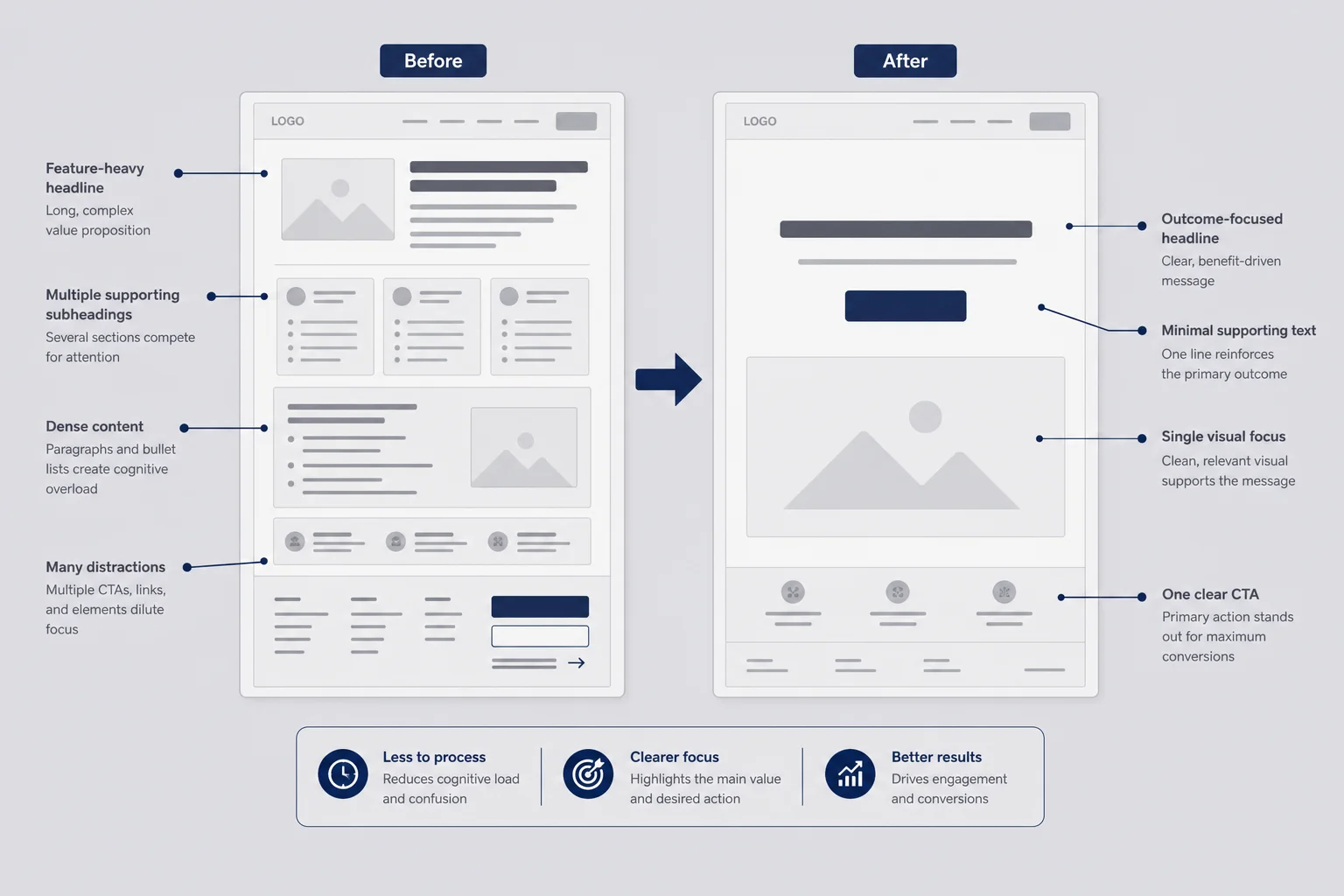
Developers build features. Visitors buy outcomes. That gap shows up on almost every first draft I review.
The pattern is predictable. You shipped something clever. You are proud of the architecture, the integration, the edge case you handled. So the headline becomes "Automated multi-channel sync with real-time webhooks and custom field mapping." A bookkeeper landing from a cold email reads that and thinks this is not for me. They leave. You add "AI-powered" and wonder why conversion dropped.
Outcomes are what changes in the customer's week after they pay. Fewer manual exports. Invoices sent before the 15th. Client reports that do not take all Sunday. The feature list is how you deliver the outcome. It is not the headline.
I once sat on a Zoom call with a founder who had rewritten his hero section eleven times. Every version led with a different feature. I asked him to describe the last customer who paid without using product vocabulary. He said she was tired of copying Shopify refunds into a spreadsheet every Monday. We put "Stop copying Shopify refunds into spreadsheets" on the page. Signups moved the following week. Not because we found magic words. Because we finally described her Tuesday.
This is where AI drafts hurt if you skip thinking first. ChatGPT will happily produce empty workflow jargon all afternoon. "Streamline your workflow." "Unlock productivity." Those phrases could describe four hundred products. AI is useful for variants once you know the outcome. It is dangerous as a substitute for knowing who pays and why.
Take a position on who the page is for. "Built for solo Shopify sellers doing their own books, not enterprise finance teams" filters hard. Filtering is good. A visitor who realizes this is not for them in three seconds is a gift. They did not waste your support time. The visitor who stays should feel seen.
Say you sell a lightweight tool that tags support emails for small agencies. Bad hero: "AI-powered inbox intelligence platform." Better hero: "See which client emails need a reply today without digging through three inboxes." The second version names the outcome and the pain. Features like auto-tagging and Slack alerts belong one scroll down, tied to results: "Morning digest shows overdue threads" beats "machine learning classification engine."
If you built without coding, the page still has to speak human. Imani covers the ship path in that guide. This post covers what strangers need to understand once the product is live.
One more trap worth naming: the comparison table that lists you versus "manual work" and wins every row. Sometimes that is fair. Sometimes it reads like a straw man. If your competitor is a spreadsheet, describe the spreadsheet pain honestly. Real people choose spreadsheets because they are flexible, not because they love data entry. Acknowledge the trade-off. "You lose custom formulas, you gain automatic columns" builds more trust than pretending Excel never existed.
The eight-second test I run before I touch the design
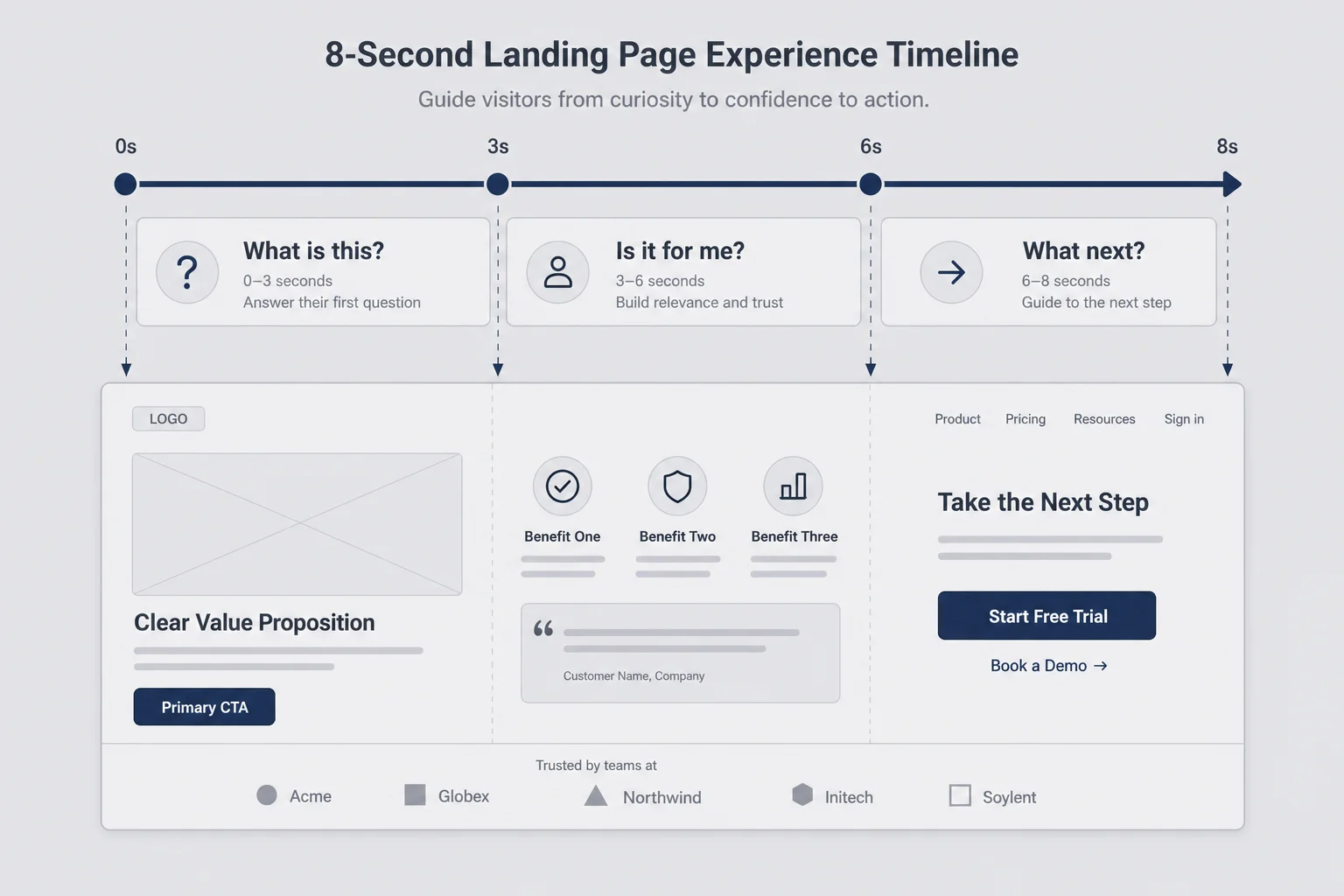
I borrowed this from my own cold email post because it deserves its own article. When someone clicks your link, skeptical and busy, you get about eight seconds. Maybe twelve if your email was sharp. In that window they decide whether to scroll, bounce, or hunt for pricing.
I do not mean eight seconds of animated hero video. I mean eight seconds of reading while multitasking. Phone on the couch. Laptop between meetings. They are not studying you. They are triaging you.
What strangers decide before they scroll
First impression is not visual polish. It is comprehension plus relevance. Can I tell what this is? Is it for someone like me? Do I know what to do next? If any answer is no, design will not save you. A gorgeous page with a vague headline still loses.
I run a literal timer sometimes. Open the page fresh. Start countdown. At eight seconds, cover everything below the hero. Can you still state what the product does, who it is for, and the primary action? If not, the hero failed. Fix copy before you fix spacing.
Founders hate this test because it exposes positioning holes. The page is not the only place those holes live. It is the cheapest place to find them. Customer interviews are better but slower. An eight-second fail is free feedback from every bounce.
The three questions every hero must answer
What is this? One plain sentence. No jargon nest. If your mom's friend who runs a bakery cannot paraphrase it, rewrite.
Is it for me? The subheadline qualifies. Role, situation, or constraint. "For freelance designers invoicing US clients" beats "for creative professionals." Specificity signals you understand the buyer's world.
What do I do next? One primary button. Not five equal choices. Not "learn more" floating next to "book demo" next to "view docs." Pick the action you actually want from cold traffic. Usually start trial, see pricing, or sign up. Repeat that button later. Do not invent new verbs every section.
I see founders hide the CTA because they think asking too early feels pushy. Strangers are not offended by a clear next step. They are offended by hunting for one. Ambiguity feels like a trap. Clarity feels like respect for their time.
The friend test
Read your hero to someone who does not know your product. Ask two questions: what does this do, and who is it for? If they hesitate, your eight-second test already failed.
Warm traffic and cold traffic need different pages
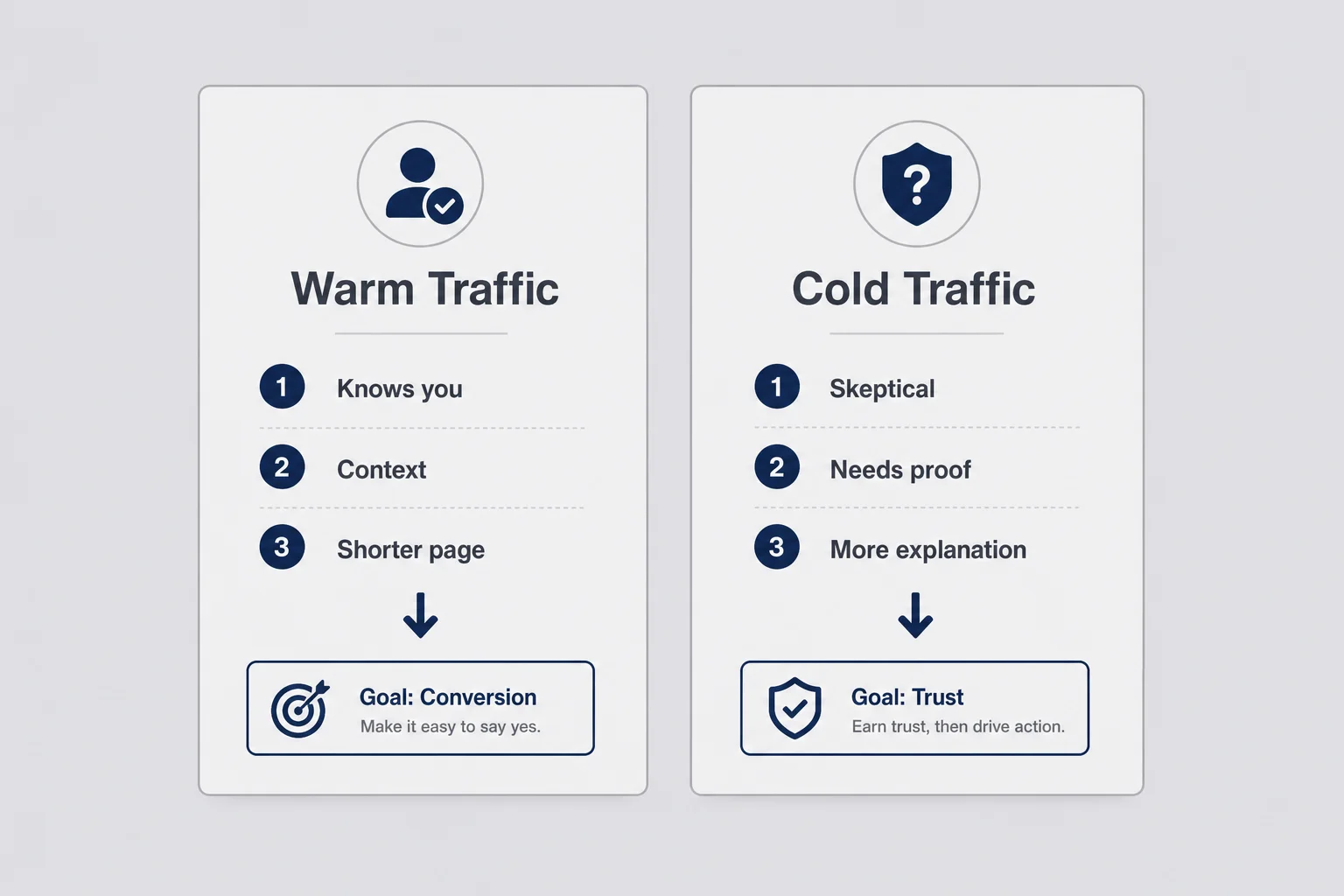
Not all visitors arrive with the same context. Warm traffic knows you, the problem, or both. Cold traffic knows neither. Sending both groups to the same page without thinking about temperature is a common solo-founder mistake.
Warm traffic includes validation contacts, waitlist signups, people you emailed personally, community members who saw you show up for weeks. They forgive rough edges. They might read two paragraphs because they trust your name or remember the problem thread you commented on.
Cold traffic includes outreach clicks, paid ads, search visitors who never heard of you, Product Hunt browsers. They owe you nothing. They will not read your manifesto. They need faster proof and tighter focus.
| Traffic type | Typical source | What the page must do | Common mistake |
|---|---|---|---|
| Warm | Validation list, personal email, community | Confirm they are in the right place; reduce friction to signup | Over-explaining the problem they already feel |
| Cold | Outreach link, SEO, ads, launch spike | Explain outcome, qualify audience, show price, earn trust fast | Homepage with blog, docs, and three products |
When to send people to the homepage
Your homepage is a lobby. It introduces the brand, links to the blog, maybe lists two products you are experimenting with. Lobbies are fine for people who already want to wander. Cold strangers need a room with one door.
Send warm contacts to a focused page too if your homepage is busy. But warm contacts might tolerate a homepage if your name is the hook. Cold contacts will not.
If you only have one URL, make it a landing page, not a homepage. Strip navigation if you must. One offer. One price. One CTA. You can add a proper homepage when you have more than one product or a content strategy that earns its keep.
The one-offer page for outreach and ads
When I send cold email, I link to a page that mirrors the email language. If the email mentioned month-end reconciliation, the headline says month-end reconciliation. Continuity matters. Clicking through and seeing a different vocabulary feels like a bait and switch even when it is the same product.
For paid tests at small budget, same rule. Match ad copy to landing headline. Tight match beats clever mismatch every time at low spend. You are not optimizing for creative awards. You are optimizing for comprehension in one session.
How to launch a micro-SaaS covers warm launch sequencing. This section is the page those launches should point to once strangers enter the picture.
I keep a simple rule in my notebook: temperature of traffic dictates length of proof, not length of page. Warm traffic needs less problem agitation and more friction removal. Cold traffic needs more qualifying language and earlier pricing. Both need clarity. Neither needs your life story above the fold.
Hero section: headline, subheadline, one button
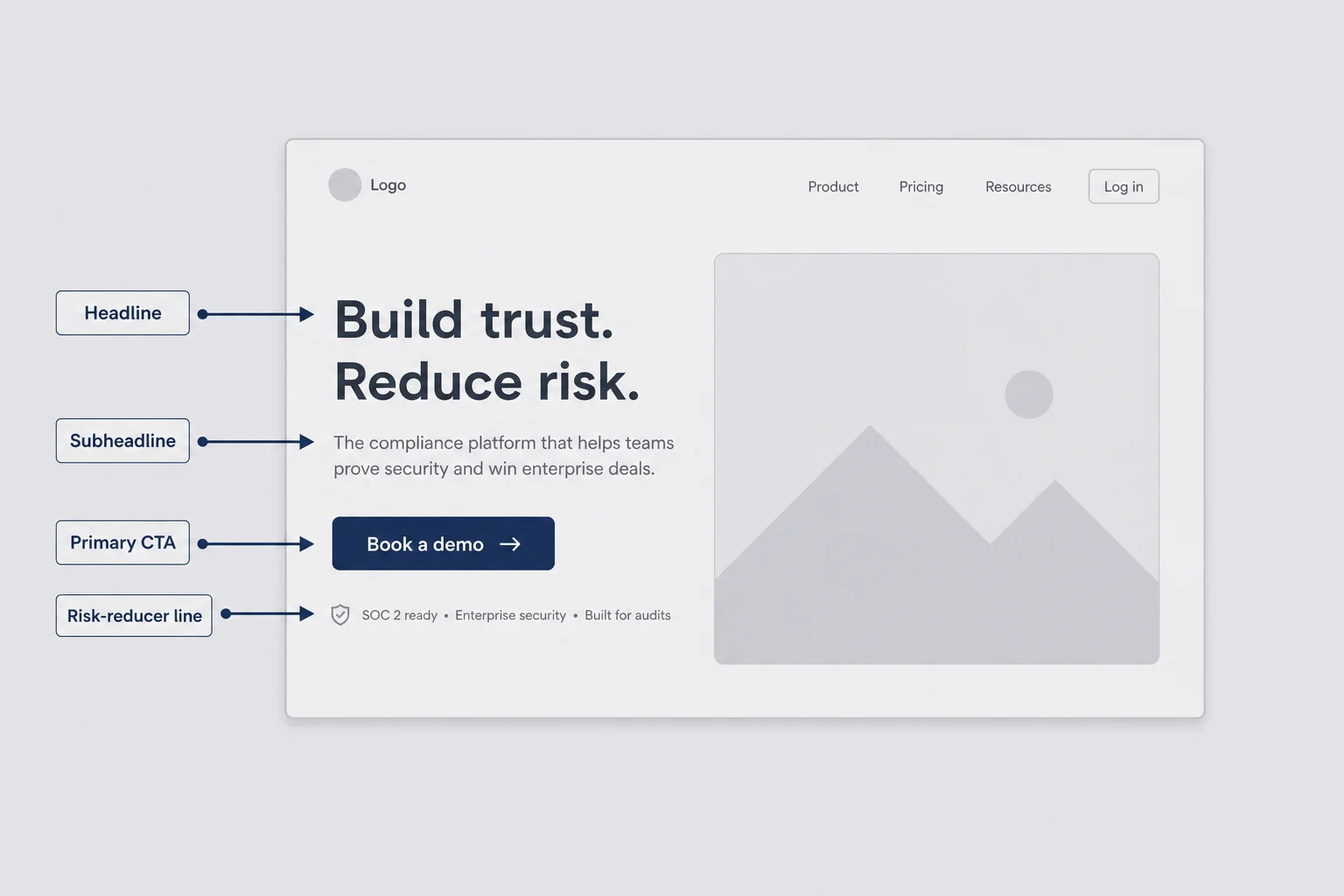
The hero is not a banner. It is a contract. You promise a specific outcome. You qualify who it is for. You ask for one next step. Everything else on the page supports that contract.
I build heroes in Framer or Webflow when I want speed without begging a developer for CSS tweaks. The tool matters less than the words. Still, solo founders should pick something they can edit at midnight. If changing a headline requires a deploy, you will change it less often. Less iteration means slower learning.
Outcome headlines without the feature dump
Useful pattern: get [outcome] without [painful trade-off]. Send professional invoices in minutes without learning accounting software. Export Shopify orders to the right spreadsheet columns without manual copy-paste every Monday.
Write five to ten versions. Read them aloud. If you run out of breath, shorten. If you need a glossary, simplify.
Avoid stacking adjectives. "Fast, easy, powerful, AI-driven" tells the visitor nothing. One concrete outcome beats four vague compliments.
Name the enemy if it helps. Not a competitor logo war. The manual process. The spreadsheet. The Sunday night report. Specific enemies make the outcome tangible.
Subheadlines that filter the wrong visitors
The subheadline qualifies. Built for solo Shopify sellers doing their own books, not enterprise finance teams. For agencies under ten people who live in Gmail, not support platforms with fifty-seat minimums.
Good filtering feels exclusive on purpose. Bad filtering is vague inclusivity that tries to keep everyone. Everyone is not your customer. Your customer is someone you can name.
Under the button, add a risk reducer when true: No credit card for fourteen days. Cancel anytime. Setup in under ten minutes. One honest line beats three fake urgency banners.
Place the primary CTA at least twice before the footer. Hero and right after the solution or benefits block. Same label both times. Changing the verb confuses tired readers.
The problem section without writing a novel
After the hero, a short problem section earns the right to present your product. Not a ten-paragraph essay about industry trends. Three to five sentences that describe the pain in the customer's words.
Pull phrases from interviews, support emails, Reddit threads, sales calls. If three prospects called it month-end reconciliation chaos, that phrase goes on the page. Mirroring language beats original poetry.
Agitate lightly. Show you understand what the manual workaround costs. Sunday nights. Double entry. The email you forgot to answer because it drowned in noise. Do not manipulate. Describe.
Then stop. Founders turn problem sections into blog posts because writing pain feels easier than proving solution. Visitors do not need your manifesto. They need recognition followed by relief.
Transition with one sentence. There is a simpler way. Or you should not need a spreadsheet for this. Then show the product outcome, not the feature grid yet.
If you lack interview data, you are not ready to optimize conversion. You are ready to validate. Go talk to five strangers. The problem section writes itself after that.
Length check: if your problem section is longer than your benefits section, you are stalling. Visitors already clicked. They have some intent or curiosity. Give them recognition, then move to how your product changes the week. Three short paragraphs maximum for most micro-SaaS offers under fifty dollars a month.
Social proof when you have no Fortune 500 logos
Empty proof sections scream early. Worse is fake proof. Made-up testimonials, logo bars from companies that never used you, inflated user counts. Strangers smell it. Trust dies faster than it builds.
What works at micro-SaaS scale:
A quote from a beta user with first name, role, and specific result. "Cut my Monday export from forty minutes to four" beats "Great tool, love it."
Your own story if you built for yourself first. I built this because I was tired of X. Honest, not heroic.
Usage detail that is modest but true. Used weekly by twelve Shopify sellers. Not "trusted by thousands" when you mean twelve.
Screenshot or short loom of the product doing the thing. Showing beats claiming when you lack logos.
Before-and-after of the workflow, not the UI chrome. Spreadsheet mess versus clean export. Inbox chaos versus tagged digest.
If you have zero customers, say what stage you are in. Early access for sellers tired of manual exports. Join five beta users shaping the export columns. Transparency converts better than fabricated social proof.
Product Hunt upvotes are not social proof of value. They are social proof of curiosity. Do not confuse the two on your page.
Placement matters as much as content. Proof directly under the hero can work when you have one killer quote. Proof after benefits works when the quote references a specific outcome you just described. Proof only in the footer might as well not exist. Nobody reads footers on first visit.
When you get your first three paying customers, email them personally and ask what almost stopped them from signing up. Their answer is often your best proof line, paraphrased with permission. "I almost did not buy because I thought it would not work with my messy CSV exports" turned into copy that converted the next ten visitors who had the same fear.
If you are pre-revenue, borrow specificity from validation interviews instead of inventing praise. "Three bookkeepers in my beta group said the export columns finally match their month-end template" is awkward but believable. "Loved by thousands" is not. Specificity signals you are talking to a real niche, not the entire internet.
Pricing on the page and the line under the button
Cold visitors hesitate at pricing more than anywhere else. They are not always unwilling to pay. They are unsure the product is worth it for them. Hidden pricing feels like a trap. Visible pricing filters mismatches early.
For most solo-founder micro-SaaS, show the number. $29 per month. $49 per month. Annual option if you offer it. What is included in one glance. Link to micro-SaaS pricing for solo founders for strategy. This section is about placement and copy on the page itself.
Put pricing where a ready buyer expects it. After benefits and proof, before FAQ. Repeat the primary CTA near pricing. Someone convinced at the price block should not scroll back to the hero hunting a button.
The line under the button matters more than founders think. No credit card required. Cancel anytime. One flat plan, no per-seat math. That single line can change click behavior on small samples. It costs nothing to test in words.
If you only have one plan, say so. One plan, $39 per month, everything included. Simplicity is a feature at micro-SaaS scale. Three tiers with enterprise "contact us" on a product with eleven users is comedy, not positioning.
Grandfathering and future price rises belong in FAQ, not hero. Do not clutter the first screen with policy. Do answer what early buyers ask once they are interested.
What to cut before you send someone a link
Every element on a landing page should earn its pixels. Solo founders add clutter because silence feels scary. It is not.
Cut or minimize:
Top navigation with blog, about, docs, changelog, and careers. One footer link to docs is enough for early stage. Navigation is an exit ramp.
Multiple equal CTAs competing for attention. Pick one primary action.
Feature grids with twelve bullets nobody reads. Three outcome blocks beat twelve adjectives.
Stock illustrations that add vibe but zero information. If you use visuals, show the product or the workflow.
Auto-playing video with no captions. Many visitors are in open offices or on mute.
Chat widgets that pop up before comprehension. Interruption before clarity feels desperate.
Founding story above the fold. Save story for about page or email nurture.
Blog roll on a conversion page. Send readers to articles on purpose, not by accident.
Fake urgency countdown timers. Solo founders do not need dark patterns. They need trust.
Before you share a link in outreach or communities, open the page on your phone. Slow load, crooked padding, and broken mobile hero are silent killers. Speed is part of copy. A page that loads in four seconds on LTE beats a prettier page that loads in nine.
I also cut duplicate CTAs that say different things. "Start free trial" in the hero and "Get started" in the pricing block sounds like two products. Pick one phrase and repeat it until it feels boring to you. Boring to you is clear to them.
Diagnose a landing page with twenty visitors, not two thousand
You do not have enough traffic for rigorous A/B tests. You do have enough to learn if you treat small samples as directional, not definitive.
Twenty visitors with zero signups is a red flag. Twenty with two signups might be fine for cold B2B. Context matters. Traffic source matters. One percent cold and fifteen percent warm email are both believable in the same week.
Sequential tests instead of A/B theater
Change one thing at a time. Headline first. Then subheadline. Then price visibility. Then CTA label. Then proof block order. Document what you changed and when. A notebook is fine. Notion is fine. Sticky notes on your monitor are fine.
Wait for enough new visitors to matter. At twenty visitors per week, one headline test per week is reasonable. Do not change headline and pricing and button color on the same Tuesday because you got nervous.
Ask five people in your target audience to screen-share while they open the page cold. Do not talk. Watch where they pause, scroll back, or frown. Five sessions beat five hundred page views without observation.
What Plausible or GA actually tells you at small scale
I prefer Plausible for solo projects because I actually look at it. Google Analytics works if you will use it. Dashboard tourism is useless.
Watch landing page bounce on the URL you send to strangers. High bounce with short time on page usually means hero failure. Time on page with no signup might mean pricing shock or confusing CTA.
Set up a simple funnel if your tool allows: landing view, signup start, signup complete, payment. See where drop-off clusters. Drop at signup start often means CTA or form friction. Drop after signup before payment means onboarding or trial experience, which drifts into Max's churn and retention territory.
Record outreach source in a spreadsheet even if analytics cannot. Email campaign A sent twenty clicks, two signups. Community post sent forty clicks, zero signups. Same page, different message-market fit. That is diagnostic gold.
Do not optimize button color before you fix headline clarity. I have seen founders A/B test green versus blue while the hero still said nothing. The button was never the problem.
When signups happen but payment does not, stop tweaking the landing page. The leak moved downstream. Onboarding, trial experience, or price-to-value mismatch live in the product. I send founders to Max's retention writing when the page works and the trial does not. Knowing which problem you have saves weeks of rewriting headlines that were already fine.
One more habit: screenshot your page when you change the headline. Date it. When you get a signup, note which version was live. At low traffic you will not have statistical confidence. You will have a paper trail so you do not repeat the same rewrite loop every month.
Ship and rewrite in Framer without a designer
You do not need a design degree. You need a page you can edit without filing a ticket.
Framer and Webflow are where I land most often for solo-founder landing pages. Framer when I want speed and decent defaults. Webflow when I want finer control and do not mind a steeper afternoon learning the boxes. Both beat waiting on a developer to change a headline before a launch window closes.
Start ugly and literal. Gray boxes, clear labels, real copy. Pretty gradients do not fix vague outcomes. Ship text first. Layer visual polish after strangers understand the offer.
Use one column on mobile without thinking. Most outreach clicks are phones sooner than you expect. If you cannot read the hero on a phone arm's length, neither can they.
Keep components reusable. Hero, three benefit blocks, proof strip, pricing card, FAQ accordion, footer. When a test wins, swap copy inside the pattern instead of redesigning the whole page.
If your product itself is no-code or AI-built, the landing page can be too. Imani ships product without production code. You can ship a page the same way. Just do not let tool speed skip positioning. Fast pages that say nothing convert at the speed of nothing.
When you need a developer touch for embeds or custom domains, ask for the smallest help. One afternoon from Max's world, not a redesign project. The page's job is words and structure. Treat engineering help as plumbing, not authorship.
Rewrite weekly when you are actively sending traffic. Stale pages that describe v1 while you ship v3 hurt trust. A living page beats a perfect frozen one.
Copy the structure from one page that works in your niche, not the words. Look at how a competitor qualifies audience in the subheadline. Look at where they place pricing. Steal architecture, not sentences. Your buyer will notice pasted copy. They will not notice a proven layout used with your own specifics.
Questions I get about micro-SaaS landing pages
How long should a micro-SaaS landing page be?
Long enough to answer every question a skeptical stranger has, and no longer. For a $29 to $49 per month B2B tool, that usually means a hero, three or four benefit blocks, social proof, visible pricing, and a short FAQ. Roughly 600 to 900 words of copy on the page itself. Higher-priced or more complex products need more proof. If you are past 1,500 words and still adding sections, you are probably avoiding a positioning problem.
Should I show pricing on the landing page?
Yes for most solo-founder micro-SaaS products, especially cold traffic. Hiding price feels like a trap to strangers. Showing $39 per month filters mismatches early and saves you demo calls with people who would never pay. The exception is genuinely custom enterprise pricing, which is rare at micro-SaaS scale. If you are embarrassed by the number, fix the offer or the audience before you hide it.
What conversion rate is realistic for a solo founder landing page?
For cold traffic to a B2B signup or trial, two to five percent is normal. Warm email traffic can hit ten to twenty percent or higher because people already know you. One percent from cold outreach usually means headline, audience, or offer mismatch, not bad luck. Do not benchmark your cold page against someone else's warm list numbers.
One landing page or separate pages per channel?
Start with one focused page for strangers. Add channel-specific pages only when you have proof the message differs. Cold email might need a page that mirrors outreach language. SEO might need a page built around a search phrase. Your homepage with six links and a blog roll is not a landing page. It is a lobby.
How do I write a headline without listing features?
Name the outcome and the trade-off you remove. Instead of AI-powered invoice automation with fifteen templates, try send professional invoices in minutes without learning accounting software. Write five to ten versions. Read them to someone who does not know your product. If they cannot say what it does and who it is for, keep rewriting. Features belong below the fold, not in the six words that decide whether anyone scrolls.
A leaky page will waste every channel you add later
More outreach will not fix a page that fails the eight-second test. More SEO will not fix pricing hidden behind a contact form. More launch hype will not fix a headline written for your ego instead of your buyer's Tuesday.
Distribution is a skill. The landing page is where that skill meets arithmetic. Forty-seven visitors and zero signups is not a tragedy. It is a message. Either the wrong people came, or the right people could not understand why they should stay.
Fix the page first when comprehension is broken. Fix the channel when comprehension works somewhere else but not here. You can tell the difference by watching one person open the link cold and seeing if they can repeat your offer back to you.
You do not need a copywriter. You need the honesty to describe what you sell in words a stranger understands without a demo. Write five headlines. Run the timer. Cut the clutter. Show the price. Send twenty more of the right people to the page and see what changes.
A product nobody hears about is an expensive hobby. A product people hear about but cannot understand is the same hobby with a nicer website. You already did the hard part of building something real. Make the page say what it does in plain language. Everything else is iteration.




Comments