How to Reduce Churn in a Micro-SaaS When You Have No Team
How to reduce churn in a Micro-SaaS as a solo founder: cheap retention habits, onboarding fixes, and the signals that tell you whether a customer is worth saving.
 By Max9 min read
Listen to this article
21:33AI-generated podcast-style overview of this article (not a word-for-word narration).
Most founders treat churn like a house fire: cold emails, discounts, guilt-tripping, panic. I've tried most of those. They rarely work.
A few years ago one of my products bled customers for three straight months. MRR dropped, my inbox filled with cancellation notices, and every instinct said to beg people to stay. I didn't. I stopped treating churn like an emergency and started treating it like a signal — including modeling the damage in a churn impact calculator so I could see how many new customers I needed just to stay flat. What showed up first wasn't a missing feature. It was people who never got past day one.
The best retention moves don't need a customer success team, a fancy analytics stack, or much time at all. They need you to watch what's happening and act early, before someone reaches for the cancel button. This won't save every account, and it shouldn't. Some people were never going to stay. The goal is to stop losing the ones who would have, if you'd noticed in time.
If you've validated, built, priced, launched, and started marketing — or used cold email to land your first paying users — customers are paying you. Good. Now the part nobody posts about: keeping them. This is Part 7 of Micro-SaaS From Zero. I'm going to walk through how to reduce churn in a micro-SaaS when you're the whole company: onboarding fixes, the two usage signals worth watching, why discounts usually fail, a first-visit flow that actually converts, and the month-three email most solo founders skip. Some numbers below are composite examples from products I've run. Your mileage will vary.
Early churn in a micro-SaaS is usually an onboarding problem pretending to be a feature problem
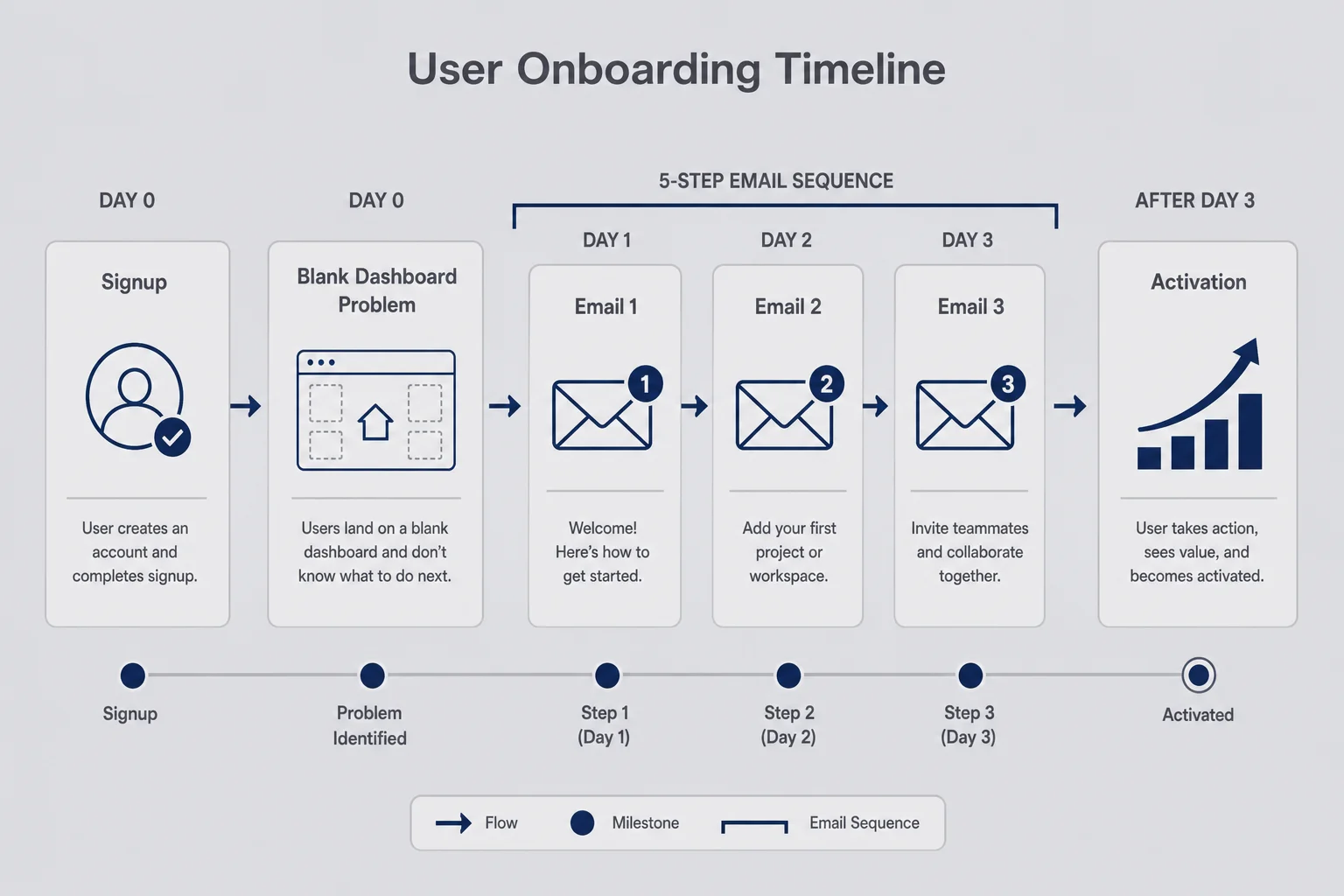
A user who cancels in the first two weeks didn't change their mind about your product. They never formed the habit in the first place.
I once spent three weeks building a feature because three people told me onboarding felt confusing. I assumed the confusion was in the UI. It wasn't. The UI was fine. People signed up, never opened the dashboard, and decided the product wasn't for them. The actual first-time experience was a blank screen with no guidance.
The fix wasn't a redesign. It was a five-step email sequence over three days, each one pointing to one small useful action inside the product. Activation went from somewhere in the low twenties to above sixty percent within two weeks. Cancellations in the first seven days dropped by nearly half. A single onboarding email costs nothing. A blank first-run experience costs you customers you never had a chance to lose.
If you want the fastest win in this whole article, start here. Not because email is magic. Because it's the cheapest way to pull people back into a product they already signed up for.
The two signals that come before cancellation
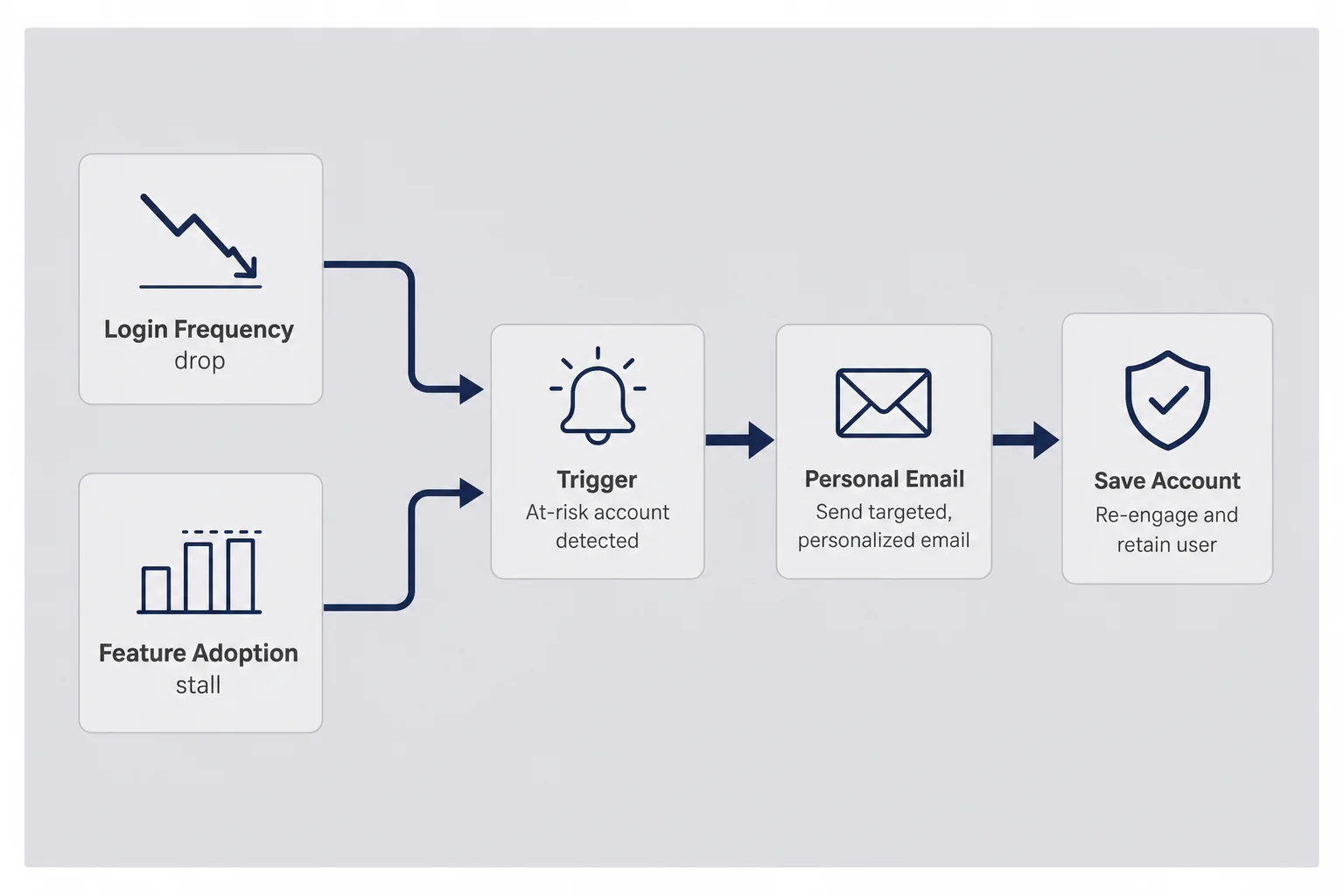
People don't cancel out of nowhere. They disengage first. The question is whether you notice.
In that same product, I tracked two leading indicators. Login frequency was the first: a customer who drops from daily to weekly to nothing over ten days probably isn't going to renew. Feature adoption was the second: someone who signs up, creates one project, and never returns hasn't made the product part of their workflow.
I built a tiny automation that pinged me when either signal fired. Nothing fancy. A morning cron job and two SQL queries against my Postgres database were enough. When the trigger hit, I sent one personal email: "I noticed you haven't logged in for a while. Everything okay?" Roughly one in four replies turned into a conversation that saved the account.
You don't need Mixpanel for this at the start. You need two queries and the willingness to send an email that sounds like a human wrote it. Tools change. The principle doesn't: the cheapest retention is reaching out before someone cancels.
When discounts are the wrong answer
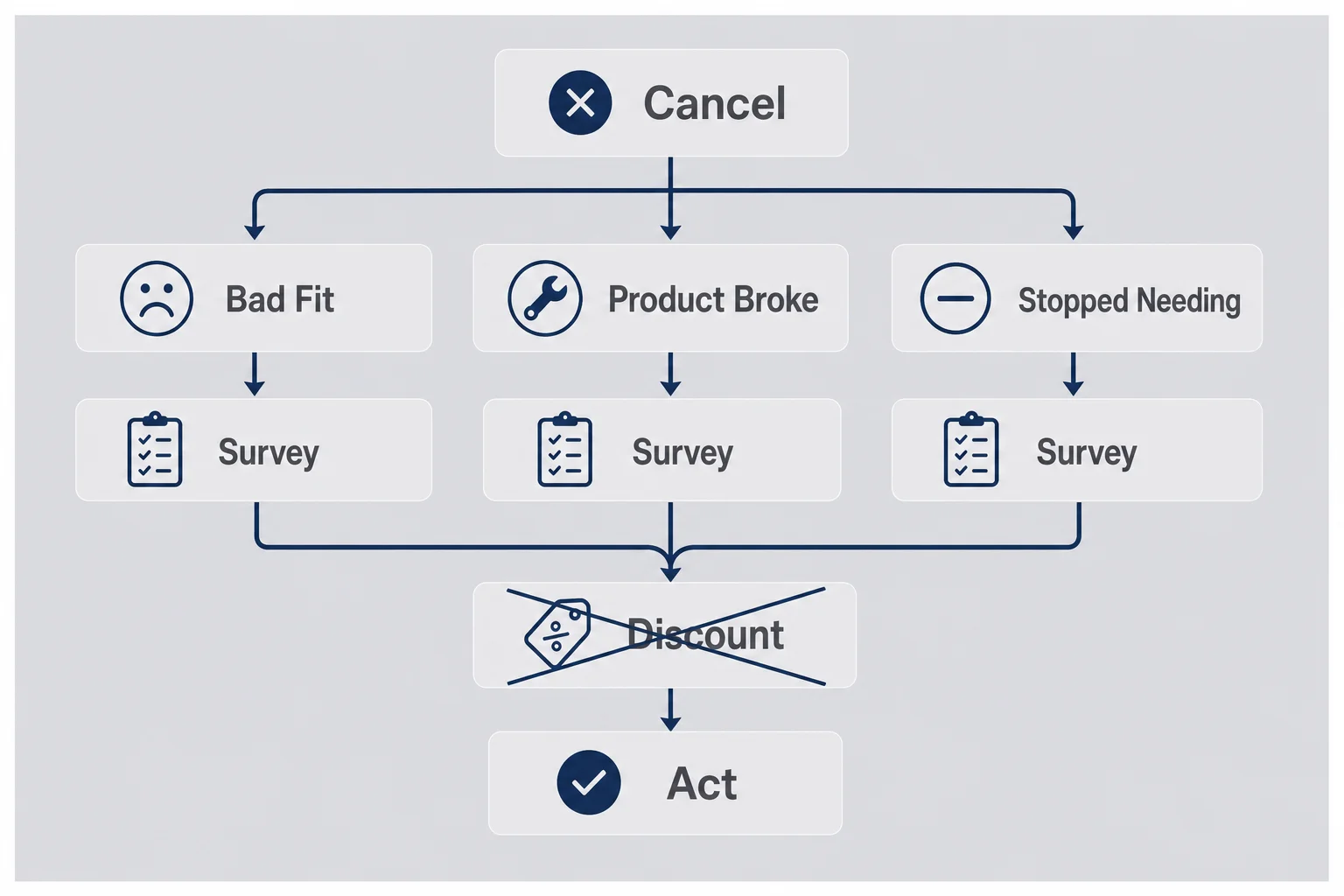
It's tempting to throw discounts at churn like it's a pricing problem. Usually it isn't. People cancel for three main reasons: they were never a good fit, the product broke, or they stopped needing it. Discounts fix none of those.
I once offered a 30 percent discount to a customer who complained about pricing. They took it and canceled a month later anyway. Pricing was never the issue. They'd signed up for a feature they expected but never actually used.
Discounts also train customers to expect lower prices. If people learn they can cancel, complain, and get a deal, you've invented a recurring revenue problem. (Ask me how I know.) If the real question is whether a price increase still wins after some people leave, that is a different spreadsheet — model it in the price raise impact calculator instead of answering with another coupon.
The better move is to ask why they're leaving before you offer anything. A one-question cancellation survey costs almost nothing to build and tells you more than any discount ever could. Then act on the answers. Sometimes the answer is "wrong customer." In that case, let them go and fix acquisition instead of retention.
Build a "failed first visit" flow for free trial users
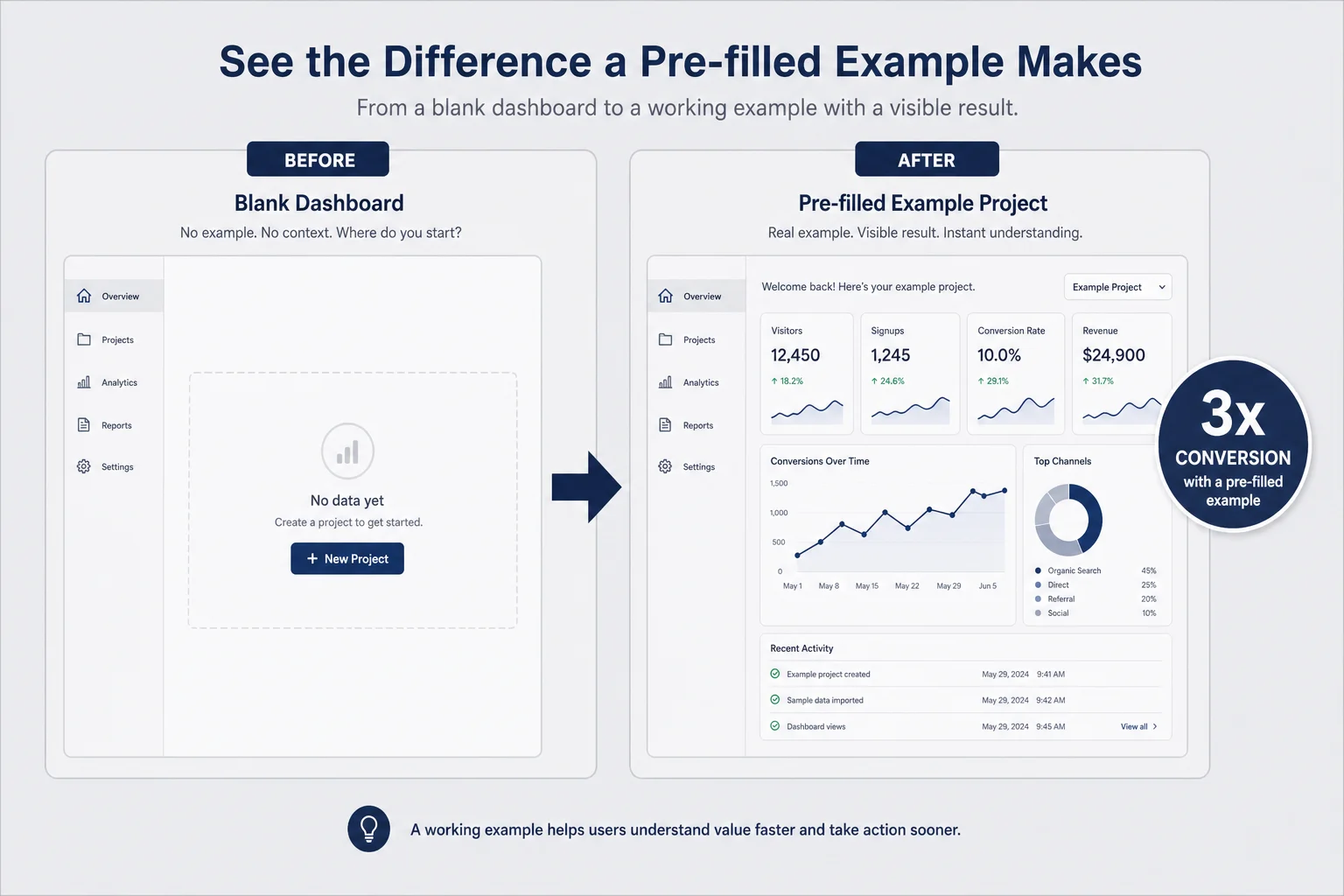
Email nudges help. But the fix that stuck for me happened inside the product, in the first five minutes after signup.
Most micro-SaaS products let people sign up and then ignore them until they cancel. That's backwards. Your first-run experience should do one job: make the user feel like they just did something useful. That doesn't require tutorials, walkthroughs, or modal overlays. It requires a working default state.
I wrote elsewhere about building micro-SaaS products with AI, but the retention lesson has nothing to do with the stack. What matters is what happens right after signup. In one product I changed a single thing: instead of landing users on a blank dashboard, I sent them directly into a pre-filled example project. They could edit it, extend it, or throw it away. The first session ended with a visible result. People who completed that first session converted to paid at roughly three times the rate of those who started blank.
You're not tricking anyone. You're making the first encounter match the promise that got them to sign up. Blank dashboards break that promise silently.
The month-three check-in is the one most founders miss
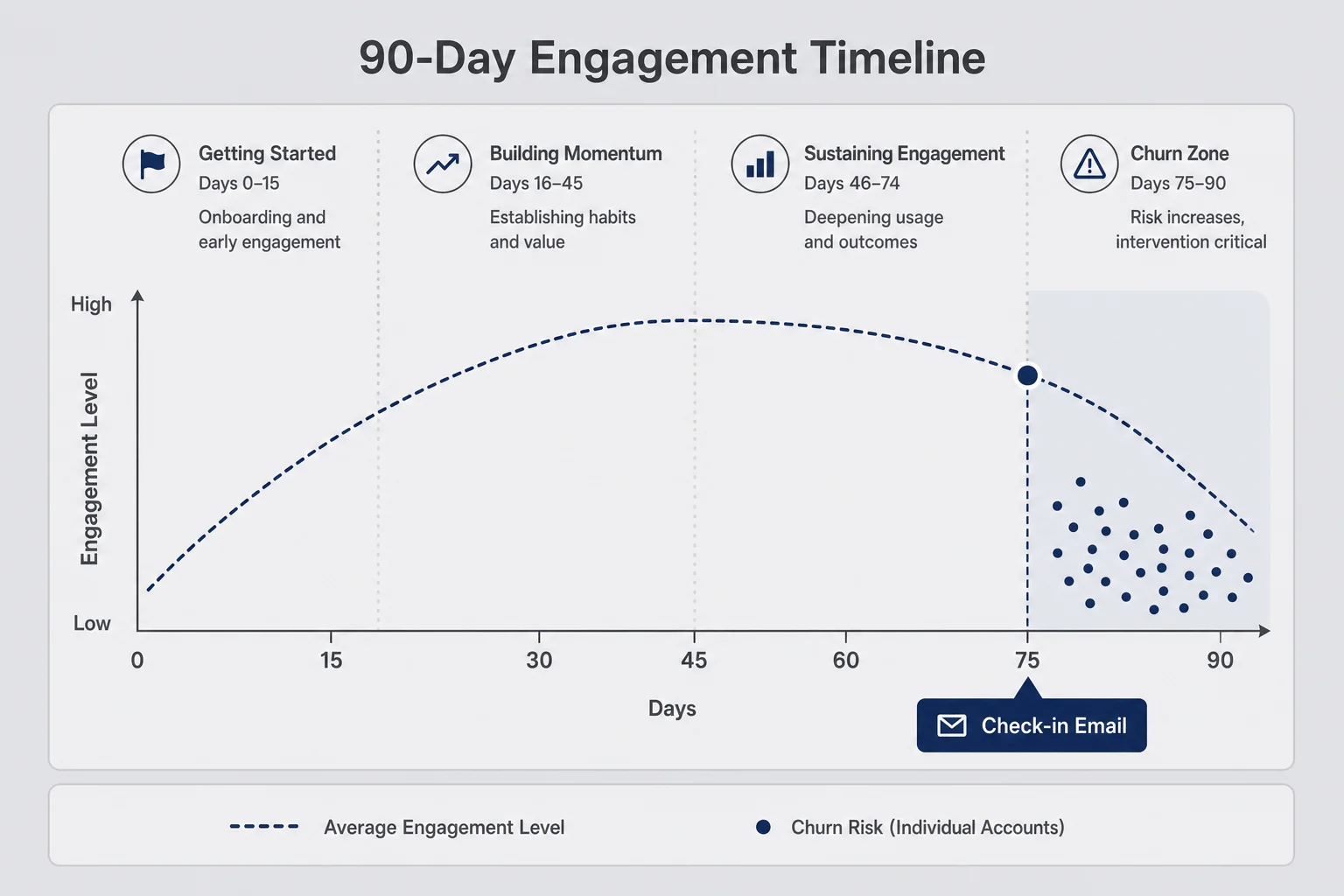
Churn doesn't happen evenly across time. It clusters. In my experience, more cancellations land around the three-month mark than anywhere else.
That's the point where the product is familiar enough to be boring, but not embedded enough to be essential. The novelty has worn off, a couple of renewals have passed, and there's no fresh reason to open the app.
I started sending a personal check-in email at day 75. Nothing salesy. Just asking what they were using the product for and whether it was still worth the price. Then I listened. Some replies were complaints I'd never heard. Others were feature requests I could ship in a day.
That single email paid for itself many times over in reduced cancellations. It also gave me more useful product feedback than any survey I ever ran. Won't work for every product. Works often enough that I'd try it before building anything more elaborate.
Know when someone is not worth saving
Not all churn is bad. Some customers were never going to stay, and chasing them makes the numbers look better while making your week worse.
The customers worth fighting for are the ones who demonstrated value. They used the product regularly, opened support tickets with specific requests, or referred others. These people are leaving because something changed in their workflow or budget. That's fixable, or at least worth a conversation. When they email instead of canceling silently, how fast you reply matters — micro-SaaS customer support for solo founders covers the inbox side.
The customers you should not waste time on signed up for a free trial, never opened the app, and canceled the day before the first charge. Saving them costs more in time and discounts than the revenue is worth. I still feel a pang when I see those cancellation emails. I send the survey and move on.
This overlaps with validation more than people admit. If someone never got value from the product, the problem might be fit, not retention. Your time is the most limited resource in a solo-founded business. Spend it on the customers who proved they'd pay if the experience was right.
Questions I hear about this
How long does it take to see churn improve?
Onboarding and early engagement changes can show results in one to two billing cycles. Behavioral signals like login frequency and feature adoption improve faster if you act on them early.
Do solo founders really need a churn survey?
Not a long one. A single question at cancellation gives you more signal than most analytics dashboards. The goal is to separate bad-fit cancellations from fixable problems.
What is the fastest win for reducing early churn?
Improve the first-run experience. Send users into a working default state instead of a blank dashboard. One good first session beats most retention emails.
When should I stop trying to save a customer?
When they never used much to begin with. If someone signed up, logged in once, and canceled before the first charge, your time is worth more than their monthly fee.
What is a good churn rate for a micro-SaaS?
There is no magic number for every product, but many solo founders get nervous when monthly logo churn climbs above five to eight percent on a small B2B tool. Early churn in the first thirty days usually matters more than the headline rate. Fix onboarding and the first session before you obsess over retention campaigns.
How do I reduce SaaS churn without a customer success team?
Track login frequency and feature adoption, then reach out personally before someone cancels. Fix the first-run experience so new users land in a working default state. Send a plain check-in email around month three. Use a one-question cancellation survey instead of reflex discounts. None of that requires headcount.
The uncomfortable part
Retention is slower than acquisition and less fun than launching. It also has a better return on time than almost anything else you'll do. If you want the dollar math before you change anything, plug your rate into the churn impact calculator and see how many new customers you need just to hold MRR steady.
If your product is decent and your onboarding is honest, the customers who stay will usually tell you why they stay if you ask. The customers who leave will tell you why too, if you give them a reason to be honest. Most founders never ask either group.
I'm not sure there's any better information for a solo founder than a one-line reply from a person who decided to keep paying you money. Everything else is guesswork.



Comments