Your App Deserves Ten Scrappy Shorts, Not One Perfect Launch Video
How solo founders use YouTube Shorts to market a consumer app: hook batches, screen captures, posting rhythm, and measuring App Store clicks instead of vanity views.
 By Iryna25 min read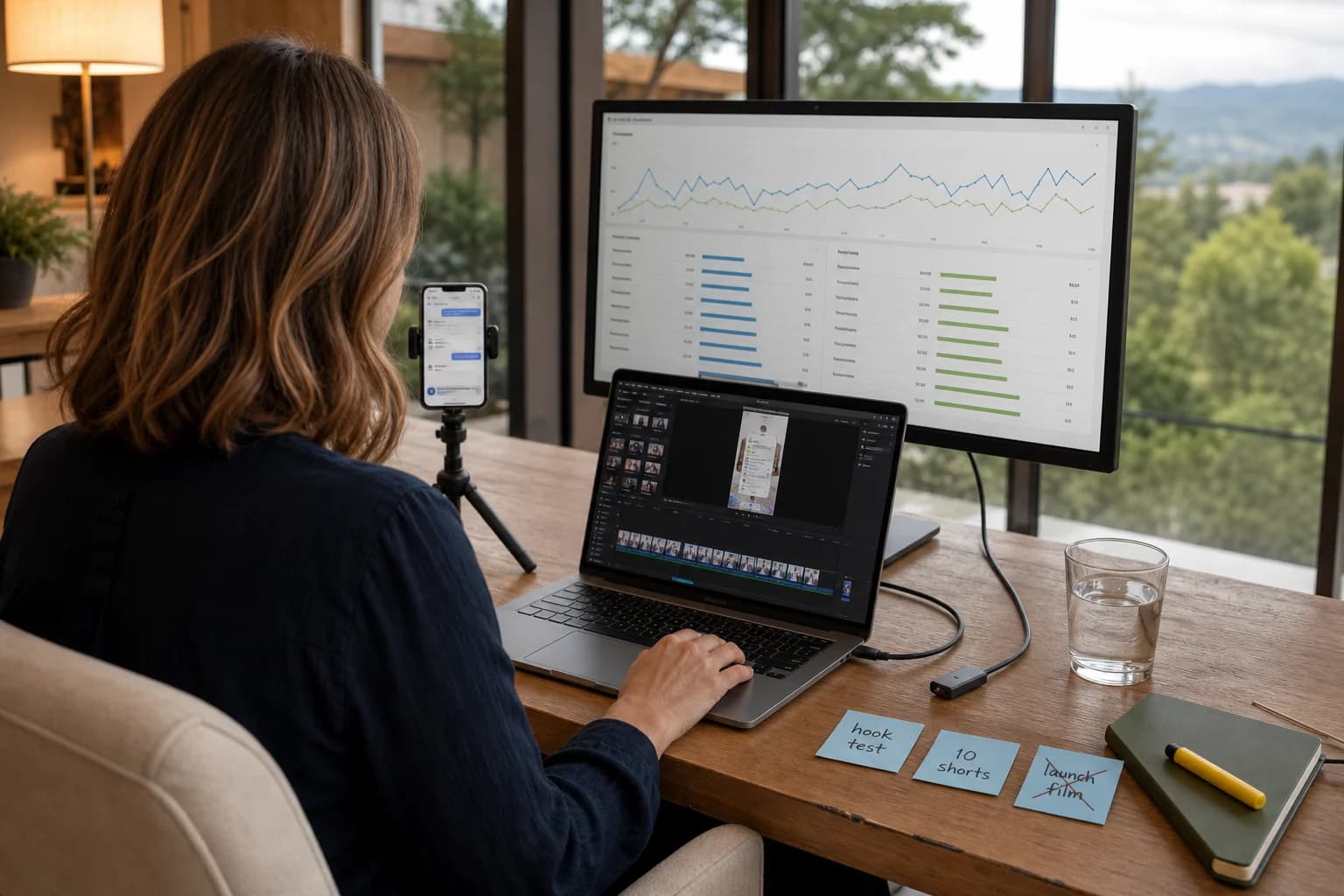
I spent a Sunday afternoon editing a ninety-second "launch film" for Finish Him Replies. Cinematic crop. Soft piano I did not license correctly. A slow zoom on my own app icon like anyone on YouTube asked for that. I uploaded it as a Short because someone on a podcast said Shorts were "free distribution." It got forty-one views. Twelve were me checking whether the export looked weird on mobile.
That is when youtube shorts app marketing solo founder work clicked for me, but not in the way those podcasts meant. Shorts are not a lottery ticket you buy with one pretty video. They are a ramp: batch cheap hooks, post small, measure whether anyone bothers to visit your App Store page, then make more of what worked. If you are still building the app itself, start with how to build your first consumer iOS app. If your listing is still a feature list in screenshot form, fix App Store optimization before you send strangers from YouTube to a page that does not convert. This piece is what happens when the app exists, the store page is honest enough, and you need a distribution habit that fits one person with evenings.
I am not a video producer. I am a product designer who talks to a camera when the alternative is hoping the algorithm discovers an app with twelve reviews. YouTube Shorts sit in a weird middle ground: short enough to film between dinner and bedtime, long-lived enough that search can find them months later, formal enough that a pinned comment with your App Store link does not look desperate. That combination matters for consumer apps in a way Twitter threads never did for mine.
YouTube shorts app marketing solo founder: why Shorts are a ramp, not a lottery
The fantasy version of YouTube Shorts marketing looks like a hockey stick. You post once. A creator with three million subscribers duets you. Downloads explode. You quit your job by Tuesday. I have seen that story on founder Twitter. I have never lived it. What I have lived is quieter and more useful: ten scrappy videos, two hooks that made people tap the link in my bio, and a slow climb in App Store product page views on days that matched upload dates.
That is the whole argument. Youtube shorts app marketing solo founder strategy is not "go viral." It is repeated proof that strangers understand the problem in the first three seconds and care enough to see the fix. YouTube gives you a search engine attached to a feed. Your App Store listing gives you conversion once they arrive. Shorts are the shuttle between those two rooms. Treat them like a ramp with gates, not like a slot machine.
I borrowed the ramp idea from how I think about soft launch geography. You do not release worldwide on day one because blast radius is expensive. You do not post one cinematic Short and sulk when it flops for the same reason. You widen when the last stage passes a gate. For Shorts, the gate is not crash-free sessions. It is store clicks, or at minimum product page views you can correlate to a video.
Views are applause, not distribution
A Short with eighty thousand views and zero traced installs is a party, not a business result. I am not saying views are worthless. Views tell you the hook stopped the scroll. They do not tell you the right person cared. Consumer apps live on strangers who feel safe enough to install something personal. A view from someone who will never need your app is noise.
The ramp mindset flips the scoreboard. Instead of "did this blow up," ask "did this send the kind of person who would pay to a place where they can install." That sounds obvious written out. It is not obvious when YouTube Studio shows a green uptick and your brain wants to celebrate. I have celebrated green upticks that never touched revenue. Do not be me on a Tuesday.
Why YouTube instead of only TikTok
TikTok discovery is brutal and fast. Instagram Reels reward accounts that already have momentum. YouTube Shorts piggyback on the second-largest search engine on earth. Someone types "how to reply to a dry text" six months from now and your Short can still show up. That long tail is boring compared to virality. Boring is good when you are one person without a content team.
I still cross-post when I can. The broader marketing playbook for solo founders applies across channels, and TikTok marketing for consumer apps covers the faster-feed side of the same hook batches. YouTube is where I want searchable proof that my app solves a named moment. TikTok and Reels are where I meet people who are not searching yet. Different jobs. Same hook batch if you are efficient.
Batch before polish
Film five opening hooks in one session before you touch transitions. Hook tests are cheap. Perfect color grading is expensive in founder hours.
What YouTube Shorts actually do for a consumer app
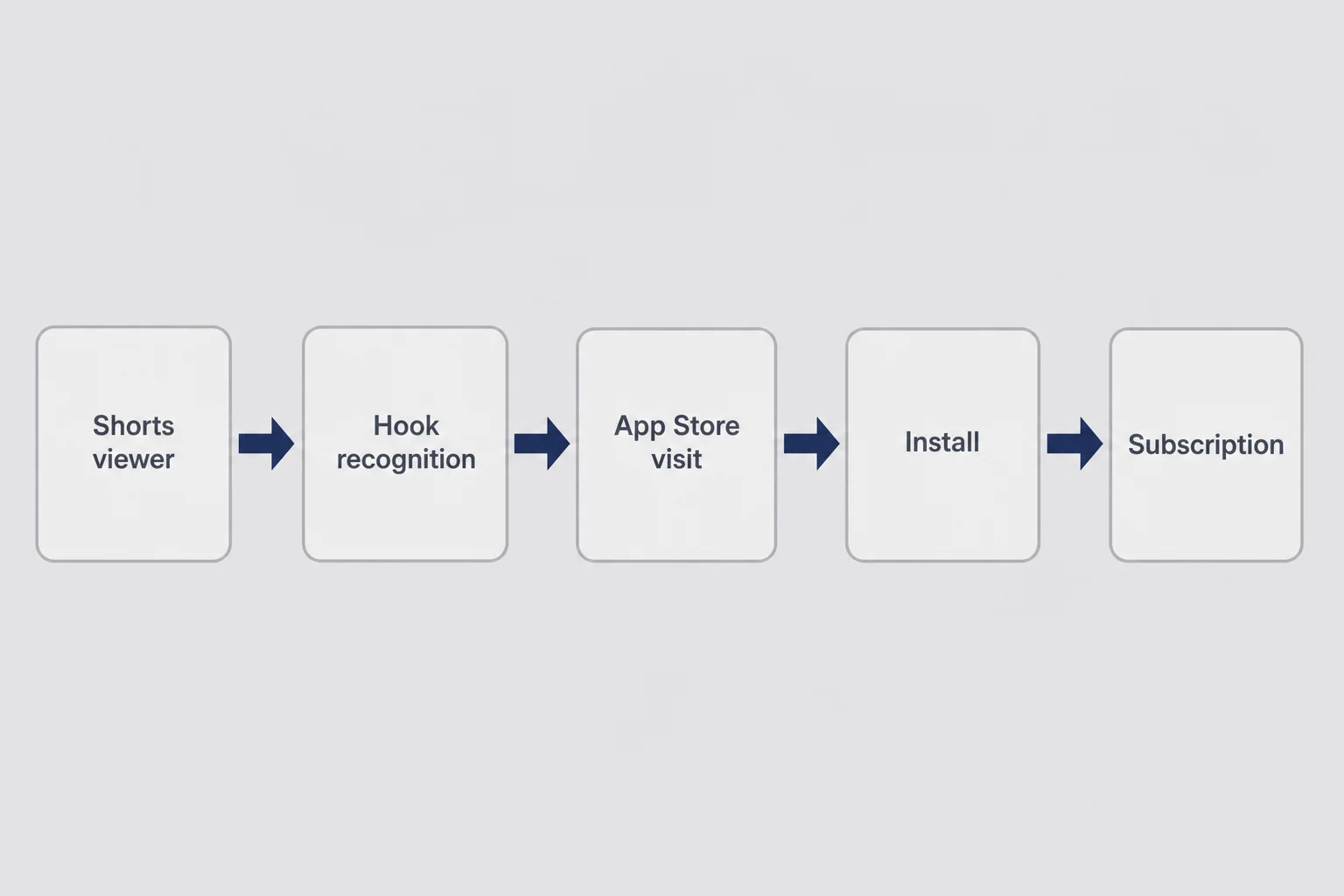
YouTube Shorts do three jobs for a consumer app if you let them. Discovery in the Shorts feed. Search discovery when your title and spoken words match how people phrase the problem. And retargeting memory when someone sees your face or your UI twice and finally installs on the third impression. None of those jobs replace a good product. All of them fail if your first session is confusing.
Discovery in the feed is the lottery layer everyone talks about. You post vertical video under sixty seconds. The algorithm tests it on a small audience. Sometimes it expands. Sometimes it dies quietly. That layer is real but uncontrollable. Do not build your business plan on it.
Search is the layer solo founders underuse because it feels unglamorous. YouTube indexes titles, descriptions, and spoken audio more than TikTok culture admits out loud. If your app helps someone draft a text, a Short titled around the exact awkward situation can pull installs months later without you posting daily forever. That is compounding distribution, the same way ASO keywords compound when you iterate monthly instead of once.
The third job is familiarity. Consumer apps with emotional problems need trust before install. Seeing the same UI solve the same awkward moment twice lowers perceived risk. Shorts are cheap impressions. Not every impression needs to convert immediately. Some are planting "oh, that app again" for later.
Shorts are top of funnel, not checkout
Nothing in YouTube charges someone's card. Shorts do not replace your paywall, your onboarding, or your privacy copy. They replace the fantasy that strangers will magically find you in the App Store without ever seeing the product move. If your onboarding drops people at permission prompts, fix that before you scale Shorts. Sending more traffic to a leaky bucket is how you collect one-star reviews faster.
Think of each Short as a three-second promise. The App Store page is the ten-second proof. The first session is the actual product. Marketing can only widen the top of a funnel that already holds. I learned that after a Short outperformed my expectations and support email got questions about a flow I thought was obvious. The Short was fine. The app was unclear. Traffic amplified confusion.
How Shorts differ from App Store screenshots
Screenshots are static persuasion for people already on your listing. Shorts are motion persuasion for people who do not know your name yet. Screenshots must work in silence on a store page. Shorts must work in silence on a feed with captions burned in. The language should match. If your best screenshot headline says "three replies in ten seconds," your Short hook should not introduce a feature matrix nobody asked for.
When a Short hook wins, steal its wording for screenshot captions in your next ASO pass. When a screenshot A/B test wins in App Store Connect, film a Short that opens on the same outcome. The channels are not separate religions. They are one story told in different shapes.
Fit check: should you bother with Shorts at all?
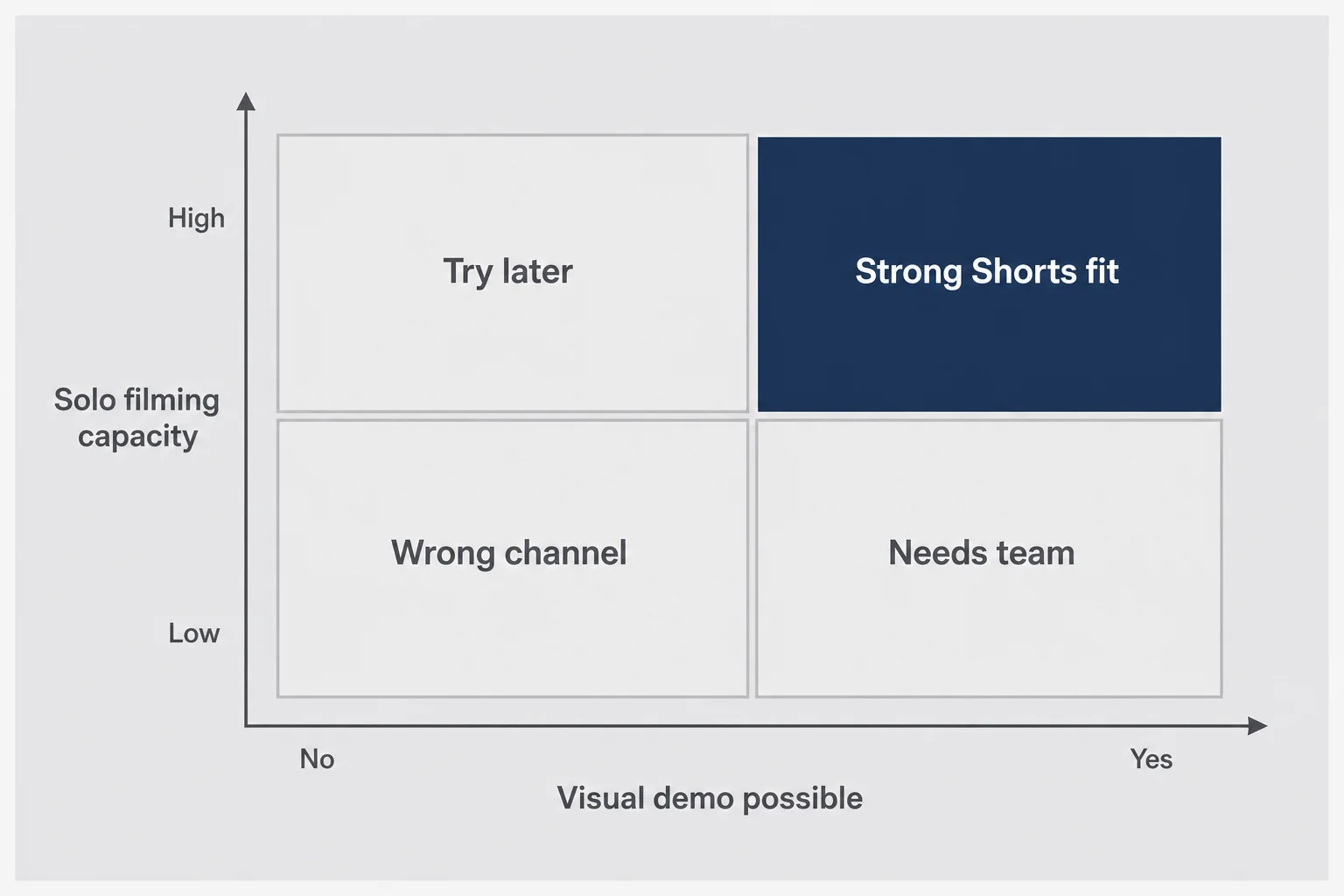
Shorts are not mandatory. They are a fit question. I would not push YouTube on a solo founder selling compliance software to CFOs. Reese has better channels for that buyer. I would push Shorts on a founder with a visual consumer app, a problem people describe in plain language, and enough comfort to show their phone screen without hiding.
Ask three questions before you buy a ring light. Can you show the core value in under ten seconds of screen recording? Would your ideal user recognize the opening scene as their life? Can you post twice a week for a month without abandoning product fixes? If all three are yes, Shorts belong in your stack. If the first is no because your app is dashboards and CSV exports, write blog posts instead.
Physical products, games with flashy moments, and lifestyle utilities are natural fits. Meditation apps can show the calm UI. Budget apps can show the receipt scan. Dating-adjacent tools can show the awkward text without showing private messages from real people. Use fake demo content. Privacy is not optional because you are marketing.
When Shorts are the wrong channel
Skip Shorts if your app cannot be demonstrated without a live account full of sensitive data. Skip them if your value proposition requires a ten-minute setup before anything interesting happens. Skip them if you are pre-launch and the product changes every three days; you will remake videos faster than you ship code. Validate first. Film second.
Also skip them if you hate being on camera and refuse to show the screen. You can do faceless Shorts with voiceover and screen capture. You cannot do effective Shorts with only a logo animation unless you already have brand recognition, which you probably do not. One consumer app, remember. Strangers need context.
When Shorts are underrated
Shorts are underrated when your App Store keywords are long-tail emotional phrases. "What to text back when he leaves you on read" is a video hook and a search query. Shorts are underrated when competitors have ugly listings but no video presence. You do not need to outspend them. You need to out-clarify them in motion.
They are underrated when you already write hooks for TikTok comments and Reddit posts. Turning a comment that got traction into a fifteen-second screen recording is faster than inventing new messaging from scratch. Your comments section is a free hook lab if you are paying attention.
The hook stack: open on the embarrassing moment
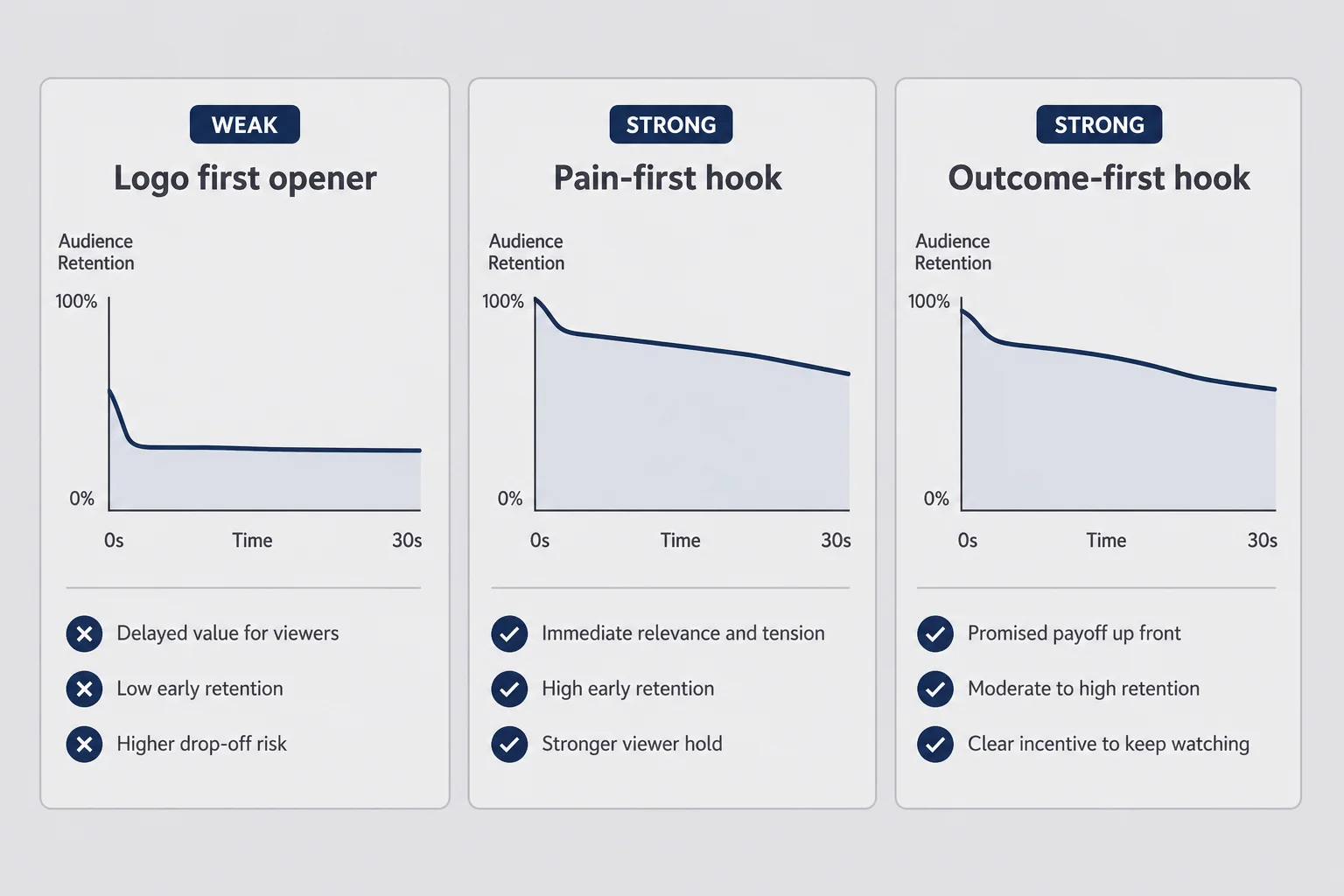
The hook is the whole game. Not your tagline. Not your mission statement. The half-second when a thumb decides to keep scrolling or move on. For Finish Him Replies, the hooks that worked sounded like the inside of someone's head at 11 p.m., not like a product announcement.
Bad hook: "Introducing the AI-powered reply assistant." Nobody is searching for introducing. Good hook: "POV: you typed four replies and deleted all of them." That is recognizable. Good hook: "The text that deserved a better answer." Specific enough to curiosity, vague enough to apply broadly.
Build a hook stack before you open your editor. Write ten opening lines on paper. Circle five you would stop scrolling for. Film all five against the same screen demo. You are not making five videos. You are making one demo with five doors into it. That is how you respect solo-founder time.
The first two seconds rule
Put motion in the first frame. A static logo card is death. A thumb tapping a notification is life. A chat bubble appearing is life. A keyboard deleting text is uncomfortably life if your app is about texting anxiety. Show the problem state before the solution state. The solution is your app. The problem is why anyone should care.
Captions in the first frame help because audio is often off. I burn in large captions for the hook line even when YouTube auto-captions exist. Auto-captions lag. Lag loses thumbs.
End cards that do not sound like infomercials
The last three seconds need one verb and one place. "Search Finish Him Replies on the App Store" is clear. "Link in bio" works if your bio is actually updated, which sounds obvious until you forget for two weeks. I have forgotten. Do not be heroic about pinned comments. Pin the link on any Short that gets traction even if it embarrasses you to see the view count.
Avoid stacking three calls to action. Subscribe, like, comment, follow, download, join Discord. Pick one. For app marketing, the download path wins. You are not building a creator career. You are building an app business with creator-shaped distribution.
Recording screen captures that look native, not amateur
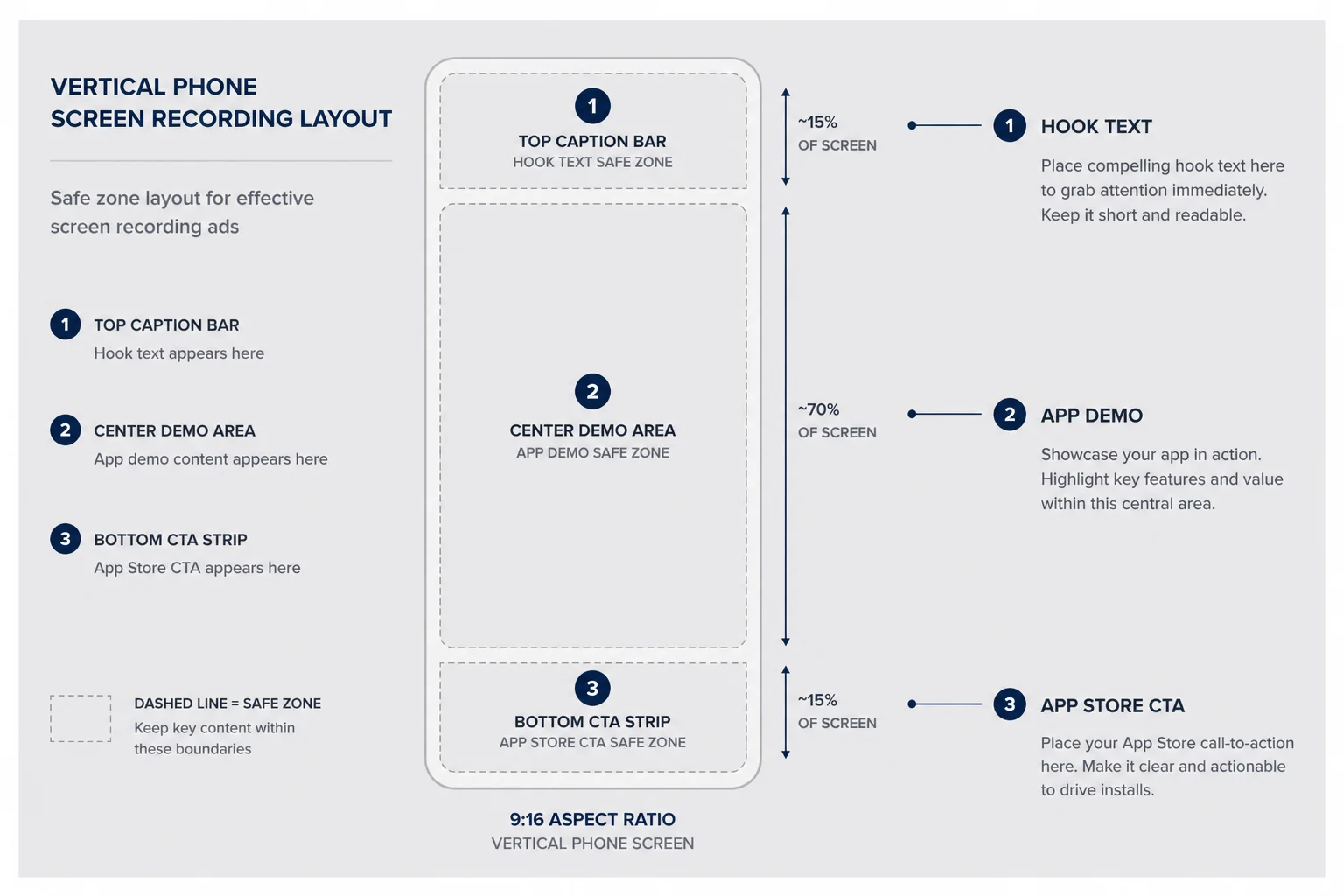
You do not need a studio. You need a clean demo account and consistent framing. I record on my phone with the built-in screen recorder, AirDrop to my laptop, crop to 9:16 in CapCut or DaVinci Resolve, and export. Total time for a batch of hooks can be under two hours once the demo path is rehearsed.
Use fake chats and fake names. Never record a real friend's messages because you are lazy. Privacy is part of the product story for personal apps. Viewers notice sloppy trust signals. Blur names if you must show realistic UI, but fake demo content is better.
Keep the status bar clean. Low battery and a pile of notifications read as chaos. Do Not Disturb is your friend. Brightness high enough that compression does not muddy the screen. If viewers cannot read the text in your demo, the Short fails before your hook matters.
Voiceover or on-screen text only
Face-on-camera builds trust faster for some founders. I am not naturally charismatic on video. Screen plus voiceover works for me. Some founders do well talking directly to camera with the phone held up. Test both as separate hooks, not as a identity crisis. The market tells you which face it trusts.
If you use voiceover, write a script shorter than you think. Eighty spoken words is plenty. Read it aloud before recording. Tongue twisters at second fifteen ruin retention. Plain words win.
I record voiceover in a closet with a blanket over my head and the mic on my phone. Professional? No. Better than echoey kitchen audio? Yes. Viewers forgive lo-fi sound when the screen is readable. They do not forgive mumbling over a blurry demo.
Editing choices that help solo founders
Jump cuts are fine. Silence is not. Background music quiet enough that captions dominate. Transitions are optional. Speed ramps can show a slow flow fast, but do not accelerate the moment of payoff. People need to see the reply appear, the budget update, the calm breath. That is the product.
Keep a template project file. Same caption font, same margin, same end card. Templates make video two through ten faster than video one. This is the same lesson as design systems in Figma. Boring repetition speeds shipping.
CapCut is enough. DaVinci Resolve is enough if you already know it. Final Cut is not required for fifteen-second demos. The editor that opens fastest on your laptop wins. I wasted a week learning keyboard shortcuts for software I used twice. Embarrassing and common.
Demo data hygiene
Create a demo account on your phone that exists only for marketing. Fake names. Fake conversations that still feel emotionally true. Reset it between batches so old UI experiments do not appear in new Shorts. Screenshot the demo path once and tape it inside your notebook. Consistency across ten videos matters more than cinematic variety.
If your app processes real user content, never use your own sensitive data on camera. Viewers are not stupid. They notice when a founder accidentally reveals something private. That single frame can become a trust problem bigger than a weak hook.
Titles, captions, and the search half of Shorts
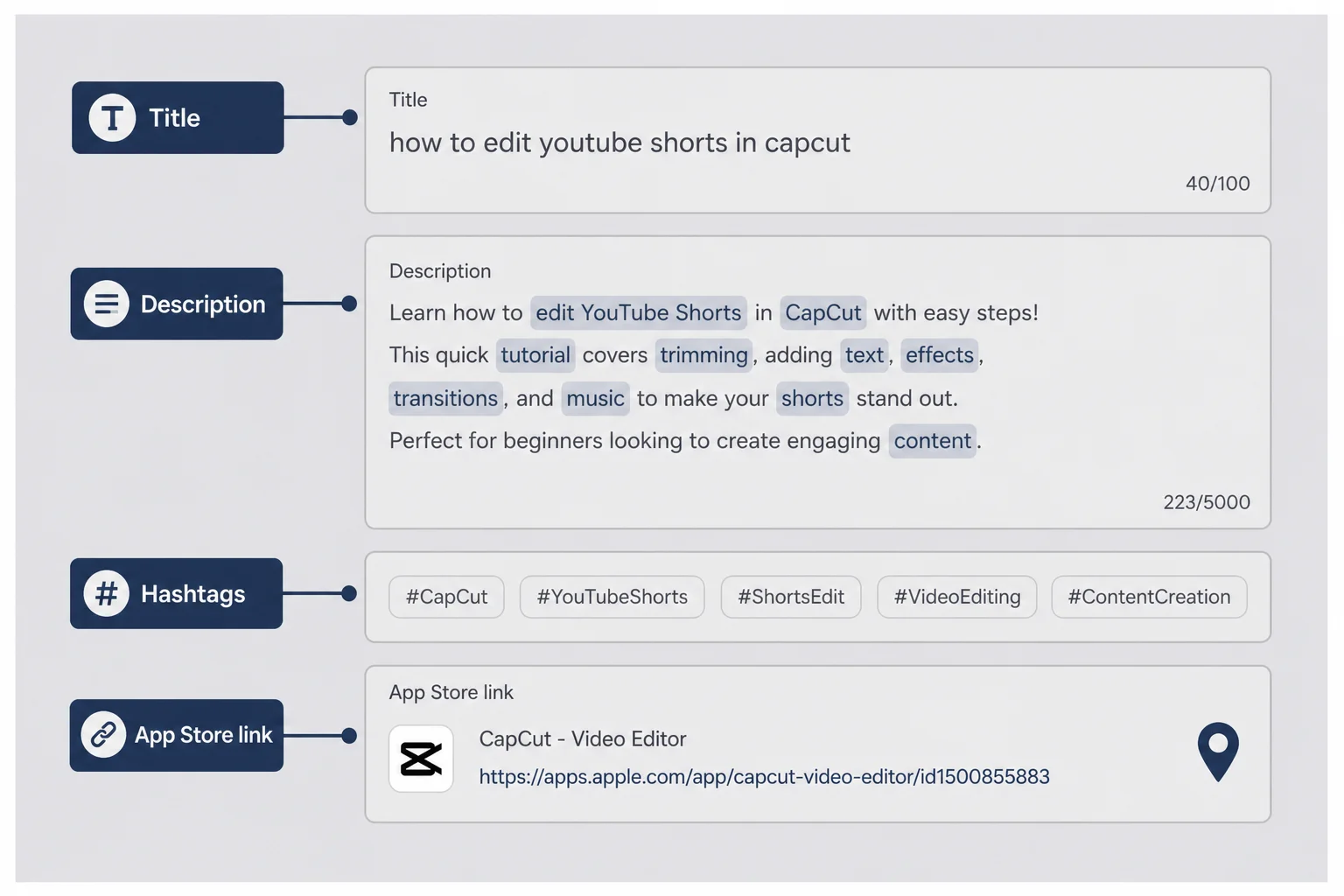
Titles are not clickbait for YouTube Shorts app marketing solo founder work. They are search bait plus curiosity bait. Put the problem words early. "How to reply when someone leaves you on read" beats "Finish Him Replies demo v3." Brand names matter later when people already know you. Early on, problem language pulls strangers.
Description fields are not throwaway. First two lines show before expand. Put the App Store link there. Repeat the problem phrase once in plain language. Add three hashtags if you want, but do not treat hashtags like Instagram. YouTube search reads sentences.
Speak the keywords in voiceover when it does not sound robotic. YouTube transcribes audio. A spoken phrase matching the title reinforces indexing. This is not SEO wizardry. It is aligning what people type with what they hear.
Thumbnails still matter on Shorts
Shorts auto-play in feed, but thumbnails appear in search results and on your channel page. Pick a frame with readable text or a clear facial expression. I screenshot a frame at the hook moment and add large text in the same font as my captions. Consistency again.
Do not mislead. A shocked face next to text that has nothing to do with your app trains the algorithm wrong and trains humans to hate you. The thumbnail promise must match the first second of video.
Playlists as quiet ASO allies
Group Shorts into playlists by problem theme. "Texting anxiety" playlist. "Dating app replies" playlist. Playlists help binge viewers and clarify channel focus to humans even if algorithms ignore them. Channel focus matters when someone lands on your profile from one good Short and decides whether to subscribe.
The solo founder posting rhythm
Consistency beats heroics. I aim for two Shorts per week when I am in a marketing sprint and one per week when I am fixing onboarding bugs. Zero weeks happen. Do not compensate with five uploads in one day unless you have five distinct hooks. Spamming the same demo with tiny edits annoys subscribers and teaches you nothing.
Batch film on Sunday. Edit Monday. Schedule Tuesday and Thursday publishes if you use YouTube Studio scheduling. Scheduling is underrated emotional protection. You are not live refreshing analytics on a work night. You are asleep while the post goes up.
Leave comments on your own Short for the first hour with a genuine question. "Which reply would you actually send?" Engagement signals matter modestly. More importantly, comments give you language for the next hook batch.
How long to run the experiment
Run the ramp for four weeks minimum. Ten Shorts. Three hooks. Track dates in a spreadsheet. App Store Connect product page views by day. Support email asks. If nothing moves, change hooks before you change apps. If hooks move but installs do not, fix the listing or onboarding. Diagnose in order.
Do not compare yourself to creators whose job is content. Compare yourself to last month's store visits. Relative improvement is the only fair scoreboard for a solo founder wearing six hats.
A weekly rhythm that survived my real calendar
Monday is admin: update bio links, check pinned comments, note last week's views. Tuesday publish. Wednesday is optional engagement, reply to comments with substance not emojis. Thursday publish. Friday review the spreadsheet for ten minutes. Weekend batch film if energy allows. If a week collapses because App Review sent a rejection, skip publishing and fix the app. The channel survives a quiet week. The app might not survive ignored crashes.
I keep a single tab in Notion with three columns: hook idea, filmed yes/no, published date. Low tech on purpose. Fancy dashboards become procrastination when you are solo.
Protecting build time
Marketing sprints need boundaries. I use a simple rule: no feature work on film nights, no filming on deep bug-fix nights. Context switching between Xcode and CapCut makes both worse. Your app still needs you. Shorts are not permission to avoid the crash that only happens on iOS 17.2.
If you are pre-revenue and choosing between a paywall fix and a Short, fix the paywall. Distribution amplifies product truth. It does not invent it.
Turning views into App Store visits
Measurement is where youtube shorts app marketing solo founder work separates operators from people who post for stress relief. You need a dated log: Short title, publish date, hook type, views at day seven, and any spike in App Store product page views within forty-eight hours. Precision is not required. Correlation is enough to decide what to remake.
Use a dedicated short link when you can. Some founders use a simple landing page with one button to the store. Some use tracked links in the description. App Store Connect does not always attribute cleanly to YouTube. Accept imperfection. Look for patterns, not courtroom proof.
Ask new users one optional question in onboarding or support: "How did you hear about us?" Free text answers are gold. "Your Short about deleting texts" tells you more than a dashboard tile labeled "social."
When to remake a winner
If a Short gets modest views but disproportionate store clicks, remake it with a tighter demo and the same hook. If a Short gets huge views and no clicks, the hook is entertainment, not intent. Entertainment is fine for brand awareness. It does not pay your Apple developer fee.
Pin comments with links on winners. Update the channel bio line to reference the problem, not only the app name. Bio lines are tiny SEO surfaces people overlook.
Pairing Shorts with live App Store tests
If you are running product page optimization tests in App Store Connect, note the dates. A Short spike hitting an old screenshot set wastes learning. Align marketing pushes with listing experiments when possible. I am not saying freeze everything until ASO is perfect. I am saying do not send a flood to a page you already know is weak without expecting weak results.
The attribution mess you should accept
You will never know with CFO precision which Short drove which install. Apple privacy and YouTube analytics do not shake hands nicely. That uncertainty makes founders quit too early. Do not quit because attribution is fuzzy. Quit because ten hooks produced zero movement in any signal you can see: page views, trials, support mentions, or revenue.
When a spike happens, screenshot the charts. Write one sentence about what you published that day. Future you will not remember. Memory lies. Spreadsheets less so.
When to spend money boosting Shorts
I have not paid to boost Shorts yet. If you do, treat it like a hook test with a budget cap, not like a prayer candle. Twenty dollars on a Short that already got organic store clicks is an experiment. Two hundred dollars on a logo animation is a hobby. Paid boost without organic signal is how solo founders burn cash they needed for their developer account renewal.
Repurposing across Shorts without doubling your workload
One filming session should yield one YouTube Short, one TikTok, one Reel, and maybe a still frame for a future screenshot test. Export master without platform watermarks. Crop separately if safe zones differ. Rewrite captions per platform. YouTube wants search sentences. TikTok wants conversational first lines. Reels sit in between.
Remove TikTok watermarks before uploading to YouTube. Platforms punish recycled content with other logos burned in. This sounds tedious. It is less tedious than filming three separate demos. For Reels-specific framing, see Instagram Reels app promotion. Same demo, different caption habits.
Keep a folder structure: hooks/2026-08-02/batch-name/raw, exports/youtube, exports/tiktok. Future you will not remember which export had the good caption. Names matter when you are tired.
What not to repurpose blindly
Do not cross-post community-specific jokes that only make sense on one platform. Do not repost a Short that references YouTube-only mechanics like "subscribe" as the main CTA on TikTok if your TikTok bio is empty. Adapt CTAs per destination.
Audio trends on TikTok are optional on YouTube. Forced trending audio that drowns your voiceover hurts clarity. Clarity beats trend participation for app demos.
Building a comment-to-hook pipeline
Comments on other creators' videos in your niche are underrated research. Not spammy "check my app" comments. Genuine replies that show you understand the problem. When a comment gets likes, screenshot it. That sentence might be tomorrow's hook. I keep a note called "stolen language" that is really just phrases real humans used about texting anxiety. Your App Store reviews and support inbox are the same mine. Shorts marketing starts in text, then moves to video.
Legal and platform hygiene you cannot skip
Read YouTube's policies on repetitive content and artificial engagement. Do not buy views. Do not join engagement pods for Shorts. The audience quality is worse than useless. For consumer apps with user-generated content in demos, use fakes. For music, use YouTube's royalty-free library or no music. A copyright strike on your only marketing channel is a self-inflicted soft launch disaster.
Mistakes that waste your evenings
I almost quit Shorts after my cinematic launch flop. That was mistake one: one video, big expectations. Mistake two was reading comments from other founders instead of from potential users. Founders applaud craft. Users applaud relief.
Mistake three is hiding the app until second forty. By then everyone left. Mistake four is never mentioning the App Store because it feels salesy. You made an app. Selling is allowed.
Mistake five is arguing with negative comments on personal apps. Delete harassment. Ignore lukewarm takes. Do not film a response video unless it is genuinely funny and on-brand. Your energy is finite.
Mistake six is treating YouTube like a performance for other indie hackers. They are not your customer unless they are. Build hooks for the embarrassed person on the couch, not for the quote-tweet crowd.
Mistake seven is ignoring comments that sound like product feedback. "Wait, does this save my chats?" is not a troll. That is onboarding copy you need. I have rewritten permission screens because a Short comment scared me correctly.
Mistake eight is filming before the app is stable enough to demo. If the build crashes mid-screen recording twice, fix the crash. Video multiplies embarrassment when the product fails on camera. TestFlight exists for a reason. Your marketing demo path should be the most boring reliable path in the app, not the newest feature branch.
What to do the week nothing works
When ten Shorts produce no signal, run a post-mortem before you quit. Were hooks problem-first? Was the App Store link visible? Did product page views move at all? If views were zero, titles and thumbnails failed. If views were fine but store flat, listing or CTA failed. If store visits rose but installs flat, screenshots or onboarding failed. Each failure has a different fix. Randomly abandoning Shorts because "video does not work for apps" is how founders protect their ego instead of their funnel.
Vanity trap
If you feel productive because you edited but you cannot name which hook you are testing, you are decorating, not distributing.
Questions I get about Shorts for app marketing
Do YouTube Shorts work for marketing a solo founder's app?
They work when your app solves a problem people already search for or recognize in three seconds on a phone screen. Shorts are not magic distribution. They are a cheap way to test hooks and send curious viewers to your App Store listing. If your product needs a long explanation or only makes sense for enterprise buyers, Shorts are the wrong room. For consumer iOS apps with a visual payoff, Shorts can compound alongside App Store search.
How many YouTube Shorts should I post before I judge results?
Post at least ten Shorts over two to three weeks before you decide the channel is dead. Use at least three different opening hooks on the same core demo. One viral miss means nothing. Ten posts with zero App Store clicks means something. Solo founders do not have budget for brand films. You have budget for small batches and honest measurement.
Should I put my App Store link in every Short?
Put a clear path to install in the description and say it out loud or on screen in the last three seconds when it fits naturally. Pin a comment with the link on winners. Do not spam the link in the first frame before you have earned attention. YouTube allows app links in descriptions. The goal is curiosity first, then one obvious next step for viewers who felt the problem in the hook.
Can I repost the same Short to TikTok and Instagram Reels?
Yes, with small edits. Remove burned-in YouTube watermarks before cross-posting. Trim to each platform's safe zones. Rewrite the caption for search on YouTube and hashtags on Reels if you use them. One filming session can feed three channels. Do not triple your workload by triple-editing cinematic cuts. Batch hooks, publish everywhere, measure where clicks come from.
What should a YouTube Short for an app look like?
Open on the painful moment your app fixes, not your logo. Show the phone screen within the first two seconds. Keep it under forty-five seconds unless the demo truly needs more. Use captions because most people watch muted. End with one line of outcome and where to get the app. Polished motion graphics are optional. Clarity is mandatory.
How do I measure if YouTube Shorts are driving installs?
Use App Store Connect source data when available, tagged links in your bio and description, and a simple spreadsheet of which Short went live on which date. Compare spikes in product page views to publish dates. Ask new subscribers in support email how they found you. Views alone are vanity. Store visits and trials from tagged links are signal. Kill hooks that get views but never move the store needle.
The tenth Short teaches more than the first
I still do not have a viral moment story. I have a folder of hooks that failed quietly and two that sent people to the store. That is enough to keep filming on Sundays. Consumer apps need strangers to understand a private problem in public for three seconds. That is a weird job. Shorts are a weird tool. They fit.
The part nobody glamorizes is how ordinary the winning videos look. No drone shot. No color grade. A thumb, a chat bubble, a caption in a system font, my voice saying something I have thought at 11 p.m. a hundred times. Ordinary is repeatable. Repeatable is how solo founders survive without a agency retainer.
If you take one thing from this, batch hooks before you worship production value. Ten imperfect Shorts with clear measurement beat one launch film that nobody watches. Fix the listing. Fix the first session. Then widen the ramp when store clicks say you earned it. Your app does not need a red carpet. It needs ten honest doors into the same demo, and the patience to see which door strangers actually walk through.
When you are ready to widen beyond organic Shorts, read the broader solo founder marketing map and keep your App Store page aligned with the language that already stopped a scroll. Distribution is not one channel. It is one story told everywhere the right stranger might look.


Comments