Validate the Awkward Moment, Not the Pitch Deck
How to test a consumer app idea before you build: embarrassing-moment signals, private behavior tests, and the B2C validation playbook that B2B advice never gave you.
 By Iryna28 min read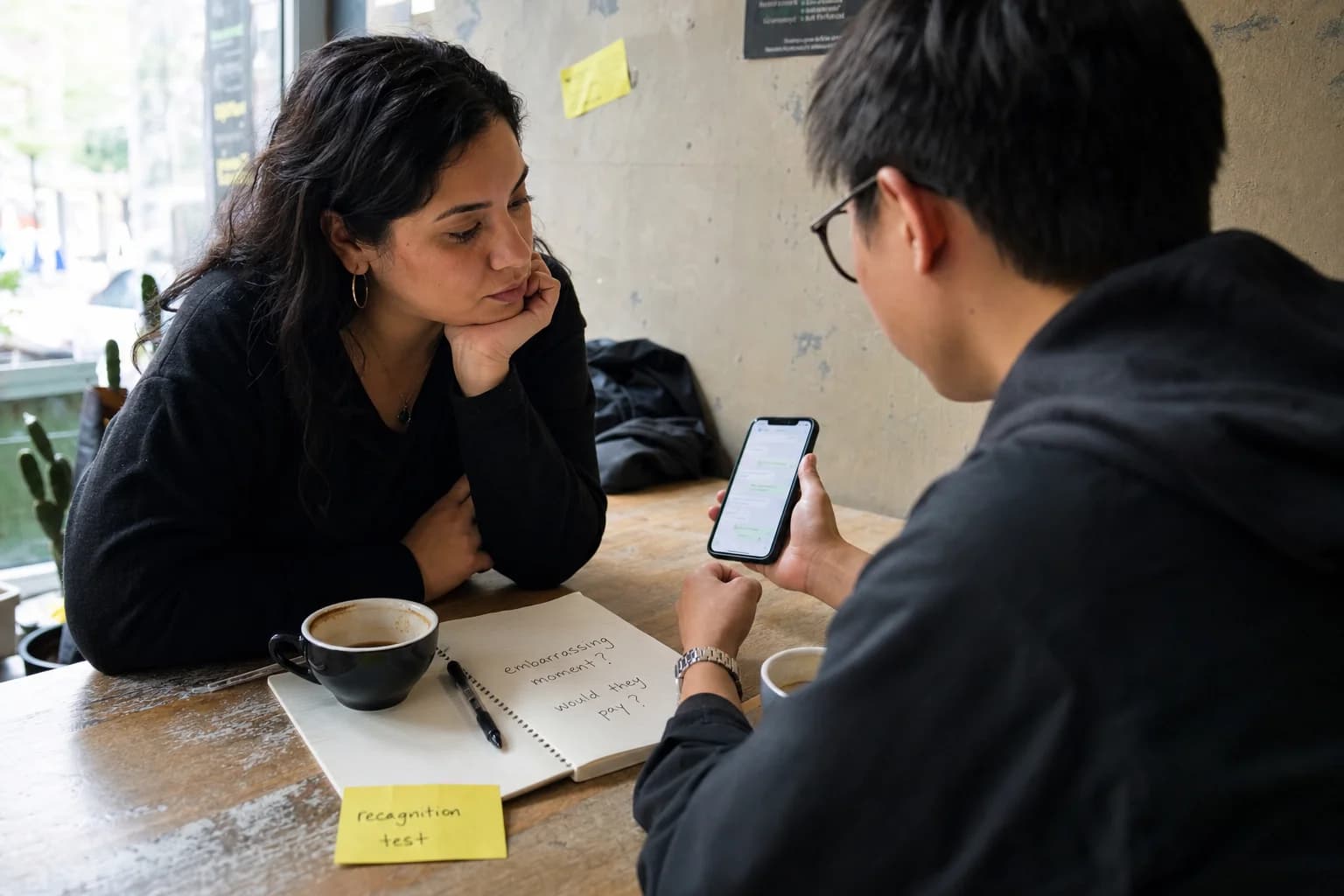
Listen to this article
19:27AI-generated podcast-style overview of this article (not a word-for-word narration).
My roommate caught me typing and deleting the same message for six minutes on a Tuesday. She did not say anything at first. She just leaned over the back of the couch, read the half-finished line, and said, "You know there is probably an app for that, right?" There was not, not one that did what I actually wanted, which was three paste-ready options in different tones without signing up for something that felt like it would store my dating disasters on a server. I laughed it off. Then I could not stop thinking about it, because that is how consumer app ideas actually start. Not with market size slides. With a moment you are slightly ashamed to admit out loud.
If you are trying to figure out how to validate a consumer app idea before you build, you have probably already read the B2B playbooks. Fake door landing page. Twenty customer interviews. Five pre-sales. Great advice when your buyer has a work email and a budget line called "software." Terrible fit when your buyer is alone on a couch at eleven p.m. wondering if an app can be trusted with a screenshot of their group chat. I am Iryna. I design consumer products for a living and I shipped one iOS app, Finish Him Replies, after years of sketching other people's paywalls. This is the validation guide I wish existed before I committed to Expo, EAS, and the emotional roller coaster of App Store review.
Consumer app validation is not softer than B2B validation. It is different. The buyer is private. The decision is emotional. The competition is often "do nothing" or "ask a friend" rather than another SaaS dashboard. You are not selling ROI. You are selling relief from a small humiliation people rarely post about on LinkedIn. That changes every test you run. Max wrote the definitive guide on how to validate a micro-SaaS idea for workflow tools and narrow B2B buyers. Imani covers validation without coding from a non-developer angle. Reese will teach you distribution once you have something strangers can find. I am here for the pocket, the screenshot, the moment before someone opens the App Store and wonders if this app is creepy. Read those posts for the general discipline. This one owns consumer app validation for solo founders building something personal on iOS or mobile first.
Revenue is still validation. Star ratings help. "My friends said they would totally use it" is not. The goal of the next few weeks is not confidence. It is evidence that a stranger with the problem will change behavior, and eventually pay, for the relief you are proposing. Everything below is bootstrapping with your dignity intact. Some numbers are illustrative examples, not claims about my bank account. I will say when I am imagining a scenario.
One more thing before the how-to: validation is not punishment for having an idea. It is how you find out whether the idea respects real humans. Consumer apps touch private life. Doing the awkward work upfront is a kindness to future you and to strangers who might trust you with their screenshots.
How to validate a consumer app idea when nobody will answer your survey
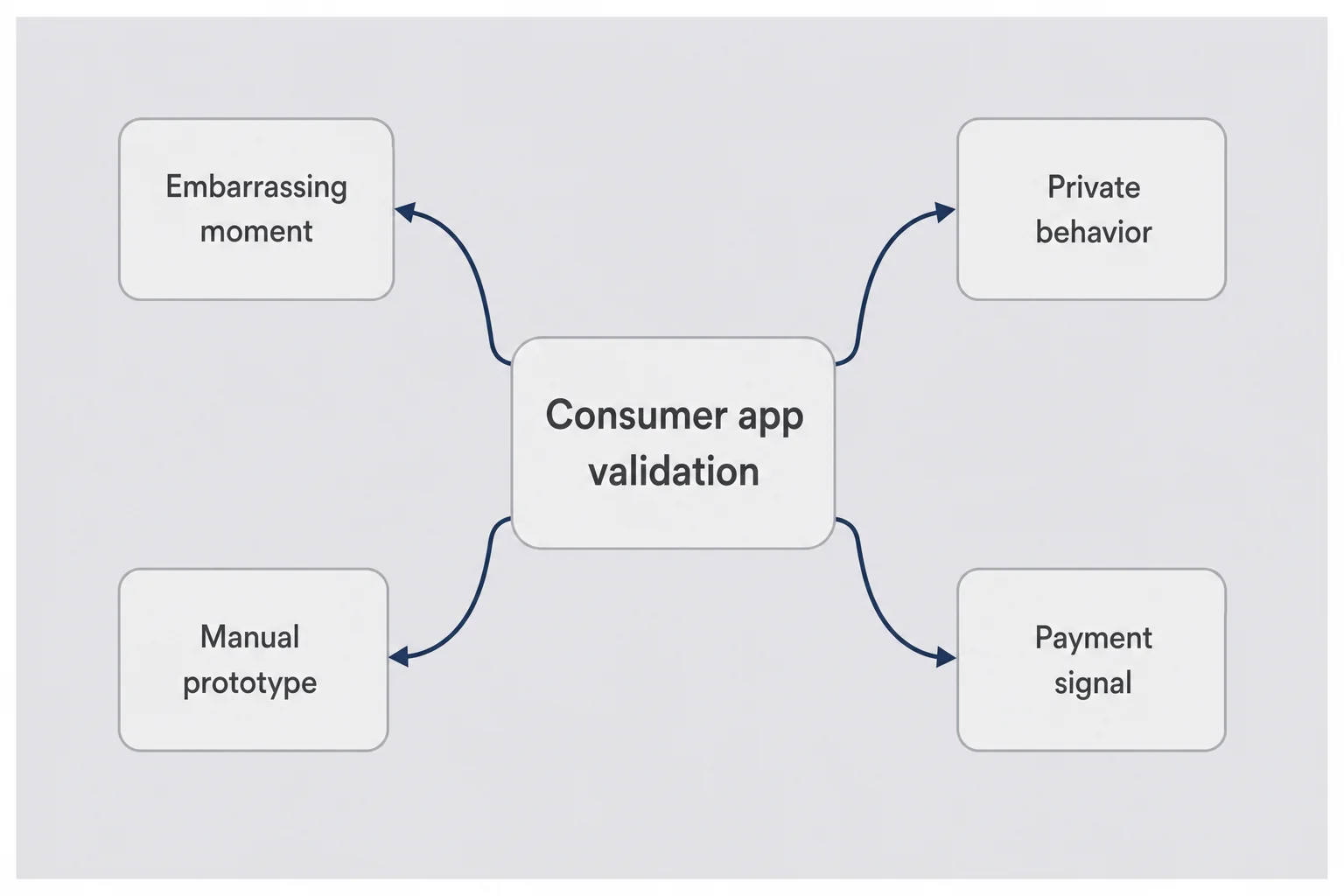
Here is the first mistake I see from founders crossing over from B2B: they treat validation like a form. Typeform survey. Google Form. "On a scale of one to ten, how painful is texting?" Nobody honest answers that about their love life, their body, their money, or their group chat drama. Consumer app validation happens in recognition, not ratings.
How to validate a consumer app idea before you build is a sequence of behavior tests that respect privacy. You define one embarrassing moment in one sentence. You look for people who flinch with recognition when you describe it. You deliver the outcome manually before you automate it. You watch whether strangers repeat the behavior without you nagging them. You ask for money when speed and discretion matter more than free alternatives. That is the whole game. The tools change. The sequence does not.
Building a consumer app got cheaper the same way B2B building got cheaper. Expo, AI-assisted coding, no-code mobile builders, templates everywhere. Cheap building does not mean you should skip validation. It means you can waste six weeks on a beautiful App Store listing for a problem people tolerate instead of solve. The cover charge for the App Store is not the $99 developer account. It is your time and your name on something strangers will judge in eight seconds.
I validate consumer ideas on a simple bar: would a stranger pay a few dollars to escape this moment faster than their current workaround? Not "is AI impressive." Not "is the market big." Workarounds matter. People already text friends for reply help. They already rewrite messages in Notes. They already open ChatGPT and paste context they feel weird about. Your app has to beat those behaviors on speed, tone, and trust, not on feature count.
If you already shipped a web micro-SaaS, forget the parts that assume a buyer reads email at work. Your consumer buyer discovers you in the App Store, a TikTok comment, or a friend who sends a link at midnight. Product has to carry distribution early. Validation has to simulate that privacy. A public waitlist for "AI relationship coach" attracts tourists. A recognition conversation about deleting the same text four times attracts the person who might actually subscribe.
The embarrassing moment test: your real ICP is not on LinkedIn
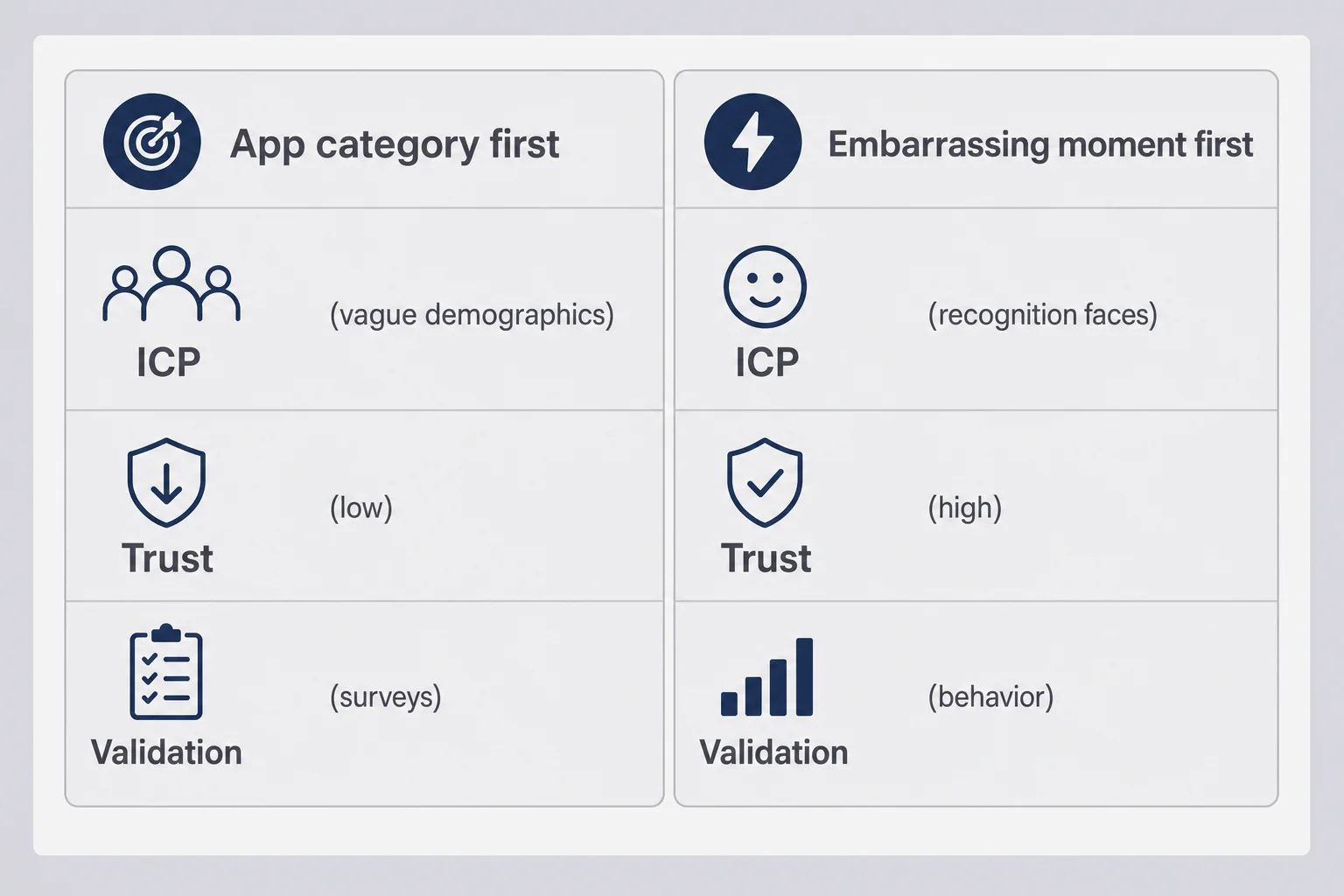
I did not validate Finish Him by saying "AI reply assistant for Gen Z." I validated it by admitting I stare at chats too long and send nothing. The embarrassing moment test is stupidly simple and weirdly hard because it requires honesty.
Write the moment like a scene, not a feature list. Where are you? What did you just read? What do you want to feel when you hit send? What do you do instead when the app does not exist yet? For me: standing in the kitchen, thumb hovering, deleting a line that was fine but not funny enough, closing the app, reopening it like that would fix my brain. If you cannot picture the room, you will build UI chrome instead of relief.
Your real ICP is not a demographic spreadsheet. It is everyone who winces when you describe the scene. I tested ten people who text the way I do. Not "would you use an AI app." I said, "You ever stare at a message for five minutes and send nothing?" Watch the face. If they laugh with recognition and pull out their phone to show you a thread, keep going. If they shrug, your idea might be a feature looking for a feeling.
Do not poll friends who love you. They are useful for TestFlight crashes and polite encouragement. They are useless for kill decisions. I love my mom. I would not let her decide whether strangers will pay for savage reply tones. Consumer validation needs people who do not care about your founder journey. Reddit threads, group chats you do not control, App Store reviews written by tired humans at one star.
The moment test also kills bad ideas early. If you need three paragraphs to explain why someone would care, you are not selling a consumer app yet. You are selling a concept. Concepts get likes. Moments get installs. I sketched flows in Figma before code because consumer apps are emotional UX with a payment screen attached. Validation starts in the same place. Name the feeling. Name the workaround. Name what "better" feels like in under ten seconds.
When the moment is too vague
"Vibes off in dating" is not a moment. "I read their last message and cannot tell if they are flirting or being polite" is closer. "I want to sound confident without sounding mean" is closer still. Narrow until you can role-play the scene with a stranger and they interrupt you to say "oh my god, yes."
If your moment only happens once a year, like taxes or wedding planning, consumer subscription economics get brutal unless you charge a lot or accept seasonal churn. Frequency matters. Embarrassment that repeats weekly beats embarrassment that peaks annually. Texting anxiety is weekly. That is part of why reply helpers can work as small subscription apps. Annual tax panic might be a one-time purchase or a content play, not a $4.99 monthly habit.
Why B2B validation playbooks lie to consumer founders
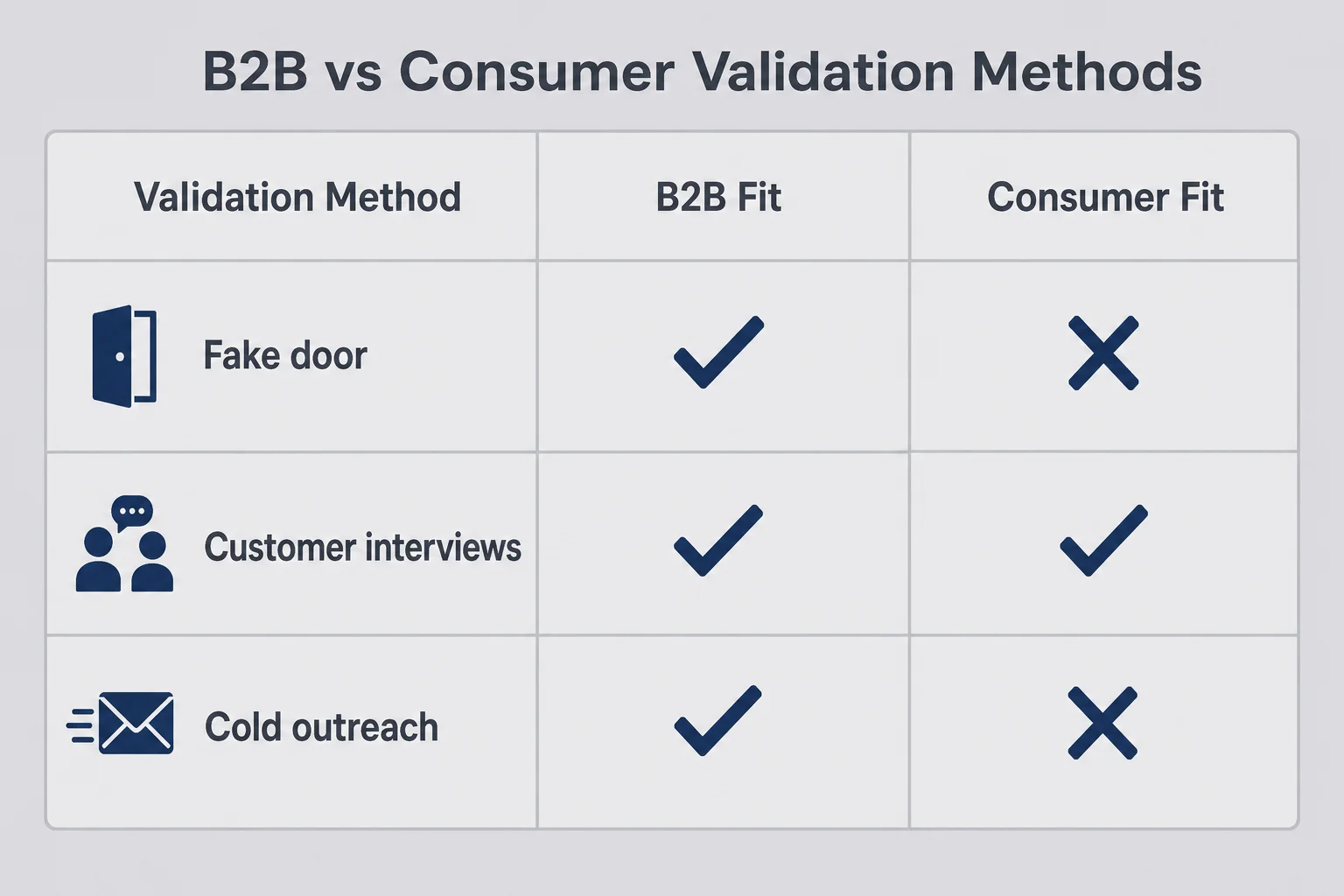
Max's micro-SaaS validation playbook is correct for B2B. Fake door with a visible price. Ten interviews without pitching. Pre-sale before code. I recommend it without reservation when your buyer has a job title and a problem that shows up in Slack. I ignored half of it for Finish Him, and that was the right call.
B2B fake doors work because the buyer expects to evaluate software with their work email. Consumer fake doors for personal problems often attract the wrong signal. Someone joins a waitlist for "AI breakup helper" because drama is entertaining. They will never install. Someone else will not join any waitlist because the problem is embarrassing. Absence of emails does not mean absence of demand. It can mean your funnel insulted their privacy.
Customer interviews still help, but the script changes. Do not ask "would you pay $9.99 a month for an app that..." Ask what they did the last time the moment happened. What did they type and delete? Did they ask a friend? Did they feel gross about it? Past behavior beats hypothetical budgets. The Mom Test principles apply. Pitching your solution turns the conversation into politeness theater.
Cold email is Reese's world. Micro-SaaS cold email finds buyers who live in inboxes. Your consumer buyer does not want a founder email about their texting habits. Distribution for personal apps is product-led, social, or App Store search. Validation should mimic discovery, not outbound sales. Post a short video describing the moment without showing your app. See if strangers comment "where is this" or share their own story. That is closer to truth than fifty warm intros.
B2B validation optimizes for willingness to pay with an invoice mindset. Consumer validation optimizes for willingness to install, reopen, and pay discreetly. A stranger who pays five dollars on Venmo for you to manually send three reply options tonight is stronger signal than two hundred waitlist emails from a Product Hunt sidebar. I am not anti-landing-page. I am anti-copying B2B mechanics without asking whether your buyer would ever type their pain into a Mailchimp form.
Imani's no-code validation path is smarter for consumer than most founder Twitter threads. Manual delivery, small tests, kill fast. The difference is emotional texture. B2B no-code validates workflows. Consumer no-code validates shame, delight, and trust. If your manual prototype makes people exhale or laugh, you have something. If it makes them say "cool tech," you have a demo.
Demand signals and App Store clues for personal apps
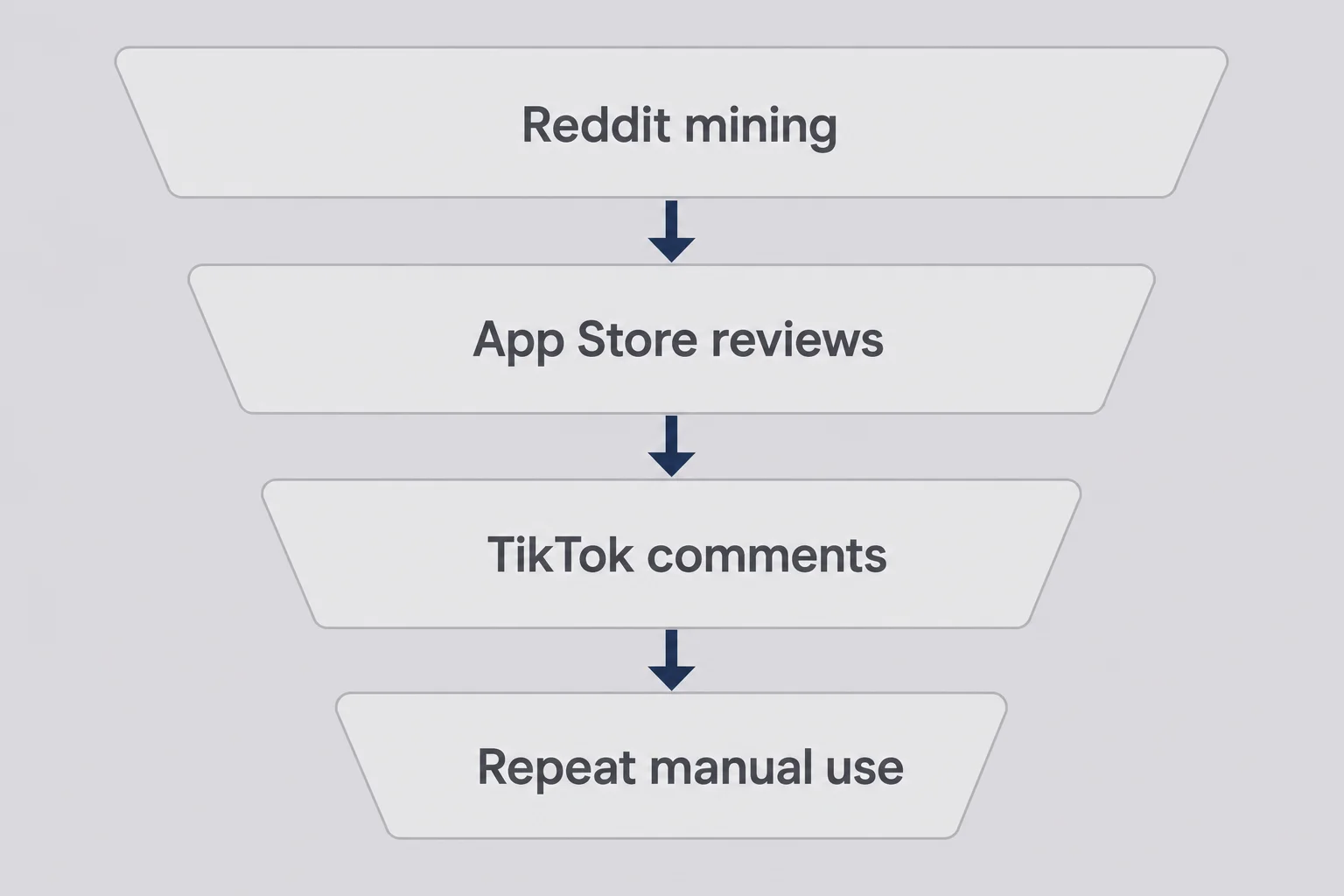
Consumer app validation needs signals that happen where the pain already lives. I use four channels. None require Swift. All require honesty about weak results.
Reddit and forum mining. Search the problem language, not your solution language. "How do I reply to this text" beats "AI writing assistant." Sort by comments, not upvotes alone. Save threads where people describe workarounds, not memes. Three unprompted "I would pay for this" comments from strangers beat thirty friends saying "you should build it." DM carefully. Offer to manually help once. Do not spam your app idea. Offer the outcome.
App Store review archaeology. Find competitors or adjacent apps. Read two-star and three-star reviews. Those are gold. Five-star reviews are often gratitude or bots. Two-star reviews are frustrated humans explaining what broke emotionally. "Works but feels creepy." "Good output but too many steps." "Love it but wish it had X tone." That is your spec. You are not copying features. You are learning what trust and relief look like in your category.
Short-form content tests. One week of posting is enough for a first read. Describe the moment. Blur screenshots. Do not pitch a launch. See if comments share stories or ask where to download. A video with four thousand views and three polite emojis is not demand. A video with eight hundred views and forty comments trading war stories might be. Comments beat views for consumer validation.
Repeat manual use. Before TestFlight, I ran crude ChatGPT sessions with blurred screenshots. Slow. Not shippable. Useful. I noticed when outputs made me feel relief versus when they felt generic or invasive. I also noticed when I would not send the line anyway. That killed bad prompt directions early. If you will not use the manual version twice in one week, strangers will not use the app twice either.
App Store demand signals also include search behavior. Type your outcome phrases in the App Store. See what autofill suggests. See what already ranks. Crowded markets are not automatic nos. They prove people search. Empty markets might mean discovery is impossible or the pain is not app-shaped. Both answers help.
Combine channels. Two weak signals across different sources might still be a no. One strong behavioral signal can outweigh a hundred likes. I care most about repeat manual use and stranger comments that describe the pain without prompting. That is the consumer version of Max's revenue finish line.
A two-week signal sprint that does not require code
If you want a calendar-shaped version, here is how I would run a first pass on a personal app idea while working a day job. Week one, day one and two: write the embarrassing moment scene and read fifty Reddit comments in adjacent threads. Not to reply. To collect language. Highlight phrases people repeat. "I never know what to say." "I draft ten versions." "I ask my sister." That language becomes onboarding copy later if you build.
Week one, day three through five: ten recognition conversations. Coffee, DMs, voice notes to people who match the moment. No pitch deck. No mockups unless they ask. Watch for phone-pulling. Count how many people volunteer a story without you asking for one. Below three out of ten is a yellow flag. Below one is a stop sign unless you narrow the moment.
Week one, weekend: manual prototype night. Run the outcome yourself for three willing people. Time how long it takes. Notice where you feel gross. Notice where they go quiet. Quiet is data. Week two: post one honest short video or thread describing the moment. Not "building in public" theater. Just the truth. Track inbound DMs. Run a paid concierge offer to five strangers if DMs show up. If nothing shows up, you still learned cheaper than an App Store icon designer.
This sprint is not the only path. It is a box you can finish. Unfinished validation drags for months because building feels like progress. A sprint ends with a decision — the Idea Validation Scorecard has a consumer-app toggle if you want a go, wait, or pivot read without negotiating with yourself.
Willingness to pay before you open Xcode
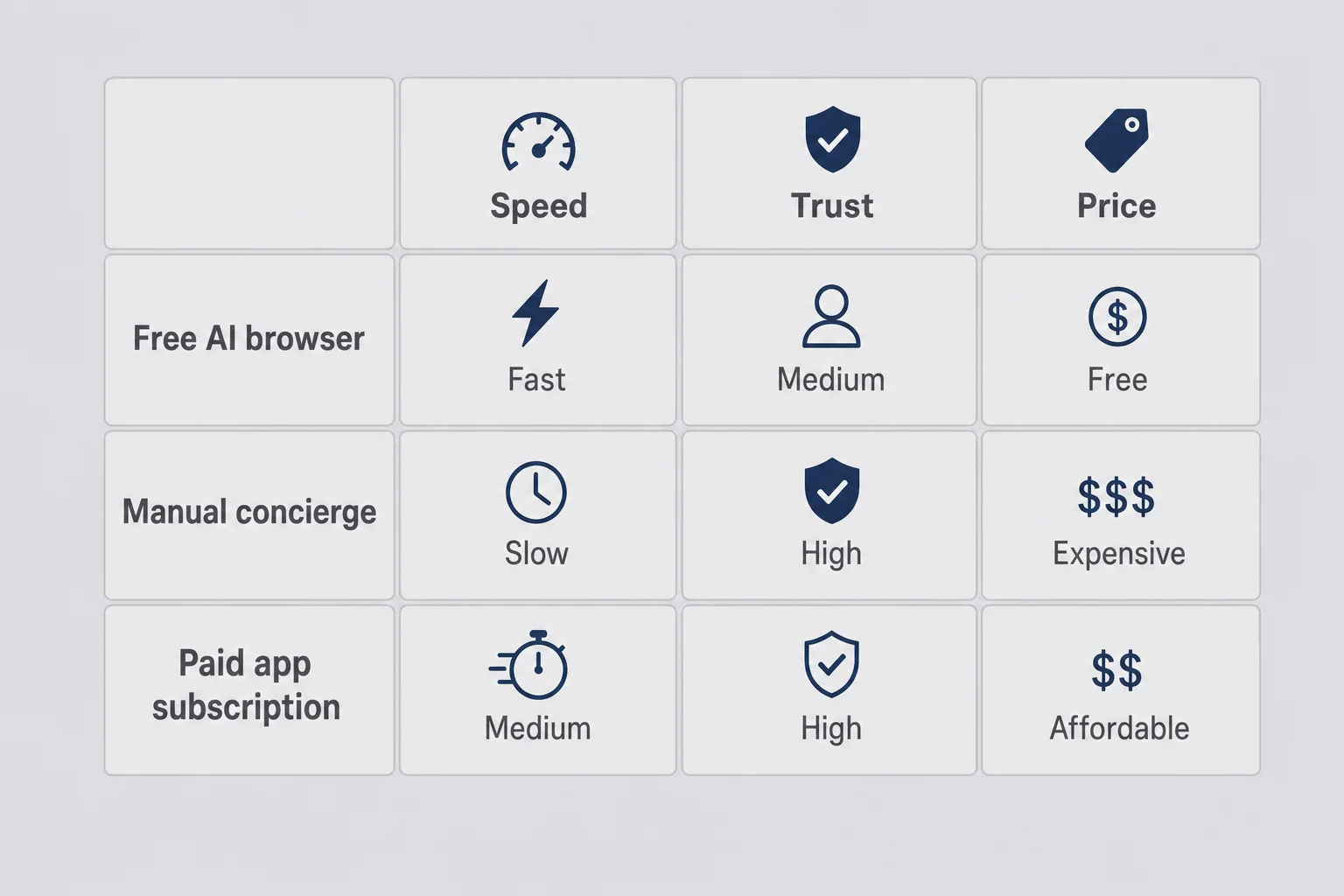
People already have free AI in a browser. Consumer apps win on speed, tone, and trust, not on "uses GPT." Validation must test willingness to pay for those differences, not for intelligence.
Ask the question plainly after someone reacts to a manual output: "Would you pay five dollars right now for three options you could paste in ten seconds?" Not someday. Not if it existed. Tonight, for the next awkward text. Yes fast matters more than yes slow. Maybes are nos with better manners.
Paid concierge beats free concierge for signal strength. Deliver the outcome by hand for five strangers. Charge five to ten dollars via Venmo, Stripe payment link, or whatever you already use. If nobody pays, the problem might be real and the offer wrong, or the problem is not urgent enough. Both are useful answers. Free help gets you gratitude. Paid help gets you truth.
Pre-selling a TestFlight spot is underrated. "I am building a discreet reply helper. Ten dollars gets you early access and lifetime discount when it ships." Small cohort. Clear deliverable. You are not scamming anyone if you are honest about stage. You are measuring whether privacy and speed are worth money before you pay for Apple developer fees and EAS builds.
Do not confuse App Store pricing research with validation. Seeing competitors charge $9.99 tells you what survived, not what you should copy on day one. Micro-SaaS pricing for solo founders from Max is about B2B floors and Stripe plans. Consumer subscription psychology is messier. People compare your app to coffee, not to ROI. They churn when shame fades or when the app feels predatory. Willingness to pay tests should use numbers you can live with if almost nobody buys. Five dollars for manual delivery. Three to five dollars a month for early app access. You are measuring slope, not MRR — save the MRR calculator for after strangers actually subscribe.
Say you charge five dollars for manual replies for one week and three strangers pay. That is not quit-your-job money. It is proof that the moment has economic teeth. Say zero pay and twenty "that is so cool" messages. Believe the zero. Politeness is infinite. Budgets are not.
Annual versus monthly is a pricing decision for later. Validation question is simpler: will anyone pay anything for relief now? If only free users show up, you might have a marketing problem, a trust problem, or a problem problem. Consumer founders love blaming marketing first. Trust and problem-fit fail more often.
The concierge MVP: deliver the loop by hand first
The concierge MVP is the most underrated tool in consumer validation because it feels embarrassing to founders who want to ship software. Good. Embarrassment is on brand for this niche.
Define the core loop in one line. For Finish Him: screenshot in, three styled replies out, copy, send. Your concierge version can be absurdly manual. User texts you a blurred screenshot in Telegram. You run the model yourself. You send three options back. Slow. Not scalable. Perfect for learning.
Run concierge for five to ten people max. You are not starting an agency. You are buying knowledge for the price of your time. Track where they hesitate. Do they refuse to send screenshots? Trust problem. Do they love output one but never send? Tone problem. Do they ask for a fourth option? Product scope problem. Do they come back three nights in a row? Retention signal.
Wizard of Oz is a cousin to concierge. User thinks software is doing the work. You are behind the curtain. Ethical line: do not fake security or privacy you cannot deliver later. If you promise deletion and you are saving images to a folder named "test," stop. Consumer trust violations do not validate. They poison.
Concierge teaches onboarding copy before you write UI. I learned that people needed to know images would not be stored before they would upload anything. That sentence became more important than any button style. I also learned tone labels mattered. Funny, savage, unexpected were not random. They mapped to real send intentions. Concierge conversations surfaced that faster than Figma.
Timebox concierge to two weeks. Longer and you become a customer support team for a product that does not exist. Shorter and you might miss repeat behavior. Goal is one repeat user who did not know you before the test. Friends repeating do not count the same way.
When concierge works, you have a script for TestFlight onboarding. When it fails, you saved months of Xcode guilt. Either outcome is professional. Only one feels heroic on Twitter.
What I would log after every concierge session
I kept informal notes because I did not have a CRM and I am not Reese. After each manual session, three lines. What did they send? What tone did they pick first? Did they ask about privacy unprompted? Did they use an output or ghost? Ghosting after a good output sometimes means the social stakes were too high to send anything, which is a product insight about tone defaults, not a failure of your copy.
One friend always picked funny first and never sent. Another picked savage once and sent immediately. That pattern shaped my default card order and my onboarding examples. You cannot get that from a Typeform. You get it from watching humans hesitate in real time.
Concierge also exposes scope creep early. Every session will tempt you to add features. "Can it read tone from the last five messages?" "Can it suggest memes?" Write those requests down. Do not build them during validation. Count frequency. If six of ten sessions ask for the same extension, note it for v2. If one loud friend asks for a kitchen sink, ignore it politely.
Fake doors and smoke tests that fit mobile (not another landing page graveyard)
Landing pages are not dead for consumer. They are just easy to misread. A smoke test should measure intent from the right audience with the right promise.
Build one page that describes the moment of relief, not the technology. Headline in outcome language. Short paragraph about discretion. One call to action. For early consumer tests, strong actions beat weak ones. "Join waitlist" is weak. "Pay five dollars for early access" is stronger. "Book a ten-minute test where I send you three replies manually" is stronger still and weird enough that only serious people click.
Drive traffic where your ICP already lives. Reddit post with value, not a banner ad on generic Twitter. Short video with a blurred chat and a comment hook. Niche Discord if you are already a member, not drive-by spam. Hundred targeted visitors beat ten thousand random clicks. Reese's landing page guide teaches structure for cold traffic. Use the structure. Change the traffic source and the headline emotional register.
Mobile-specific smoke tests include TestFlight interest forms tied to a specific moment. "Reply helper for people who overthink group chats. iOS TestFlight in two weeks. Five dollars holds your spot." Small list. Honest stage. You are validating platform fit too. Some people only want Android. Believe them.
Another smoke test: fake App Store listing draft shared privately. Show icon, subtitle, three screenshots mocked in Figma. Ask ten target users what they think the app does and whether they would tap Get. Confusion means listing problem before code problem. Creepy reactions mean trust problem before feature problem.
Kill landing page vanity the same way Max kills B2B vanity. Traffic without the right action is noise. Ten percent email signup from random TikTok might be lies. Five manual paid deliveries from a Reddit thread is truth. Consumer smoke tests fail when founders optimize for page views to feel progress. Optimize for strangers doing something slightly costly.
I am not telling you to avoid Carrd or Framer. I am telling you to pair the page with behavior that respects privacy. If your idea cannot be described without making someone blush on a Zoom call, your validation funnel probably should not be a Zoom call.
Privacy and trust as early validation signals
Privacy is not a legal checkbox you add before launch. For consumer apps, especially anything touching messages, money, health, or photos, privacy is the product. Validate trust before you validate features.
In concierge tests, watch what people ask before they send content. "Do you save this?" "Who sees it?" "Will this show up on my phone bill?" Those questions are roadmap items. If you cannot answer clearly, you are not ready to build. Finish Him's architecture decisions came from validation conversations, not from a compliance checklist I pretended to understand.
Run a trust prototype alongside your output prototype. Same manual session, but lead with your data promise. "I process this once and delete the image." Then do exactly that. See if they still hesitate. Hesitation after a clear promise means your tone, brand, or category history is working against you. Dating and messaging apps start with skepticism. Your first session must feel safer than pasting into a random web form.
App Privacy labels and review questions will force specificity later. Validation is where you learn what to say. Ephemeral processing, no chat history, anonymous sessions, no training on user content. Those are product decisions. Test which phrases calm people down. "Bank-level encryption" marketing fluff made my friends eyeroll. "Screenshot deleted after replies generate" made them nod.
Children's privacy, health claims, and adult content edges can kill App Store approval entirely. If your idea skates near those lines, research guidelines before code. Validation includes reading rejection stories from similar apps. Two-star reviews that say "felt sketchy" are trust validation failures you can avoid.
Trust validation also means being honest about what AI does. If users think a human reads their screenshots, you failed. If users think outputs are guaranteed perfect, you failed differently. Consumer apps should set expectations like a good friend, not like a demo reel.
When trust blocks conversion in manual tests, fixing copy and flow is cheaper than fixing a shipped app with one-star reviews. I would rather lose an idea in week two than launch something people call creepy in public reviews.
Trust copy you can test in one sentence before you design UI
Before Figma, before Swift, before Expo, write three trust sentences and read them aloud to someone who matches your ICP. "Your screenshot is processed once and deleted." "We do not store your conversations." "No account required to try it." Watch the face. If they ask follow-up questions, your sentence is unclear. If they relax their shoulders, keep that sentence for onboarding screen one, App Store description, and review notes.
Consumer apps fail trust in predictable ways. Asking for too much data before value. Showing other users' content without context. Hiding what the AI does. Using stock photos of happy couples when your app is about anxiety. Validation is where you catch those mismatches for free. A/B testing trust copy after launch is expensive because reviews are public and slow.
If your idea touches dating, mental health, finances, or bodies, assume users arrive skeptical. That is not insulting. It is respect. Meet skepticism with specificity, not with more adjectives.
Kill criteria: when to stop before App Store fees
Validation is also permission to stop. Consumer founders treat quitting like moral failure. It is resource allocation.
Kill when you cannot get recognition faces from strangers describing the moment. Kill when manual outputs do not produce relief, laughter, or send intent. Kill when nobody will pay for concierge delivery after ten real asks. Kill when the only enthusiastic users are builders who love AI demos. Kill when you keep widening the audience from "people who overthink dating texts" to "anyone who uses messaging" because the narrow version failed.
Kill when frequency is too low for subscription economics unless you pivot to one-time pricing. Kill when workarounds are good enough and your app only saves thirty seconds. Kill when trust barriers never soften after clear privacy promises. Kill when you secretly hope validation succeeds because you already built half the app. Sunk cost is louder in consumer because Figma files look so finished.
Do not kill because one Reddit post got ignored. Do not kill because your mom did not understand the idea. Kill on patterns across channels. Zero paid concierge, zero repeat manual use, zero unprompted stranger pain in research. That pattern is a kind answer from the universe.
Apple's developer fee and EAS builds are not bankruptcy events, but they are emotional toll gates. Time is the bigger cost. Three months building a consumer app nobody reopens is worse than three weeks validating badly and learning fast. I killed features inside Finish Him before I killed the whole idea. Narrow kills are healthy. Idea kills are healthy too.
Pivot signals look like partial recognition. People love the output but will not upload screenshots. Maybe text-in instead of image-in. People pay for one tone only. Maybe narrow the product. People want web not app. Maybe platform wrong. Pivot is not failure. It is validation doing its job.
Write your kill criteria on a sticky note before tests. "If zero strangers pay for manual delivery by Friday, I pause." Stick to it. Future you will try to negotiate. Future you is emotional. Criteria were written by slightly wiser present you.
What validation looked like for Finish Him
I will not invent revenue charts for an app that was still moving through review when I wrote the build guide. I can tell you what validation felt like without pretending I ran a perfect lab experiment.
The personal itch came first. I was the user. That helps consumer ideas but does not replace external signal. Founders who only validate on themselves build hobbies. I still needed strangers.
Recognition conversations were messy. Some friends lit up. Some looked confused because they send messages without overthinking. That split taught me my ICP was overthinkers, not all texters. Manual ChatGPT sessions with blurred screenshots taught me three tones beat one generic reply. I felt gross about certain upload flows and removed them before code existed. That gut check was validation data.
Willingness to pay was informal. I asked whether people would pay a few dollars a month to stop staring at blank reply fields. Quick yeses mattered. Long maybes did not. I did not run a perfect paid concierge cohort at scale. If I were starting today, I would charge five dollars for a week of manual replies and measure repeat asks. That is the honest upgrade to my process.
Competitor reviews taught me speed and paste-ready output beat long paragraphs. Trust language mattered as much as wit. TestFlight with friends caught onboarding confusion I would have missed in Figma. One crash on the screen that mattered. My mom was polite. I fixed it before review.
I also learned what not to chase. A friend wanted group chat support before single threads felt solid. Another wanted Android before iOS proved the loop. Feature requests during validation are gifts you should catalog, not obey. The loop matters first. Everything else is a sequel.
There was a week I almost built a web version because posting a landing page felt easier than dealing with provisioning profiles. That was avoidance wearing a validation costume. Web might be right for some ideas. For a screenshot-first reply helper, the phone was the point. Validation helped me see the difference between distribution fear and platform truth.
Validation did not end at launch. Consumer apps validate continuously through retention and upgrades. First version is hypothesis. Reviews are feedback. Validation before build just stops you from coding the wrong hypothesis for six months.
Say you run the two-week sprint and get four paid manual sessions, two repeat users, and one stranger DM asking when TestFlight opens. That is enough to start building a v1 loop if your costs are sane. Say you get zero repeats and polite praise. Thank the universe and pick a sharper moment. Both outcomes beat three months of beautiful UI nobody reopens.
If you want the full stack and shipping story after validation passes, read how to build your first consumer iOS app. That post picks up where this one ends.
A few honest answers about validating a consumer app idea
How do you validate a consumer app idea before building?
Start with one embarrassing moment you can describe in a sentence, not an app category. Run recognition tests with ten people who live that moment. Prototype the output manually before you write app code. Mine Reddit and App Store reviews for unprompted pain. Ask for money or a paid TestFlight beta before you pay for EAS builds. Consumer app validation is emotional signal plus private behavior, not a B2B waitlist.
Is a landing page enough to validate a consumer app?
For some consumer apps, a waitlist tells you almost nothing because the real buyer will not give a work email for a personal problem. Landing pages work when traffic matches the private moment and the page describes relief, not features. Pair a simple page with Reddit posts, short-form video, or manual concierge delivery. If strangers will not take a stronger action than an email signup, treat the page as research, not validation.
How is consumer app validation different from B2B SaaS validation?
B2B buyers answer surveys, join waitlists, and take discovery calls because the problem is professional. Consumer buyers decide in private on a phone. They care about trust, shame, and speed more than ROI slides. Fake doors and cold email playbooks from B2B rarely transfer. Consumer validation leans on recognition moments, manual prototypes, App Store competitor reviews, and willingness to install or pay discreetly.
How long should consumer app validation take?
Two to four weeks of focused evenings is enough for a first pass if you already feel the problem yourself. Week one is moment definition, ten recognition conversations, and Reddit or App Store research. Week two is manual prototype outputs and a small willingness-to-pay test. If you cannot get one stranger to use a manual version or pay a few dollars for speed, do not open Xcode yet.
What counts as a kill signal for a consumer app idea?
Kill when people nod politely but will not show you a real thread, screenshot, or workaround. Kill when manual outputs do not produce relief or laughter. Kill when nobody will pay five dollars for a concierge version. Kill when the problem only appears once a year. Kill when you keep widening the audience to rescue the idea. Consumer apps need frequent, emotional, private pain. Without that, downloads become a hobby.
Validation is the awkward conversation before the awkward app ships
I still overthink texts without opening my own app sometimes. The product works better than I do on bad nights. That is fine. Validation will not remove your anxiety as a founder. It only reduces the odds that you ship that anxiety into a stranger's phone wrapped as a subscription.
You do not need a pitch deck. You need one embarrassing moment described honestly, a handful of strangers who recognize it, a manual version that produces relief, and eventually money or repeat behavior that is not politeness. Consumer app validation is quieter than B2B Twitter threads. Fewer screenshots of MRR dashboards. More DMs with blurred chats and nervous questions about privacy.
If the signals are weak, be glad you learned in weeks. If the signals are strong, build the smallest loop that delivers the moment, price it without apologizing, and read the build guide when you are ready for TestFlight. Your first app does not need to be your life's work. It needs to solve one awkward moment well enough that a stranger pays five dollars without you explaining yourself in a calendar invite.
The App Store can wait. The moment you are trying to escape cannot. Validate that first.



Comments