I Had Forty-Seven Keywords and Zero Outlines
A solo-founder keyword research workflow for web content: listen in sales notes, score one phrase, outline for search intent, and publish to a page that matches the promise.
 By Reese26 min read
Listen to this article
26:11AI-generated podcast-style overview of this article (not a word-for-word narration).
A founder DM'd me his Ahrefs export last March. Forty-seven keywords. Color-coded by volume. Zero outlines. Zero published URLs. He asked if he was "doing SEO right" because the spreadsheet felt productive.
I asked what his last customer typed into Google before they paid. Silence. Then: "They came from a referral." Right. And nobody is searching your product name on day one either. Keyword research micro saas solo founder work is not exporting a rainbow spreadsheet. It is finding one web phrase your buyer already uses, proving you can beat page one with specificity, outlining an article that answers the query in their words, and sending the click to a landing page that keeps the same promise. Tools help at the edges. Listening is the center.
I am Reese. I have done growth for small B2B SaaS since 2014 and launched a couple micro-SaaS side projects that found small audiences because I knew where strangers look before I finished polishing features. I use Ahrefs and Ubersuggest. I also use sales call notes, support tickets, and the exact sentence someone writes when they reply to cold email. Keyword research without that human input is autocomplete cosplay.
This post is the system behind my micro-SaaS SEO guide. That piece owns the channel: one article, slow compounding traffic, honest metrics. This piece owns the workflow before you hit publish: research, score, outline, align the destination page. Not App Store keywords. Not a content calendar fantasy. Web search phrases for blog posts and guide pages that earn clicks for years.
The difference matters because founders confuse the two and wonder why their store keyword list did not produce a blog outline. Or why their blog ranks but the App Store page still has generic screenshots. Same founder, two surfaces, two research habits. This article is the web habit only.
If you cannot say who the product is for in one sentence, close this tab and do positioning first. Keywords amplify a clear offer. They do not invent one.
Keyword research micro saas solo founder: the pipeline before the publish button
Keyword research micro saas solo founder work fails when it stops at the tool. Exporting related terms feels like progress because the CSV has numbers. Numbers without intent are wallpaper.
I think of the job as a pipeline with four stations, not a single afternoon in a keyword explorer. Listen for how buyers describe pain in plain English. Score one primary phrase against buyer fit and page-one reality. Outline an article whose H2s mirror how the searcher thinks. Publish to your domain with a landing page or CTA path that uses the same language as the title tag. Miss a station and you get familiar waste: forty-seven saved keywords and an empty docs folder, or a ranked article that sends traffic to a homepage that says "streamline your workflow."
Solo founders do not need enterprise content ops. You need one repeatable pass you can run on a Sunday before you write. The pass is boring. Boring is why it survives busy weeks when inspiration does not.
Web content keyword research is different from the keyword lists you see in App Store optimization threads. Apple search is title, subtitle, screenshot words inside a store tab. Google search is problem language in articles and focused pages on your domain. Both matter for some founders. This article is the web lane only. Mixing them produces outlines that sound like store metadata and articles that never match what someone typed in a browser.
The pipeline also assumes you are writing for strangers with a problem, not for investors or peers. "AI-powered workflow intelligence" is not a keyword. It is a pitch deck fragment. "Copy shopify orders to google sheets without zapier" is a keyword. Ugly. Specific. Typed by tired humans.
What changes when research becomes a pipeline
When founders treat research as a pipeline, publishing gets slower in a useful way. You do not open a blank doc and prompt an outline from thin air. You open a one-page brief: primary phrase, searcher job, three H2 candidates, CTA destination, page-one gaps you will beat.
That brief is the handoff between marketing and writing. Even if marketing and writing are both you on a Tuesday night. The brief stops you from publishing another founding story that nobody searched for.
I keep mine in a single page called research brief in the same folder as drafts. Filename pattern: YYYY-MM-DD-primary-phrase-slug.md. When I come back two weeks later, I know exactly what job the article was supposed to do. Without that file, I rewrite the intro three times because I forgot which searcher I was talking to.
The pipeline also makes AI useful instead of dangerous. I do not ask Claude to "find keywords for my SaaS." I ask it to expand an outline I already scored, or to suggest three title variants for a phrase I already picked. AI as typist, not strategist. Strategy came from the language bank and page-one reading. That division of labor keeps the prose sounding like me and the structure sounding like the SERP.
Another change: you stop treating every blog post as a brand exercise. Founding stories have a place. They rarely match a problem query. The pipeline forces you to ask whether this URL earns a click from a stranger with a headache, not from your mom sharing on Facebook. Both audiences are lovely. Only one is keyword research.
Why founders research keywords in the wrong room
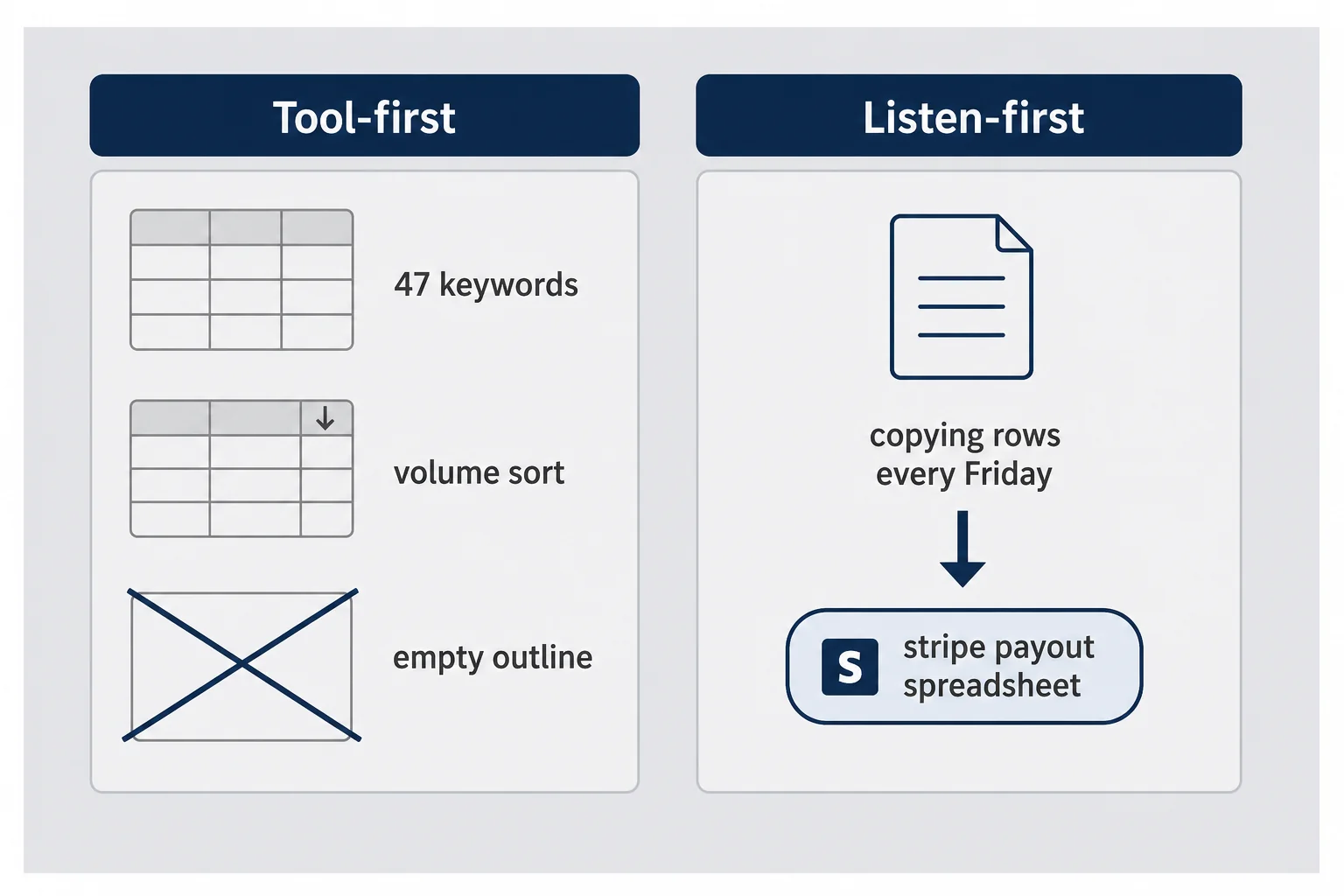
The wrong room is the tool before the notebook. The right room is anywhere customers talk without your jargon.
Most solo founders start keyword research inside Ahrefs or Ubersuggest because the interface looks like work. Type a head term. Sort by volume. Save forty variants. Feel productive. None of that tells you whether the person behind the query would pay you $29 a month.
The wrong room is also positioning you have not earned yet. If your homepage still says "for modern teams," keyword tools will suggest phrases for modern teams. That is a crowd, not a customer. Tools magnify who you claim to serve. They do not correct a vague ICP.
Another wrong room: competitor brand terms. Ranking for a rival's product name is a hobby for lawyers, not a solo founder SEO strategy. I see exports full of "[Competitor] alternative" before the founder has one article that ranks for a problem phrase. Alternatives pages can work later. Problem language pays rent first.
The right room is messy. It is a sales call where someone says "I have been copying rows every Friday." It is a support ticket that literally quotes the error message they Googled. It is a Reddit thread where your buyer complains in comments. Keyword research starts there. Tools validate and long-tail. They do not replace ears.
I learned this consulting for a founder who ranked nowhere after six months of blogging. Every post was feature-forward because his Ahrefs seed list started from his own product category name. We threw away the export. We reread ten support emails. The phrase we needed was in email seven, written by a bookkeeper who would never say "revenue reconciliation workflow." She said "stripe payout spreadsheet." That became the primary phrase. The next article outline took twenty minutes.
Tool-first versus listen-first
Tool-first research asks: what has volume? Listen-first research asks: what did a buyer almost say out loud? Volume without buyer fit is how you chase "invoice software" with a domain rating of four. Listening without tools is how you write beautiful posts nobody finds. You need both, in order.
When I catch myself tool-first, I close the tab and open Notes. I paste five customer sentences. I underline verbs. "Copy," "export," "remind," "reconcile." Those verbs become seeds. Only then do I type them into Google and a keyword tool.
Reddit and forums without becoming a spam account
Lurk where your buyer complains. Do not post your URL in thread one. Read the exact words they use when they are frustrated. Screenshot phrases into your language bank. Later, when you write the article, mirror that frustration in the opening paragraph without naming the thread.
I am not asking you to mine communities for SEO and ghost them. I am asking you to listen before you publish. The best-performing post I helped a founder ship last year opened with a sentence pulled from a comment that said "I refuse to pay for Zapier just to move twenty rows." The article ranked. The commenter never knew they wrote the hook. That is fine. The article helped.
If your ICP does not live on Reddit, try niche Slack groups, Facebook groups for bookkeepers, indie consultant forums, or industry Discords you already belong to. Keyword research is channel-agnostic listening with a search bar attached.
The human inputs I trust more than autocomplete
Autocomplete lies politely. It shows what people type often, not what your buyer types when your product is the answer.
My best keyword sources are still human, even in 2026 with AI everywhere.
Sales and discovery calls. When a prospect describes their week, I write the phrase down verbatim. Not cleaned up. If they say "messy CSV from our CRM," that string goes in a doc called language bank. That doc is more valuable than a paid tool seat.
Support tickets and onboarding replies. People paste error text. They describe what they tried before they found you. That is search intent wearing a support costume.
Cold email replies. When someone responds "actually I was looking for something that handles multi-currency," you just got a secondary keyword and a angle for page one.
Cancellation and churn reasons. Uncomfortable and useful. "I thought you integrated with QuickBooks" tells you what the landing page promised poorly and what someone might Google next.
Community lurk, not community spam. Read threads where your ICP complains. Do not post your URL. Steal phrases, not threads.
Compare that to opening a keyword tool's "related terms" list without context. The list is infinite. Your weekend is not. Human inputs filter infinity down to sentences that sound like your customer, not like an SEO blogger's template.
Building a language bank in one afternoon
Create a note. Five sections: sales, support, email replies, reviews, churn. Spend forty-five minutes pasting real sentences. No paraphrasing yet. After paste, highlight recurring nouns and verbs. "Friday," "export," "manual," "stripe," "sheet."
Those highlights become Google seeds. Type each into search in a private window. Read page one. Ask if you could write something more useful for that exact person. If yes, add the phrase to a shortlist. If no, long-tail until yes.
This is unglamorous. So is revenue. Autocomplete skips the Friday part. Your article should not.
When human inputs contradict the tool
Sometimes your language bank says "stripe payout spreadsheet" and the tool says ninety searches a month. That is fine. Ninety searches with buyer intent beat nine thousand searches for "accounting software" when you have no authority and no enterprise sales team.
Sometimes humans say something too long to be a keyword. Trim to the core job while keeping their words. "I am tired of copying stripe into excel every friday for taxes" becomes "stripe to excel for freelancers" or "stripe payout spreadsheet freelancer." The article opening keeps the long version. The title tag uses the trimmed version.
My ninety-minute keyword research sprint
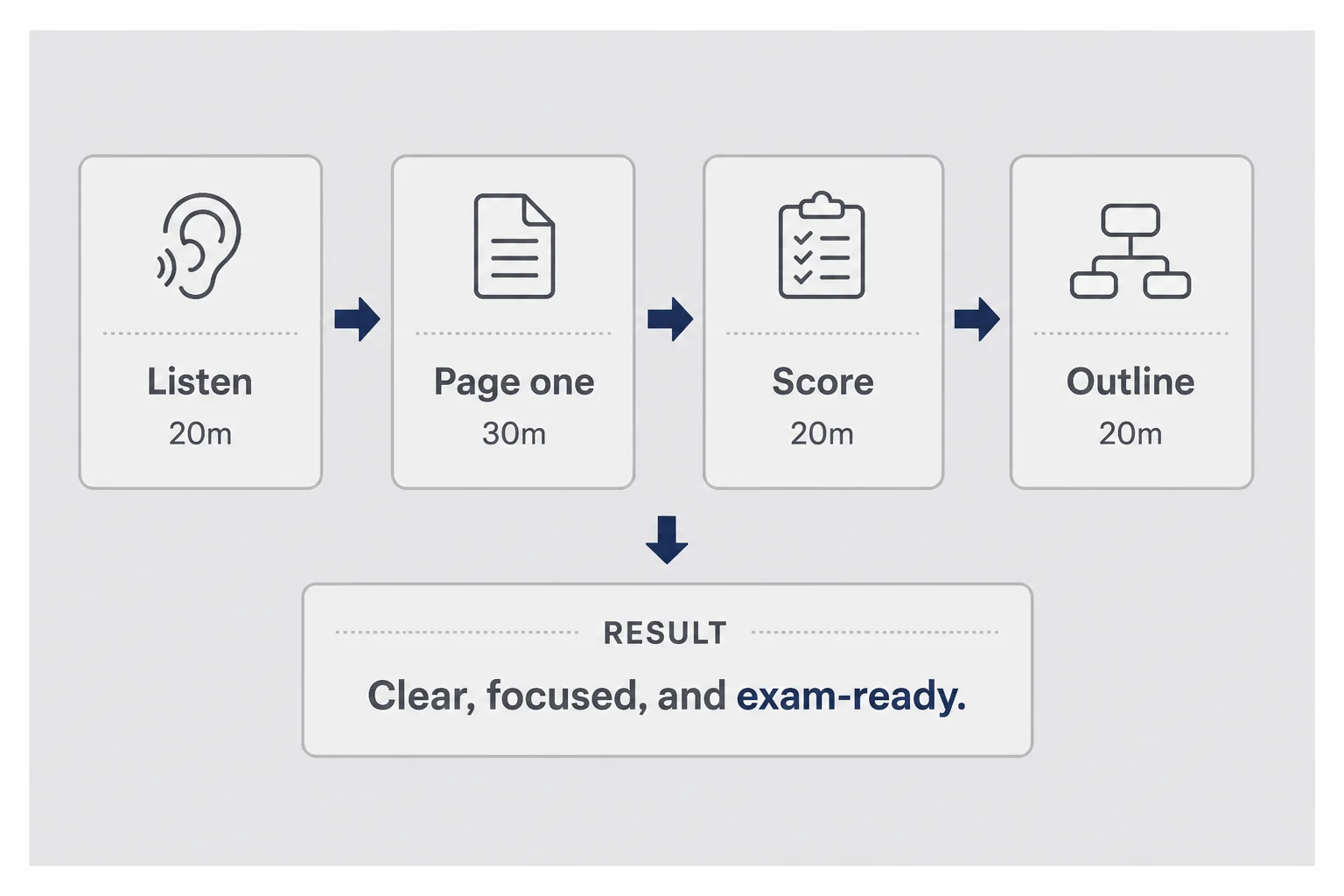
Block ninety minutes. No publishing. No AI outline yet. One primary phrase at the end or you reschedule.
Minutes zero to twenty: listen. Open your language bank or build a quick version from five support emails. Write five problem statements in plain English. Verbs, not taglines. "Send invoice reminders without QuickBooks." "Export shopify orders to a clean sheet." "Map stripe fees for tax season."
Minutes twenty to fifty: page one. Pick the strongest problem statement. Google it in a private window. Screenshot the top five results. Note format: tutorial, listicle, forum, video, product page. Note age. Note who ranks: brands, indie blogs, Reddit, Quora. Ask what is missing. Old screenshots. No solo-founder constraint. No price honesty. No "when not to use this tool."
Type two long-tail variants if page one is all giants. Repeat until at least two results look beatable by a practitioner post.
Minutes fifty to seventy: score. Run the shortlist through Ahrefs or Ubersuggest if you have it. Check difficulty if it helps you sleep. I care more about the four questions below than any KD number. Pick one primary phrase. Write the sentence: "Someone searching for ___ should land on ___ because ___."
Minutes seventy to ninety: outline. One page. Primary phrase at top. Three to five H2 candidates that match search intent, not your feature list. One CTA destination. One note on what page one missed that you will include.
Stop when the outline exists. Do not "quickly" write the intro. Momentum theft is real.
I run this sprint on Sunday for a post I publish the following weekend. It beats Monday-night panic where you publish something because the calendar said so.
What I do not do in the sprint
I do not pick five primary keywords. I do not let AI choose the phrase without page-one reading. I do not count words for a draft. I do not design the hero image. I do not open Webflow. Research and outline only.
If I finish early, I read one more page-one result critically. I do not start writing prose. Separation of stages keeps quality higher for solo operators who wear every hat.
Example brief from a real-shaped scenario
Say you sell a tool that helps freelancers reconcile Stripe payouts into a tax-ready spreadsheet. Your language bank has "copying rows every Friday" and "stripe fees make no sense in Excel." Page one for "stripe payout spreadsheet" shows two indie blogs from 2022, a Quora thread, and three corporate accounting sites that never mention freelancers.
You score it: buyer fit yes, beatable yes, problem intent yes, CTA path yes after you build /for-freelancers or reuse a focused block on your pricing page. Primary phrase locked.
Your ninety-minute outline might look like this in plain text. Primary: stripe payout spreadsheet for freelancers. Job: stop manual copy-paste before tax season. H2 stubs: the Friday ritual, which columns break when you export, doing it in Excel vs Sheets, when an accountant is worth it, automating without Zapier if that is your wedge. CTA: trial on a page that repeats "stripe payout spreadsheet" in the hero.
That brief is maybe two hundred words. It saves you six hours of wandering prose. Write the article next weekend, not the same night. Fresh eyes catch where you slid back into feature language.
How I score a phrase before it becomes a headline
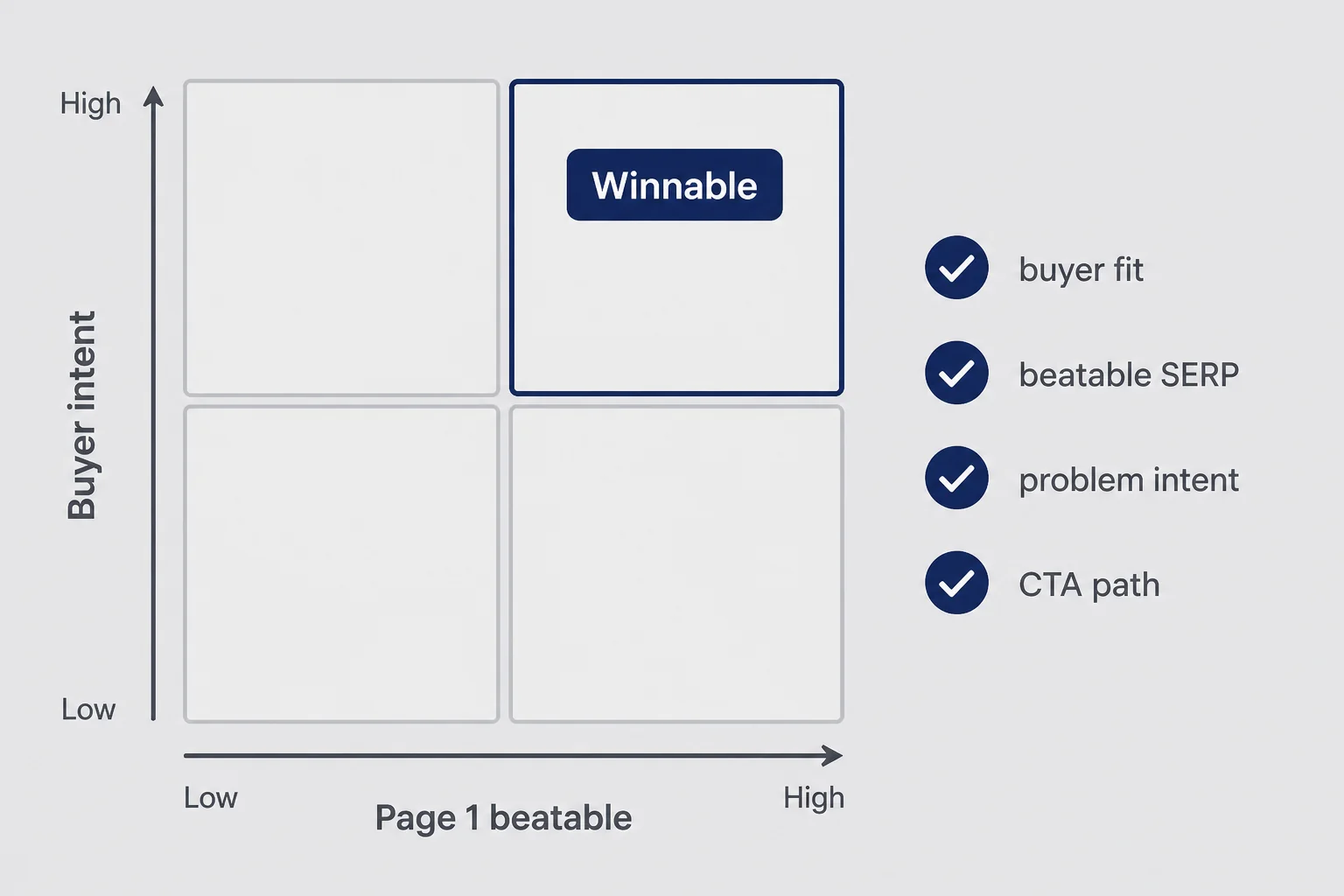
Volume is a tiebreaker, not a gatekeeper. I score with four questions. Pass three of four and the phrase is a candidate. Pass four and I outline this week.
Does the searcher look like my buyer? Students researching homework do not buy $49 B2B tools. Competitors shopping features do not count. If the SERP is all "what is X" definitions for beginners, be careful. Education traffic can work with the right CTA. It often does not for narrow B2B.
Can I beat two results on page one without a DR 60 site? I need at least two slots that are forums, thin listicles, outdated posts, Quora, or indie blogs I could out-specific. If every slot is a brand with a podcast, long-tail until the board changes.
Does the phrase imply problem-solving intent? "Shopify accounting" is broad. "Export shopify orders to google sheets" is a job. Jobs convert better for micro-SaaS with clear workflows.
Is there a one-click path to try or buy? If the article cannot link to a focused page or trial without a homepage detour, fix the plumbing before you write. Keyword research connected to a leaky lobby is how founders decide SEO does not work.
Difficulty scores from tools are a fifth input, not a boss. A phrase with KD 15 and wrong intent loses to a phrase with KD 35 and perfect buyer fit. I have ranked with ugly pages because page one was uglier and older.
Long-tail without hiding
Long-tail does not mean nonsense nobody types. It means specific enough to filter tourists. Three to six words is often the sweet spot. Long enough to show job intent. Short enough to fit a title tag without truncation comedy.
When tools suggest thousands of variants, I pick one primary and optionally two secondary phrases for subheads. Secondary phrases are not second primaries. They support the same article job.
The one-sentence gate
Do not outline until you can finish: "Someone searching for ______ should land on this page because ______." If the second blank is vague, you are not ready.
Turning one winner into an outline that matches search intent
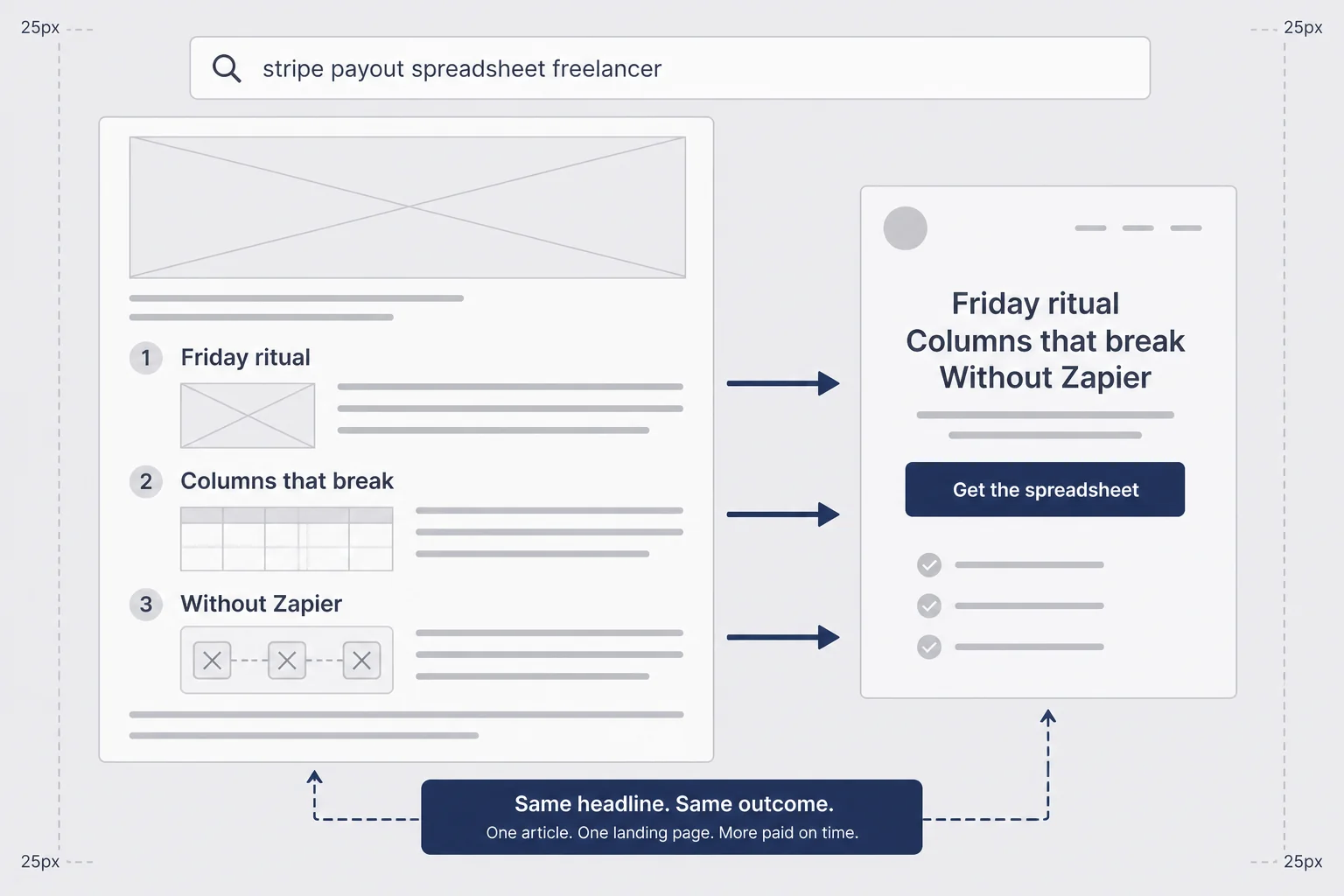
An outline is not a table of contents for your ego. It is a map of the searcher's questions.
Start from the primary phrase. Ask what the clicker wanted in the three seconds before they hit your result. A how-to query wants steps early. A "best tool for" query wants honest comparison and trade-offs. A "without [incumbent]" query wants the workaround before the pitch.
My outline template is stupid on purpose. Top line: primary phrase. Second line: searcher job in one sentence. Then three to six H2 stubs. Each stub is a question the reader has, phrased how they would say it in Slack, not how your CEO would say it on a webinar.
Open with the problem in their words, not a definition. If the phrase is "export shopify orders to google sheets," H2 one is the Friday night ritual, not "What is Shopify."
Deliver the answer early. Google and humans both punish burying. A short how-to with screenshots beats a philosophical essay about data integration.
Show judgment. What you skip. What breaks. What you tried and rejected. Opinion is a moat at long-tail scale because corporate blogs fear naming trade-offs.
End with one next step. Link to trial, focused landing page, or deeper guide. Not five CTAs. One.
AI can speed an outline after you pick the phrase. Feed it the primary keyword, three customer sentences, and page-one gaps. Edit every H2 until it sounds like your buyer. Do not let AI invent H2s from generic SEO templates. "Benefits of automation" is not an H2. "When Zapier is still worth it" might be.
Align outline H2s with SERP features
Skim page one for patterns. If every ranking page has a checklist, your outline needs a checklist section. If every ranking page compares tools, you need comparison with honest limits. If videos dominate and you hate camera, question whether text is the right format.
Your outline should note one beat page one element: fresher screenshots, solo-founder constraint, pricing transparency, failure mode you lived through. That element goes in the brief so you do not forget it during drafting.
Drafting from the outline without bloating
When I finally write, I keep the outline visible in a second window. Each H2 gets a word budget in my head: enough to answer the question, not enough to impress Google with length. If an H2 is done in three paragraphs and the reader would nod, I move on. Padding is how solo founders turn a ninety-minute research win into a Sunday lost.
I draft the intro last even though readers see it first. The intro is easier when the body already exists. I know what the article actually delivers. I can open with the customer's Friday ritual because I just wrote the section that solves it.
First draft is allowed to be ugly. Second pass is where I check every H2 against the outline brief. Third pass is where I read aloud for jargon. If I stumble, a stranger will bounce faster.
Secondary keywords without dilution
Secondary phrases from your language bank can become H3s or subheads. They should not become a second article crammed into one URL. One page, one job. Google semantic understanding is good enough that you do not need to repeat the primary phrase every paragraph.
Landing page language has to match or research was theater
Traffic from a well-researched article dies on a homepage that speaks a different language. I see this constantly in audits.
Your research produced a primary phrase. Your outline produced H2s in buyer language. Your title tag promises a specific job. The landing page hero must continue that conversation, not restart with "the modern platform for agile teams."
This is the same discipline as my landing page guide, but search traffic is colder. You get eight seconds and no prior relationship. Misalignment between SERP snippet, article H1, and landing hero teaches Google and humans that your result disappointed.
Before publish, align three strings: search phrase, article title, landing headline. They do not need identical words. They need the same job description. If the article is "without Zapier," the landing page cannot pretend Zapier does not exist. If the article is a how-to, the landing page should not jump to enterprise demo language.
For self-serve B2B micro-SaaS at $29 to $79 a month, I show pricing on SEO landing pages when traffic is cold. The article earned trust. Hiding price forces a call your solo operation may not want to take.
Internal links matter at small scale. Link from the article to the focused page. Link from older posts if relevant. Link from footer or resources if it helps visitors self-educate. You are building a tiny cluster around one problem phrase, not a silo.
Blog URL and domain choice
Host on your product domain. yourapp.com/guides/export-shopify-orders is fine. You are building equity you own. Medium syndication can wait. Ownership first.
When you need technical fixes for sitemaps or canonical tags, ask Max. Do not let perfect technical SEO block a good article on a sane setup.
The article-to-email bridge
Keyword research does not end at publish. Add one line in your onboarding or sales template: "We published a guide on [primary phrase] — want the link?" Warm contacts who did not know you blog become first readers. Their questions sharpen article two.
I also drop the URL in support macros when the ticket matches the phrase. Not as marketing spam. As help. If someone asks how to export Stripe data manually and you have the guide, sending it is support that doubles as distribution. That loop only works when the article title matches what they literally asked.
Web search phrases are not App Store keywords
Iryna owns consumer iOS and App Store optimization. I will not pretend otherwise. Web keyword research and ASO overlap in spirit, not in execution.
App Store search optimizes title, subtitle, keyword field, and screenshot words inside Apple's tab. Web search optimizes problem phrases in articles and landing pages on your domain. A founder shipping both needs two lists, two workflows, two measurement habits.
The mistake I see is copying App Store metadata into blog outlines. Store copy is short, branded, competitive on category terms. Web articles win on long-tail problem language and depth. "Habit tracker" might matter in the store. "how to stick to a habit when you work from home" might matter on the web. Different queries, different pages.
If your product is web-only, ignore ASO threads for keyword research. If you are mobile-first with a marketing site, run this pipeline for /blog and /guides. Let mobile keywords live in Iryna's lane.
One list per surface
Keep a web-phrases.md and let mobile keywords live in App Store Connect notes. Mixing them in one Ahrefs folder creates outlines that rank for nothing because the intent was never clear.
When keyword research is the wrong Tuesday task
Keyword research is the wrong priority when you have zero paying users and no evidence strangers want the product. Talk to humans. Email warm contacts. Run a fake door. Keywords plant seeds for compounding traffic. They do not validate demand.
Research is also wrong when you need ten customers this month and have no other channel running. Search is slow. Pair planting with cold email or community work while the article ages.
Skip research when positioning is mid-edit. Keywords selected before you know your best-fit customer produce articles that rank for tourists. Fix positioning first. Then run the sprint.
Skip research when you are using it to avoid writing. Forty-seven saved keywords with no outline is procrastination in a spreadsheet. The outline is the commit point.
Research is right when you have a clear ICP, a product that solves a repeatable job, and time to let search compound. Research is right after your first SEO article underperforms because you learn whether the phrase was wrong or the landing page was wrong. That feedback loop is valuable.
The uncomfortable middle: traffic without signups
Sometimes research worked and conversion did not. Search Console shows clicks. Plausible shows people hitting the article and leaving before pricing. That is not a keyword failure. That is a message mismatch or a CTA buried in the lobby.
Before you pick a second phrase, open the landing page on your phone. Read only the hero. Does it continue the article promise in eight seconds? If not, rewrite the hero, not the keyword list. I have watched founders run three research sprints while the same leaky homepage killed every article. The pipeline ends at publish, but revenue ends at checkout.
If conversion is weak but qualitative feedback is strong, your phrase might be top-of-funnel education. That can still be worth it if the article captures email or nurtures trust. Be honest about which game you are playing. Not every keyword needs to close on visit one. Every keyword should have a defined next step you can measure.
Signs you are ready
You can name three customers and describe their Tuesday pain without jargon. You have a page where someone can sign up without a sales call. You are willing to wait ninety days for clicks. You read micro-SaaS SEO and want the pre-publish system, not another motivational speech about content marketing.
Tools I actually open (and what I ignore)
I pay for Ahrefs Lite some months. Ubersuggest is fine on a budget. Google Search Console is mandatory after publish. Plausible or GA for whether organic visitors hit signup.
I open Google in a private window more than any paid tool. Page one reading is free and usually more honest than a difficulty score.
I ignore enterprise suites, rank-tracking dashboards with forty competitors, and AI tools that promise "SEO strategy" without seeing your product. I ignore keyword clustering features until I have one winning page. Clustering five losers does not help.
AI helps after the phrase is chosen: meta description variants, headline options, outline expansion. AI does not pick the phrase unless you feed it customer language and page-one gaps. Otherwise it suggests "invoice software" because the internet is full of invoice software content.
Search Console after publish is ongoing keyword research. Queries you did not expect appear in the Performance report. Sometimes Google ranks you for a variant. That is free data for article two.
Weekly habits that do not become a second job
Check Search Console once a week, not hourly. Note position bands for your primary phrase. Note landing page conversion from organic. Five spreadsheet rows a month beats a complex dashboard you stop opening.
Request indexing once when you publish. Then wait. Rewriting title tags every three days is anxiety, not strategy.
When to rerun the sprint for article two
Rerun the full ninety-minute sprint when article one ranks on page one or two, when Search Console shows a surprising query variant worth owning, or when you learn the primary phrase was wrong and customer language points somewhere else. Do not rerun because you feel guilty about not blogging.
Article two should be adjacent, not random. Same buyer, neighboring job. "Stripe payout spreadsheet" pairs with "stripe fees for freelancers" or "1099 stripe export." Not with "best CRM for agencies" unless you pivoted ICP, in which case fix positioning before you research again.
I keep a phrase tree note: primary phrase at the root, branches for variants I might own later. One branch active at a time. The tree prevents me from starting six half-written posts because Ahrefs suggested them on a bored Thursday.
Questions founders ask about keyword research
How long should keyword research take for a solo founder?
Block ninety minutes for the first pass on a new topic cluster. Twenty minutes on customer language, thirty on page-one reading, twenty on scoring in a tool, twenty on a one-page outline. If you are still exporting lists after two hours, you are avoiding the outline, not researching.
What is the best free keyword research tool for micro-SaaS?
Google Search Console after you publish, plus private-window Google for page-one reading. Before publish, Ubersuggest or Ahrefs Lite helps with difficulty scores. None of them replace listening to how customers describe pain. Free tools are fine. Free thinking is not optional.
How many keywords should one blog post target?
One primary phrase per page. Secondary phrases can appear in subheads naturally, but the article needs a single job. Google and readers both get confused when you try to rank for invoice software and stripe reconciliation and freelancer taxes on one URL.
Is keyword research different for web SEO and App Store search?
Yes. Web search rewards problem phrases in articles and landing pages. App Store optimization rewards title, subtitle, and screenshot language inside Apple's store. This post is web content workflow. If you ship iOS, Iryna owns ASO. Do not paste App Store keywords into blog outlines.
When should I skip keyword research and just write?
Skip it when you have no paying users and no positioning clarity. Write to humans first through email, calls, and community. Skip it when you need revenue this week and search is your only hope. Keyword research is for planting a web asset that compounds, not for avoiding a sales conversation.
How do I know if a keyword is too competitive?
Open page one in a private window. If every result is a major brand, a 4,000-word guide from a site with a podcast, or nothing you could out-specific in ninety minutes, long-tail the phrase until at least two results look beatable. Difficulty scores help. Your eyes on page one matter more.
Research is listening with a publish date attached
Forty-seven keywords in a spreadsheet is not a strategy. One phrase your buyer actually types, outlined in their language, published to your domain, with a landing page that keeps the promise: that is how solo founders turn search into a quiet channel.
Run the ninety-minute sprint once before you write. Score honestly against page one, not against volume trophies. Outline like the searcher is impatient, because they are. Publish. Measure whether strangers from search try the thing. Fix the landing page before you chase phrase two.
Keyword research micro saas solo founder work is not glamorous. It is cheaper than ads and calmer than performing daily on social. Plant one article this quarter. Give it three months. If clicks arrive and nobody signs up, the research did its job and the landing page needs work, not another export.
When the web lane is working and you want the full SEO picture, read micro-SaaS SEO for solo founders. When your message still sounds like everyone else, fix positioning before you score another phrase. The pipeline only compounds when the offer is true.



Comments