Their Customers Were Already Yours. You Just Were Not in the Room.
How solo founders use integration and partnership marketing to borrow distribution from tools your buyers already pay for, without pretending to have a biz-dev team.
 By Reese25 min read
A founder I coached last spring had the kind of product I wish more people built. Clean reporting for freelance bookkeepers. Thirty-two paying customers. Churn under control. He could explain the job in one sentence. What he could not do was get strangers to discover him without a warm intro.
He spent a month tweaking Google Ads at twenty dollars a day. Clicks happened. Trials barely did. Then a customer mentioned she wished his exports plugged straight into the tool she already lived in for client files. Not a novel idea. He had thought about building the connector someday. Someday is where distribution goes to nap.
We mapped the ten tools his happiest customers named unprompted. Three showed up on almost every call. He picked the smallest partner with the clearest overlap, wrote a short pitch, and shipped a bare-bones integration in two weeks. No partnership manager. No conference booth. Sixty days later, partner-sourced trials were still lumpy, but they converted at nearly double the rate of cold site traffic. Same product. Different room.
That is what integration partnerships for a micro-SaaS solo founder are about. Not enterprise alliance decks. Not revenue-share contracts written by lawyers you cannot afford. You show up inside software your buyer already trusts, make the handoff obvious, and treat the partner's audience like a channel you earn rather than buy.
I have been on the marketing side of small B2B SaaS since 2014. I have watched founders burn months on co-marketing fantasies while never submitting a marketplace listing. I have also watched a single OAuth connection plus a honest listing description outperform a quarter of content marketing. The pattern is boring. Pick the right parent tool, ship something their users can click, measure signups like you would measure any other channel.
This post sits in the grow stage. It assumes you launched something real. If you are still shaping the offer, read micro-SaaS positioning for solo founders before you chase logos. If you need a wider channel map, marketing for solo founders and solo founder marketing focus set the table. Integrations stack with referral programs, SEO, and LinkedIn. They are not a replacement for knowing who pays you.
Partnerships fail when founders treat them like prestige. A badge on your homepage that says "integrates with X" is worthless if nobody clicks. They work when you treat them like plumbing plus discovery: the pipe has to carry water, and the faucet has to be labeled where thirsty people already stand.
Integration partnerships micro saas solo founder: distribution you borrow instead of buying
When I say integration partnership marketing, I mean a deliberate plan to reach customers through another product's ecosystem. The integration is the proof you belong there. The marketing is everything that makes that integration visible: marketplace copy, release notes, co-branded content, sales enablement for their team if they have one, and your own onboarding path for users who arrive with a partner cookie attached.
Solo founders hear "partnerships" and picture handshake photos at SaaStr. Forget that image. At your scale, a partnership is usually an async email thread with a developer advocate, a listing in their app directory, and twelve shared customers who stop copy-pasting CSVs because you finally wired the APIs. That counts. Revenue counts more than the photo.
The economic logic is simple if you say it out loud. Your buyer already pays for Tool A. Tool A has trust you do not have yet. When your micro-SaaS appears inside Tool A's workflow, you inherit a slice of that trust. Not all of it. You still have to deliver. But the conversation starts at "oh, this works with what I use" instead of "who are you again?"
Borrowed distribution is not free distribution. You pay in engineering time, listing maintenance, support edge cases when the partner API changes, and the opportunity cost of not building another feature. The trade is usually worth it when your ideal customer profile tightly overlaps the partner's base and when the integration unlocks a job they already do weekly. It is not worth it when you chase a big logo to impress investors you do not have.
Integration partnerships differ from affiliate deals. Affiliates are often strangers promoting for commission. Integrations are product surface area. Referrals, which I covered elsewhere, come from happy users sending colleagues. Partner marketing comes from being embedded where work happens. All three can coexist. Confusing them leads to weird emails where you ask a platform for affiliate rates when what you really need is a marketplace row.
As a solo founder, your unfair advantage is speed and specificity. Big vendors move slow. You can ship a narrow connector that solves one painful edge case for a niche vertical, write listing copy that sounds like you talked to ten users yesterday, and iterate when the partner's PM actually replies. Enterprise partnership teams optimize for safe breadth. You optimize for sharp fit.
What "good" looks like at micro-SaaS scale
Good looks like a partner-sourced signup path that you can trace in analytics. Good looks like customers saying they found you inside another product, unprompted, on onboarding calls. Good looks like the partner at least listing you without you nagging every week. Great is co-marketing, but great is optional early. Findable is mandatory.
Bad looks like a private integration built on a deprecated API that only one legacy customer uses. Bad looks like homepage logo walls with zero attached UTM strategy. Bad looks like you shipping OAuth before you validated that anyone on the partner platform needs what you do. I have done that last one. The connector worked beautifully. Nobody clicked.
Your first partnership goal is not exclusivity. It is learning whether ecosystem distribution moves paid conversion for your ICP. Run it like any other channel experiment: hypothesis, minimum build, measure, keep or kill.
I keep a note in my project doc called "borrowed trust checklist." Before I email a partner, I answer four questions in plain language. Do at least five paying customers already use both products in the same week? Does the integration remove a step they complain about in support? Can I explain the connection in one sentence without saying "platform" or "synergy"? Am I willing to maintain this connector for twelve months if signups are slow at first? If any answer is no, I delay the build. Enthusiasm is cheap. Maintenance is not.
Partnerships also change how you talk about the product on sales calls. When a prospect asks whether you "integrate with X," you want to say yes with a link, not "we can look at that on the roadmap." Roadmap answers signal risk. Connect buttons signal maturity. Even if your total customer count is small, sounding like part of a stack helps you sound like the default choice inside a niche.
Why a partner's audience beats your ad budget alone
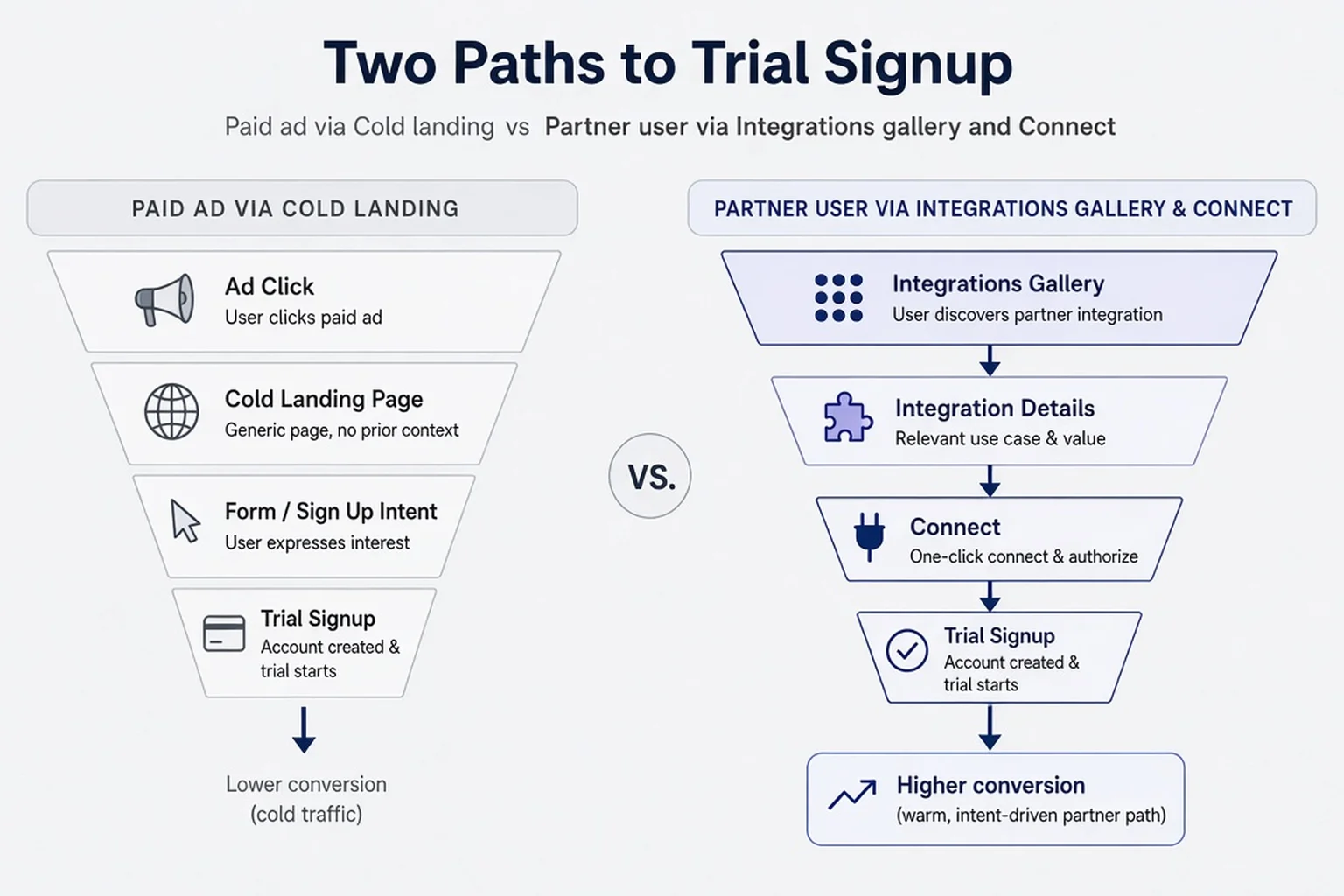
Paid ads can work for micro-SaaS. I wrote about profitable paid ads when the math is tight. Ads buy attention. They do not automatically buy belief. A stranger who clicks your ad still asks whether you will exist in six months, whether your tool fits their stack, and whether you understand their job. You spend the first thirty seconds of the landing page answering trust questions instead of value questions.
Partner traffic arrives with a different context. They were already inside software they pay for. They clicked "connect" or browsed an integrations gallery because they have a workflow problem now. You are not interrupting their day. You are offering a continuation of it. That shift shows up in conversion more often than founders expect, especially in boring B2B niches where trust matters.
Ads also scale spend before you scale understanding. It is easy to increase budget before you know which message resonates. Partner channels force constraint. You usually get one listing, one primary use case, one shot at clear copy before review. Constraint sounds unpleasant. It also prevents you from spraying twelve value props at cold traffic.
There is a credibility gap solo founders underestimate. Your site traffic is unknown domain, unknown founder, unknown longevity. A marketplace listing sits under the partner's brand umbrella. Not a full endorsement. Still a filter. Buyers assume you passed some minimum bar to appear there. You did pass a bar if you submitted working software instead of a vaporware slide.
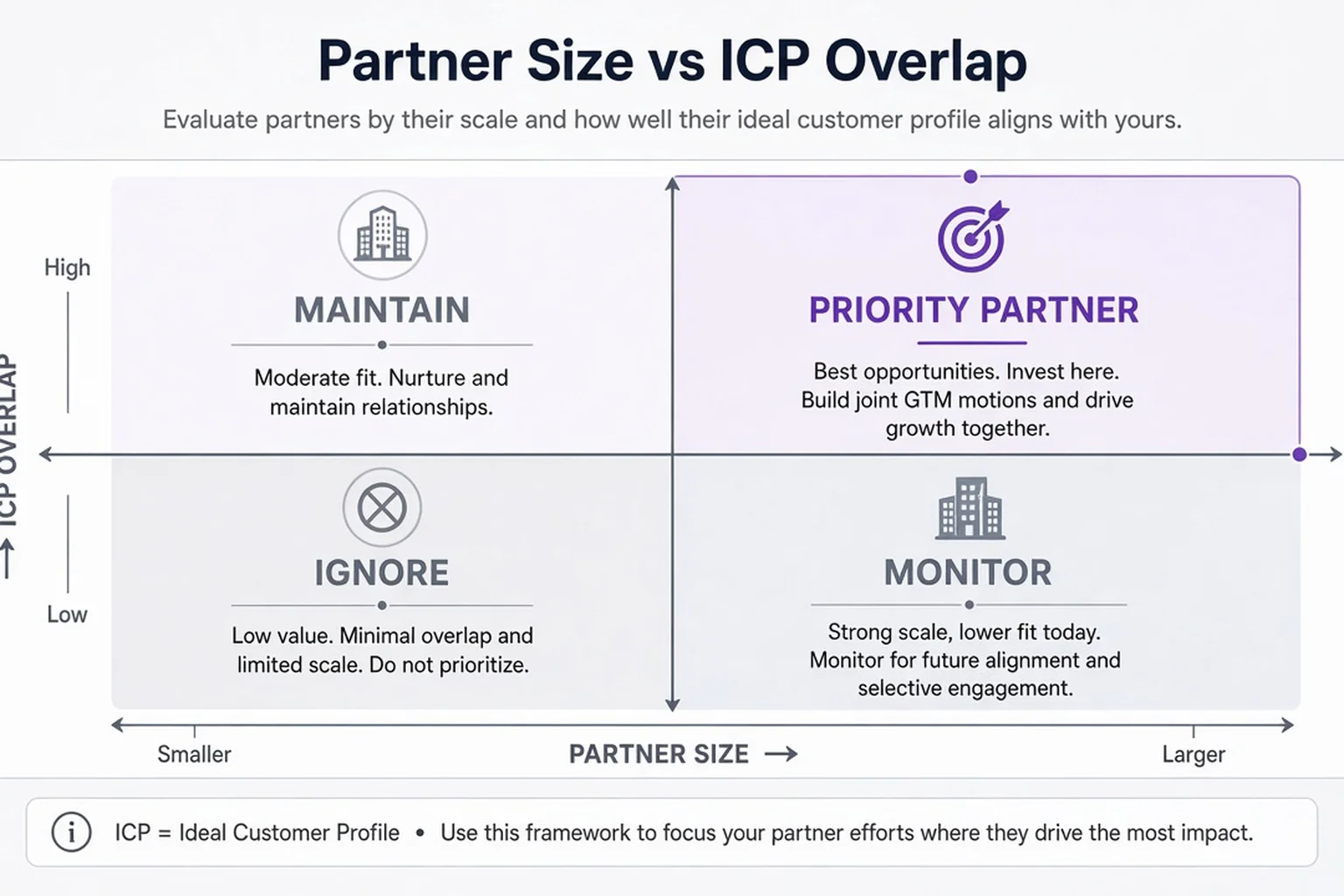
Partner audiences are pre-segmented if you choose well. The partner's product definition did the ICP work. Notion users are not the same as Shopify merchants. HubSpot admins are not the same as Figma freelancers. Pick the partner whose user list would look like your customer list if you exported both to CSV and squinted. That overlap is the whole game.
The attention math nobody posts on Twitter
Say your site converts cold traffic at one percent trial start and partner traffic at two and a half percent. Same trial-to-paid rate. Partner path wins without heroic copywriting. Now say partner traffic is one fifth of your volume but half your new MRR this month. You do not need partner traffic to dominate numerically. You need it to punch above its weight while you keep improving direct channels.
Ads compete on auction dynamics. Integrations compete on fit and maintenance. Auctions tax you every month. Integrations tax you when APIs change. Neither is passive. Pick the tax you can afford with your skills. If you are a marketer-founder with a contractor dev, integrations may be cheaper than sustained spend. If you are code-heavy and ad-averse, still measure partner ROI or you will romanticize building connectors forever.
Channel stacking
Treat partner signups as a segment in your weekly metrics, the same way you would segment Reddit or newsletter traffic. Compare activation and paid conversion by source, not just volume.
Pick tools your customers already pay for
The worst partner strategy I see is copying a competitor's logo row. Founders open a rival landing page, screenshot twelve integrations, and treat it like a shopping list. Some of those tools share no meaningful audience with you. Some require enterprise partnership tiers you will never qualify for. Some are platforms where your feature should be native, not bolted on. The logo row is marketing, not a roadmap.
Start from customers, not logos. Pull the last fifteen onboarding calls or support tickets. Ask which other software names appear. Scan cancellation surveys for "I needed better X with Y." Email your five happiest users one question: what do you open before and after my product each day? Patterns beat brainstorming.
Build a short list with three columns: tool name, how customers use it with you, and whether an API or official partner program exists. You are looking for repeated pain at the intersection. If four customers manually export CSVs into the same accounting tool, that intersection is screaming. If one customer mentioned a weird edge case, file it under later.
Prioritize partners where overlap is high and political complexity is low. Overlap means shared ICP. Low complexity means public API docs, self-serve developer registration, and a marketplace that lists small vendors without a six-month legal review. Giant platforms can be worth it eventually. Your first win usually comes from the mid-size tool beloved in your niche.
Consider directionality. Some integrations are symmetric: both products benefit from the connection. Some are you riding their gravity well. That is fine. Just do not pretend the bigger partner will promote you equally if you are not driving revenue or retention for them. Know which side needs the other more. As a micro-SaaS, that is usually you. Accept it and make their life easy.
Red flags when evaluating a partner
If API access requires a sales call before you can read docs, budget time accordingly. If their marketplace has not been updated in two years, treat listing traffic as uncertain. If their users are mostly consumers and you sell B2B workflow software, overlap may be fake. If building the connector requires scopes that feel invasive for your privacy story, pause and ask whether a lighter integration, export plus webhook, solves eighty percent of the job.
Talk to one customer who uses both tools before you write code. Not a survey. One conversation. Confirm the workflow, the frequency, and what they do today when your products do not talk. That call saves weeks of building the wrong bridge.
Rank your short list with a simple score if you are stuck between two equal-looking options. Give one point for each paying customer who mentioned the tool. Give two points if exports or copy-paste between the products show up in support tickets. Give three points if the partner publishes clear marketplace rules you can read without a sales call. Subtract two points if the partner recently launched a native feature that overlaps your core outcome. The highest score gets the next email, not the biggest logo.
The partner pitch email I actually send
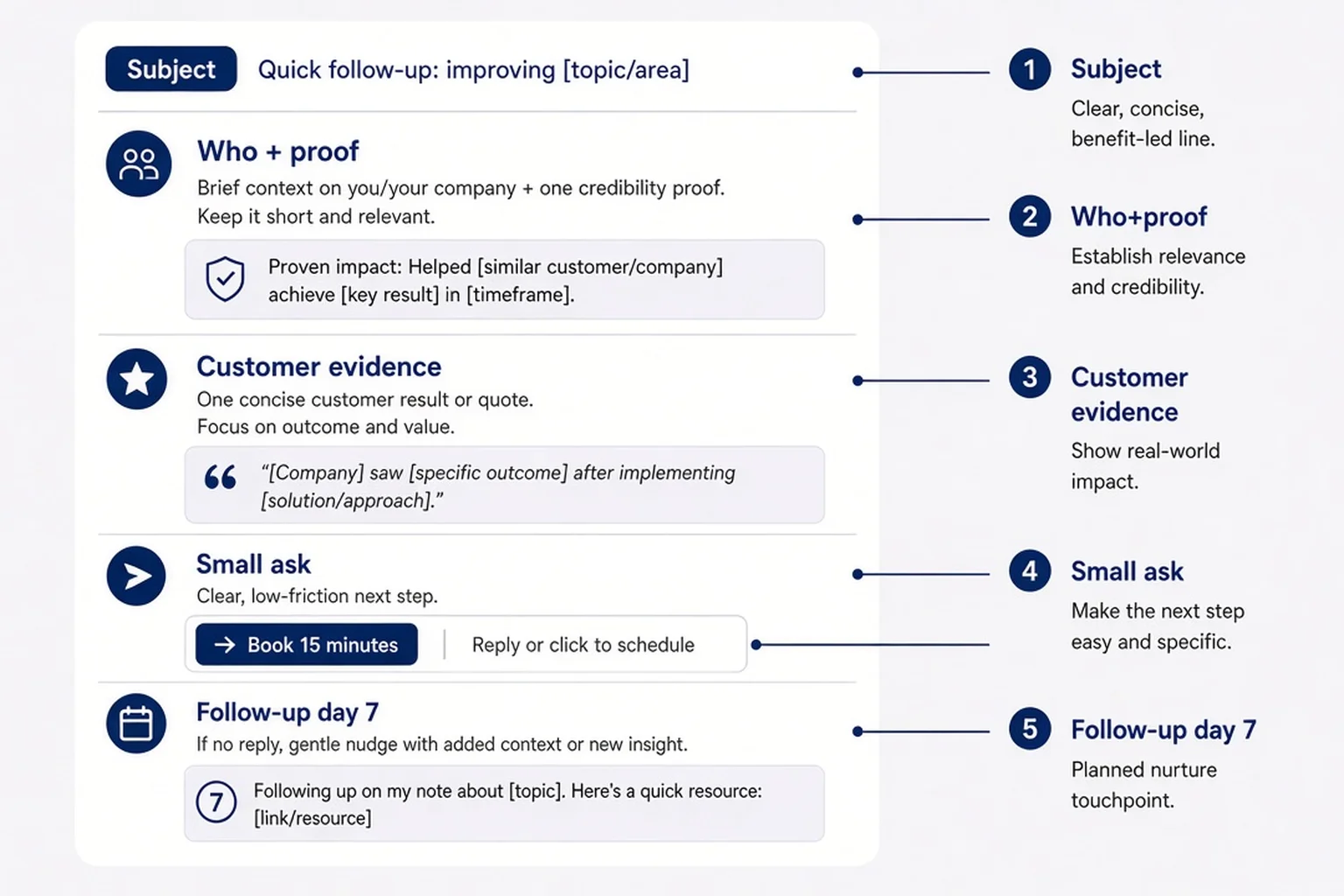
Partner outreach is not cold email to their entire user base. It is warm-ish email to a person who owns integrations, developer relations, or partnerships. Usually you are asking for consideration, not closing a million-dollar deal. Keep the email shorter than your anxiety wants.
My subject lines look boring on purpose. "Integration idea for [their tool] users who [specific job]" beats "Strategic partnership opportunity." Their inbox is full of strategic opportunities from people who never shipped software. Specificity signals respect for their time.
Paragraph one: who you are in one sentence, plus social proof that is modest and true. "I run [product], a [narrow outcome] tool for [ICP]. We have [number] paying teams, mostly [vertical or role]." Do not inflate. Do not attach a pitch deck unless they ask.
Paragraph two: the customer evidence. "Four customers this month export from us into [partner product]. They asked for a direct connection. Here is the workflow they described." One concrete example beats three abstract benefits. If you can name a use case their PM already tracks internally, even better. You are helping them see demand they might not have quantified.
Paragraph three: the ask. Make it small. "I would like to build against your public API and submit a marketplace listing. Are you the right person, or should I talk to someone on the dev platform team?" Optional: link to a one-page spec or Loom under ninety seconds showing the user flow. Not a roadmap. A screen path.
I do not lead with revenue share demands on first contact. I do not ask for homepage placement. I do not mention that my competitor is already listed unless I can prove user demand they are missing. First email opens a door. Terms come later if the door opens.
Follow-up once after seven business days with something new: a shipped beta, a customer quote, a clearer screenshot. Then stop. Ghosting happens. Nagging burns the bridge for when they reorganize teams and your integration actually matters.
What to attach without being annoying
A simple Notion page or PDF with user story, screens, scopes you need, and support contact. Listing draft copy in their tone guidelines if published. A timeline you can hit without promising your entire quarter. Partners remember founders who ship on the date they said.
If you lack customers, you lack leverage. Validation posts from Max and Imani cover that ground. Partner pitches land better when you can say paying users begged for the connector. If nobody begged, go get five users who will beg honestly after you describe the workflow.
Co-marketing when you are the whole marketing team
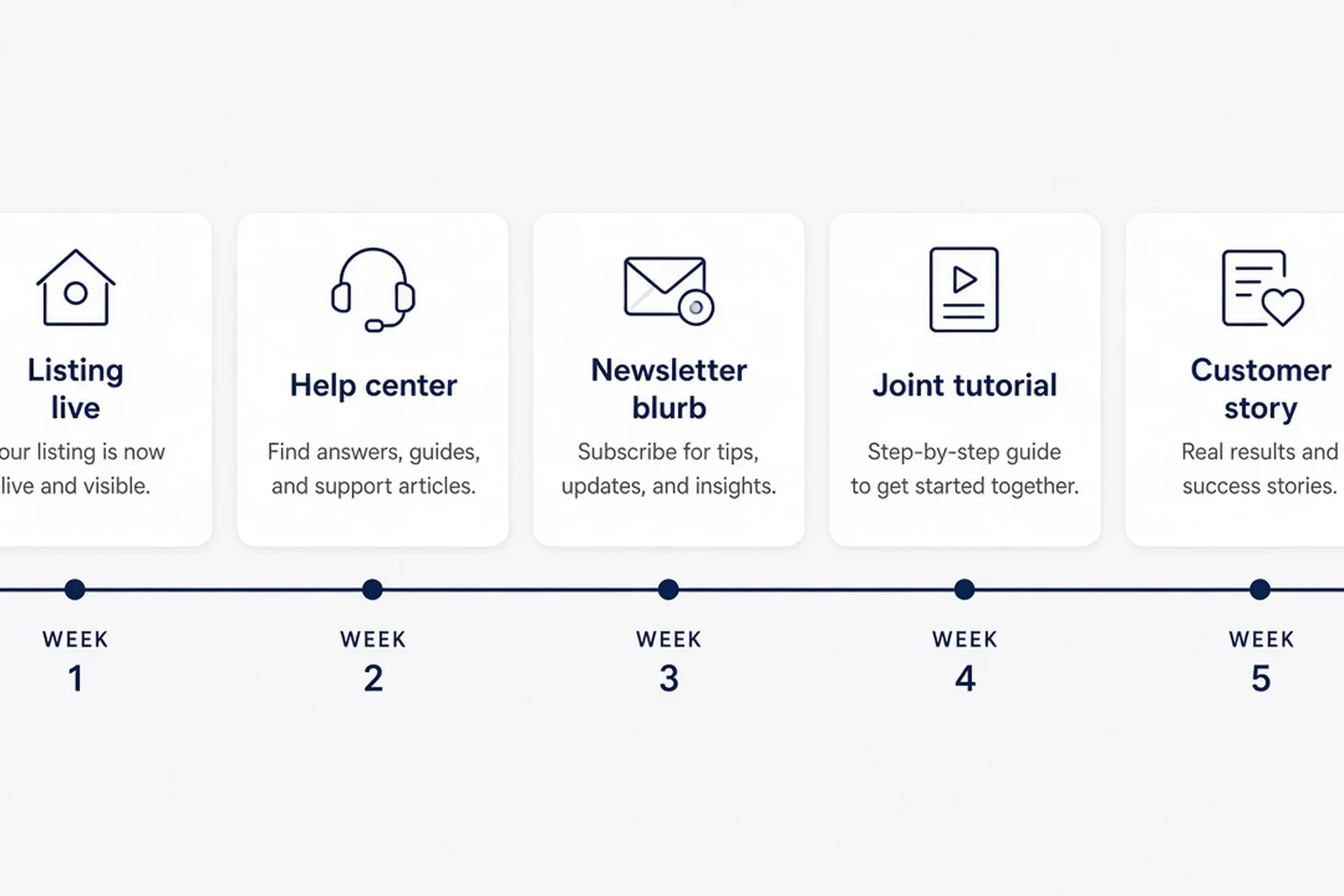
Co-marketing sounds corporate until you strip it to assets. A blog post. A help-center article. A newsletter blurb. A thirty-minute webinar where you do the work and they lend their logo. That is co-marketing at micro-SaaS scale. You are not negotiating billboard buys. You are making it easy for them to say "we added an integration that helps users do X" without writing from scratch.
Start by doing their work for them. Draft the announcement post in their voice. Include screenshots with alt text, setup steps, and a link to your docs. Offer to publish on your blog first if they prefer not to. Many partner teams are underwater. Founders who show up with publish-ready copy get farther than founders who ask "what co-marketing do you offer?"
Time co-marketing around a moment. Listing approval. Major connector upgrade. A customer story that names both products without feeling like a paid testimonial. Moments give their marketing team a reason to click send. Random Tuesday emails do not.
Joint webinars can work if your audience combined exceeds what you could fill alone and if the topic is a workflow, not a product tour. "How agencies close month-end without spreadsheet chaos" beats "Introducing our integration." You bring the expert voice and the slides. They bring list access if they agree. Record it. Repurpose clips for founder content systems later.
Do not depend on co-marketing for the partnership to pay off. Listing discovery and in-app search should carry baseline traffic. Co-marketing is upside. If the partnership only works after a heroic launch campaign, it is fragile.
Protect brand tone. Your voice can stay casual while you adapt formatting for their blog. Never let co-marketing push you into hype you would not use on your own site. Readers smell mismatch.
Schedule a personal reminder two weeks after listing goes live. Screenshot the marketplace row, check your analytics for first clicks, and send your partner contact a thank-you with one metric even if the metric is small. Gratitude with data sticks in inboxes longer than another ask. Founders who only show up when they want something train partners to ignore them.
Legal and promises you can keep alone
You might not have a lawyer on retainer. You still can agree to sensible terms: mutual linking, accurate logos, no misleading claims, support SLAs you can actually hit. Avoid exclusivity clauses that block you from integrating competitors unless they pay for that privilege, which they will not at your size. Avoid co-marketing commitments with hard dates unless you control the calendar.
Ship the integration customers can find without a sales call
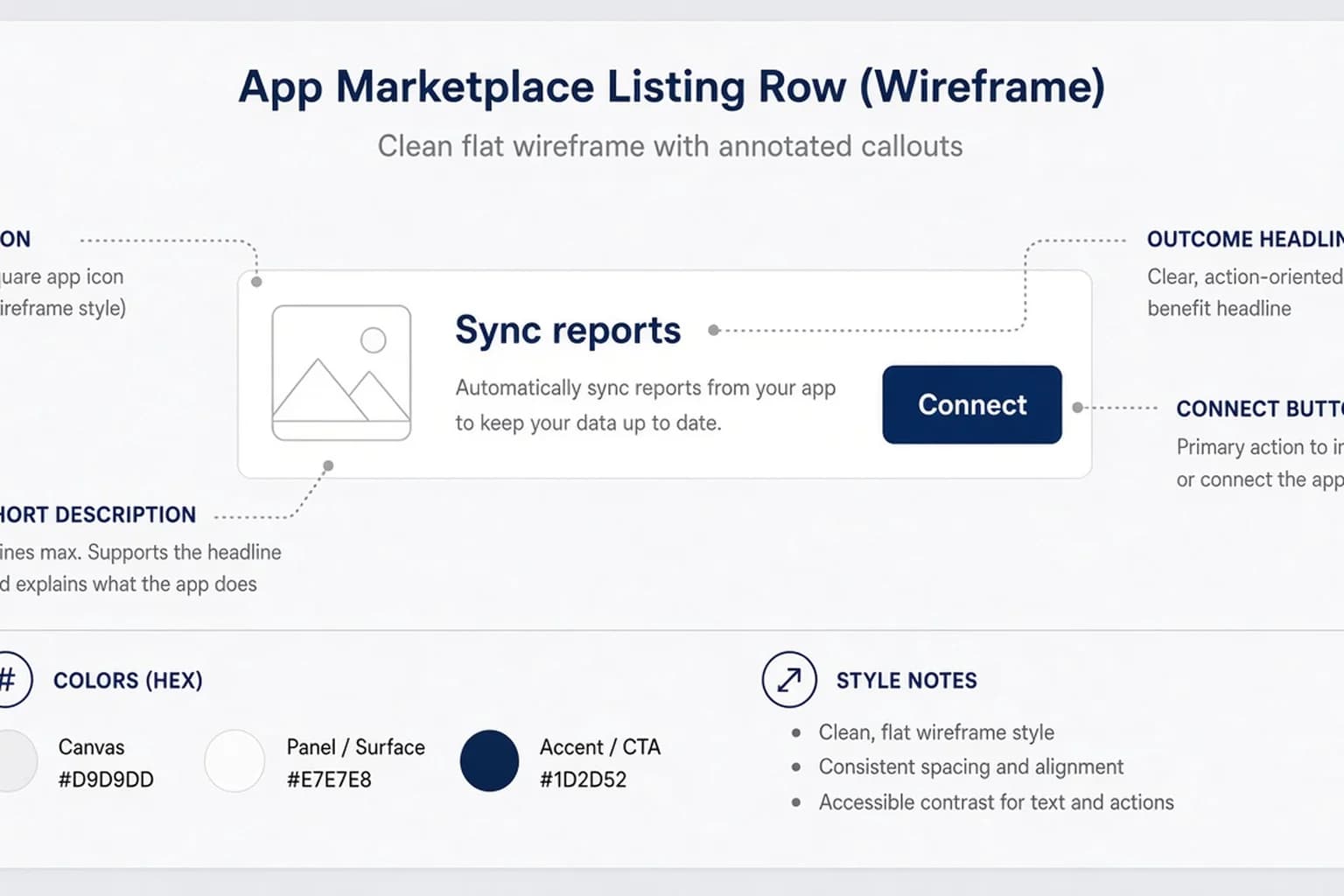
Marketing an integration starts before the connector ships. It starts with naming. Inside the partner UI, users scan titles, not your internal project codename. Lead with the outcome their user cares about in that context. "Sync client reports to [Partner]" beats "AcmeSync Pro connector v2."
Build the happy path first. OAuth flow that fails gracefully, clear permissions language, a setup screen that does not assume users read your docs. Every extra support ticket from partner traffic erodes the channel. If Max were writing this section, he would dive into token refresh and webhook idempotency. I stay at the product boundary: the integration is marketing that breaks if the first run fails.
Submit marketplace assets the day the happy path works in staging. Screenshots at realistic UI scale, not full-screen mockups. Short video if the partner allows it. Link to docs that start with "why connect" before "API reference." Non-coders on the partner side review listings too.
On your site, mirror the discovery path. A landing page for partner name traffic with the same words as the marketplace listing. Continuity reduces bounce. Add a paragraph on security and data handling if your ICP cares, agencies, finance, health-adjacent workflows. You do not need a SOC 2 badge to be clear about what you touch.
Enable sales-less onboarding. Partner users should reach value without booking a call with you unless your product genuinely requires it. If it requires a call, say so in the listing. Surprise calls kill conversion and produce angry tweets tagging the partner.
Plan for API drift. Partner platforms change fields, deprecate endpoints, rename scopes. Put a quarterly calendar reminder to test the connector. A broken integration is anti-marketing. Customers blame both vendors.
Zapier, Make, and the minimum viable bridge
Official OAuth integrations are ideal when APIs cooperate. Zapier or Make bridges are legitimate first steps when speed beats polish, especially if your customers already pay for automation tools. List those paths honestly. Do not advertise a native sync if users still need a third automation account unless you say so upfront. Trust is the asset you borrowed. Lying burns it fast.
App marketplaces versus one-off handshake deals
Marketplaces offer discoverability at scale you cannot replicate with blog posts alone. Search inside the partner product becomes SEO you do not own. Reviews on marketplace pages, when they exist, become social proof. The downside is rules: branding guidelines, review queues, category placement you cannot control, competitors listed beside you.
Handshake deals, private beta integrations, or "we will mention you in our Slack community" arrangements can move faster. They fit when the partner is small, when your ICP is concentrated, or when the workflow is too niche for public marketplace taxonomy. Handshakes rarely scale. They can prove demand before you invest in full OAuth.
Some founders pursue platform certification programs, Shopify Plus partner tiers, HubSpot app partner levels, and similar ladders. Read requirements before fantasizing about badges. Many tiers assume agency business models or minimum revenue. If requirements exclude solo bootstrapped tools, skip gracefully. False prestige wastes quarters.
When you choose marketplace-first, study top listings in your category. Not to copy features, to copy clarity. What headline pattern repeats? How do they explain setup time? Do they show pricing? Your landing page discipline still applies. The marketplace row is a mini landing page.
One-off deals can still be public. A shared Notion doc, a joint template gallery, a reciprocal docs link. Marketing is visibility plus trust. The contract shape matters less than whether users stumble into the workflow.
When to walk away from a marketplace
If fees eat unit economics, pause. If policy changes force you to store data you should not store, pause. If the partner category is crowded with free tools that commoditize your outcome, think hard. Sometimes the better move is deeper integration with a smaller tool where you can be the obvious default.
Track partner traffic like a channel, not a vanity logo
Founders love adding partner logos to the homepage. Founders hate tagging UTM parameters consistently. Guess which habit pays rent. Every partner link should be identifiable in analytics. Every OAuth completion should store partner origin when technically feasible. Stripe metadata, CRM tags, database column, spreadsheet column if you must. If you cannot answer "how many paying customers came from Partner B last quarter," you are running a hobby with decorations.
Define partner metrics the same way you define ad metrics. Impressions inside their marketplace are rarely visible. Focus on clicks to your site or in-app installs, trial starts, activation events, paid conversions, and ninety-day retention compared to other sources. Write the numbers in a spreadsheet column labeled partner source so you cannot pretend the channel works because the integration feels impressive in demo calls. Weekly marketing metrics discipline applies here too. One row on the board: partner-sourced paid adds.
Run cohort conversations. Talk to three partner-sourced customers. Ask what they would have done without the integration. Their answers sharpen listing copy and roadmap. Numbers tell you if the channel works. Interviews tell you why.
Compare customer quality, not just quantity. Partner users who churn fast may be bargain hunters who clicked every integration in the gallery. Partner users who stick might be exactly your ICP. Optimize for stickiness before you beg for more promotion.
Report back to partners when you have good news. "We saw forty connects this month and six converted to paid" gives their team a reason to keep you listed. Silence makes you forgettable. Data makes you real.
When to double down or cut the integration
Double down when partner-sourced users retain as well as direct users and support load is manageable. Cut or pause when build maintenance exceeds revenue, when the partner duplicates your feature natively, or when policy changes block your core use case. Cutting hurts emotionally if you poured dev weeks into it. Keeping a dead connector hurts customers more.
When the partner ghosts after you ship the connector
You shipped. You listed. You emailed your contact. They moved teams, or the marketplace review stalled, or co-marketing never scheduled. This is common enough that you should plan for it emotionally and operationally.
First, make sure the integration still works for organic discovery. Users who find you through search inside the partner product do not care that your BD thread died. Support them well. They are the proof that helps the next conversation.
Second, document outreach with dates. One polite reopen email with a concrete asset beats three vague pings. Offer something new: a case study, a fix they requested, a metric showing adoption. Then stop. You have a business to run.
Third, diversify. One partner dependency is fragile. Two overlapping partners is better if your architecture allows it. Not twelve half-built connectors. Two solid ones beat a logo wall.
Fourth, learn why the thread died. Wrong contact? Weak user proof? Integration too niche for their roadmap? Competitive threat? Honest postmortems prevent repeating the same pitch to five platforms with identical silence.
Ghosting is not always malice. Priorities shift. Your micro-SaaS is one line on a spreadsheet for them. Keep shipping value for shared users. Sometimes partnerships reactivate when their customer success team notices tickets asking for you by name.
When you feel tempted to chase a bigger partner because the logo would look good on a pitch deck you are not even using, go back to your customer list. The right partner is the one your best customers already touch Tuesday afternoon, not the one your ego wants on a slide. I have wasted a month on a logo that never sent a trial. I have gained paying users from a boring mid-size tool I had never heard of before customer interviews. The boring one paid my Stripe fees.
Integration marketing versus affiliate and referral motion
Referrals reward existing customers for introductions. Affiliates reward promoters, often creators. Integrations reward users by reducing friction where they already work. You can run all three, but the ops load differs.
Referrals need links, rewards, and timing around customer wins. Affiliates need fraud checks and payout admin. Integrations need engineering and ongoing API hygiene. If you are solo, pick one partnership motion to execute well this quarter. Spinning up affiliate tiers while your OAuth flow is flaky spreads you thin.
Integration marketing also interacts with keyword research. Users search "[partner name] integration for [job]." Your docs and landing pages can capture that long-tail SEO if you write for humans who typed exactly that phrase. Partner brand plus your outcome is a query worth owning on your site even if the partner outranks you for their own name.
If you are non-technical, you can still own the partnership motion. Write the spec, record the Loom, draft the listing, run customer interviews, and tag analytics. Hire a fractional dev for OAuth once the partner says yes. Max covers the deep implementation patterns. Your job is to make the business case so obvious that building the connector is the obvious next sprint, not a speculative side quest.
Questions I get about integration partnerships
When should a solo founder prioritize integrations over paid ads?
After you know who pays and which larger tool they already use daily. Integrations borrow trust from software they already budget for. If you still cannot describe your best customer in one sentence, fix positioning before you chase partners. Ads and integrations both fail when the offer is fuzzy.
Do I need a full OAuth integration before approaching a partner?
Not always. Many conversations start with a clear use case, a one-page spec, and a willingness to build. Some partners list you with a Zapier-style connection first. What you need before the email is proof that their users hit the same pain you solve, not a finished connector sitting unused in your repo.
How do I get listed in a partner app marketplace?
Read their developer or partner page like a checklist. Ship the minimum viable connection their reviewers can click through. Write listing copy in the customer's words, not feature bullets. Follow up politely if review stalls. Marketplace teams are small; a complete submission beats a perfect integration that never gets submitted.
What is a fair co-marketing ask for a bootstrapped micro-SaaS?
Start small: a shared blog post, a mention in their integration newsletter, or a joint webinar if you can carry the prep work. Do not ask for homepage placement on day one. Offer a customer story, a template, or a narrow workflow guide their users actually need. Make the first ask easy to say yes to.
How do I track revenue from integration partnerships?
Use UTM parameters on every partner link, a dedicated signup landing page, or referral codes in Stripe metadata. Tag accounts created through OAuth from that partner when your auth flow allows it. Review partner-sourced trials and paid conversions monthly, not once. Logo collection is not a metric.
What if the partner stops responding after I ship the integration?
Keep the integration working for customers who find it. Document the outreach timeline. Ask once more with a concrete asset ready, like a short Loom showing the workflow. If they ghost, redirect energy to the next partner with overlapping users. Sunk dev time hurts; pretending the partnership is active hurts more.
The room matters more than the megaphone
I still think about that bookkeeper founder. He did not need a louder launch. He needed to stand where his customers already stood, inside the tool they opened before they ever heard his name. Integration partnerships are not a shortcut around having something worth paying for. They are a way to stop asking strangers to care about a tab they have never opened.
Pick one partner that fits like a glove. Ship the connector like it is your primary landing page. Measure signups with the same skepticism you bring to ad dashboards. Co-market when you can, but do not wait for co-marketing to matter. If the integration works, users will tell you. If it does not, no logo wall saves you.
A product nobody hears about is still an expensive hobby. Showing up inside software they already pay for is one of the quieter ways to be heard. Boring, specific, and often exactly enough for a solo founder who would rather build one good bridge than shout across the whole internet. Pick the bridge this month. Measure it next month. Let the logos follow the numbers, not the other way around.




Comments